GEO vs Paid Ads, Cost-Effectiveness Comparison
Is it cheaper to earn a ChatGPT recommendation than to buy a Google Ads click, and when does GEO beat paid media on real cost per customer?

The average cost-per-click on Google Ads rose 12% year-over-year in 2025, while AI-driven discovery channels grew to capture nearly 30% of product research queries. That gap creates a new question for marketers allocating budgets: is it cheaper to earn a recommendation from ChatGPT than to buy a click from Google? The answer depends on your timeline, your category, and how you measure cost, but the math increasingly favors Generative Engine Optimization (GEO) for brands willing to invest in compounding visibility.
How Paid Search Costs Are Structured
Paid search runs on an auction model. You bid on keywords, pay per click, and the moment you stop spending, traffic stops. The economics are straightforward but punishing at scale.
- CPCs compound against you. As more advertisers enter your category, bids rise. SaaS keywords in competitive verticals routinely exceed $15–$30 per click, and in the priciest categories the numbers are steeper still, where insurance keywords regularly clear $50 a click, which is exactly where earning AI recommendations beats renting them.
- No residual value. A paused campaign produces zero impressions. There is no long tail.
- Attribution is clean but narrow. You know exactly what each click cost, but you only capture users actively searching with commercial intent.
Paid search works well for short-term demand capture, product launches, seasonal pushes, bottom-of-funnel conversion. But it is a rental model. You are leasing attention, not building equity.
How GEO Costs Are Structured
GEO costs are weighted toward creation and optimization rather than distribution. You invest in structured content, authoritative sourcing, and technical signals that make AI models more likely to cite your brand.
- Upfront investment, declining marginal cost. The first audit and content overhaul require real effort. After that, each incremental optimization costs less because your foundation is already in place.
- Compounding returns. Once an AI model associates your brand with a category, that association reinforces itself across future training cycles and retrieval queries.
- Broader surface area. A single well-optimized page can generate mentions across ChatGPT, Gemini, Perplexity, Copilot, and AI Overviews simultaneously, five channels for the price of one.
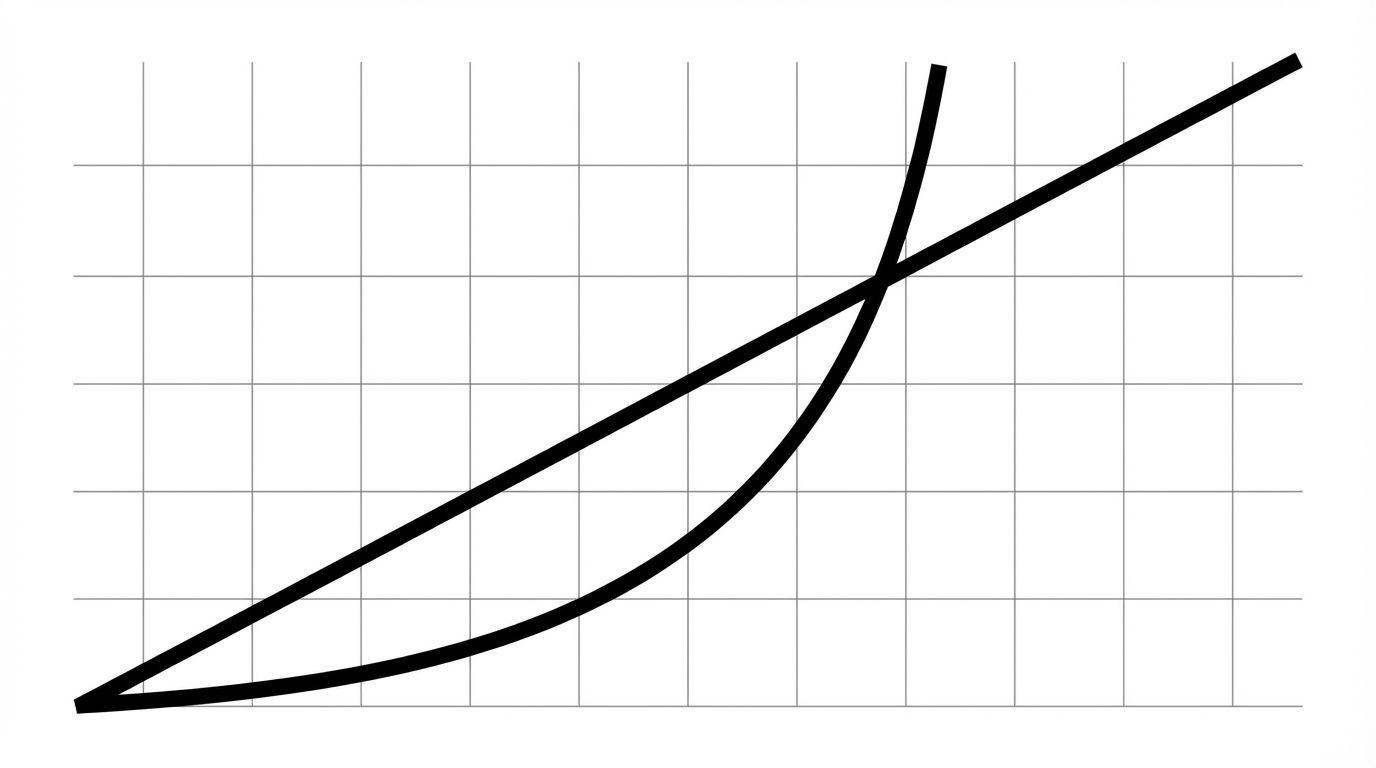
The comparison below illustrates how these two investment profiles diverge over time.
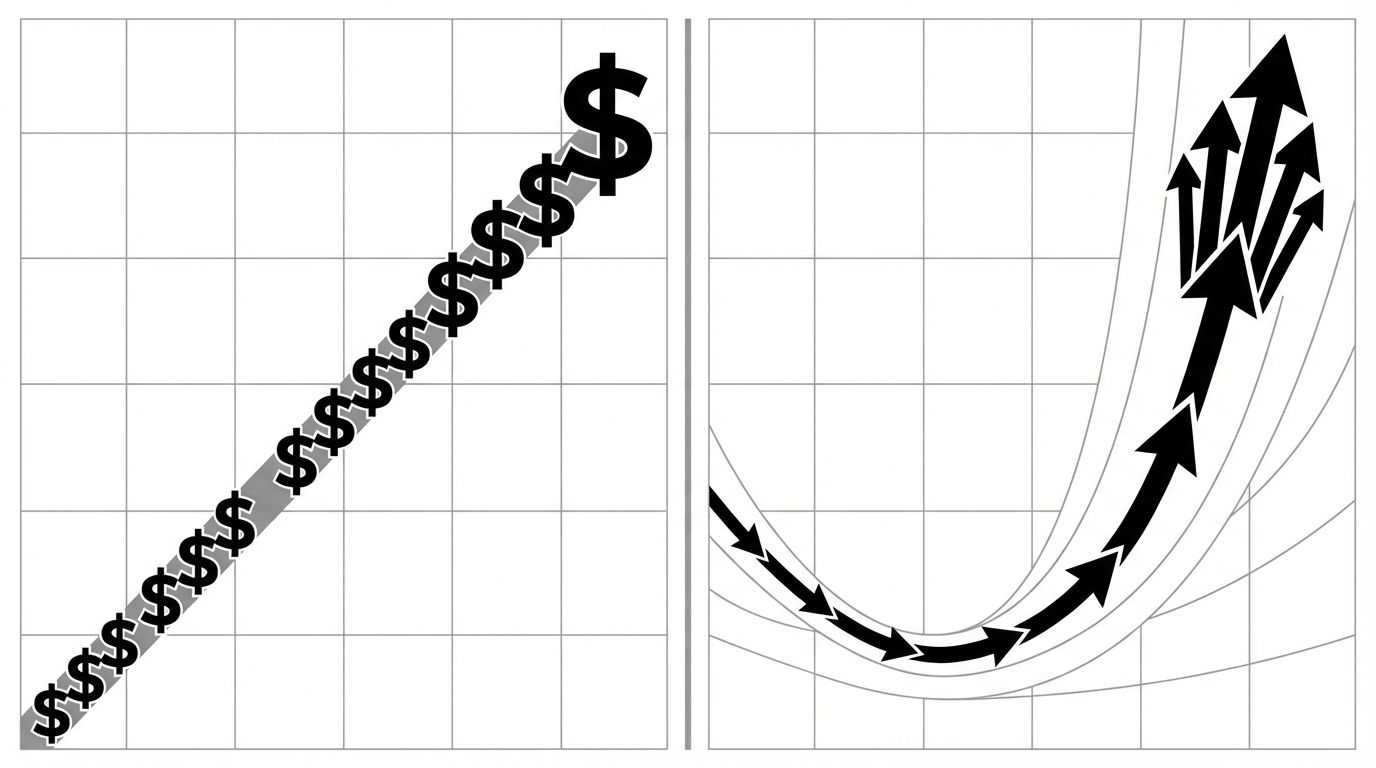
A 12-Month Cost Comparison
Consider a mid-market SaaS company spending $8,000 per month on paid search, generating roughly 500 clicks at a $16 CPC. Over 12 months, that is $96,000 in ad spend with zero residual value once the budget stops.
Now consider the same company investing $8,000 per month in GEO, content creation, technical optimization, structured data implementation, and ongoing monitoring. Here is how the numbers diverge:
- Months 1–3: GEO produces minimal AI mentions. Paid ads deliver steady clicks. Paid wins on immediate ROI.
- Months 4–6: AI models begin citing the brand in category-relevant queries. Organic AI traffic starts at low volume but grows without additional spend.
- Months 7–12: AI mentions compound. The brand appears in 15–30% of relevant AI queries. Equivalent paid traffic would cost $4,000–$7,000 per month.
By month 12, the GEO investment is generating traffic that would cost more to replicate through paid channels than the original GEO budget. And unlike paid ads, the returns persist even if you reduce spend.
Where Paid Ads Still Win
GEO is not a replacement for paid search in every scenario. Paid ads retain clear advantages in specific contexts:
- Time-sensitive campaigns. Product launches, event promotions, and seasonal sales need immediate reach. GEO cannot deliver overnight visibility.
- Precise audience targeting. Paid platforms let you target by demographics, device, location, and intent signals that AI platforms do not expose.
- Controlled messaging. Ad copy is yours to write. AI recommendations are generated by the model, you influence them, but you do not control the exact phrasing.
- A/B testing velocity. You can test dozens of ad variations in a week. GEO feedback loops operate on longer cycles.
The smartest budget allocation is not either/or. It is a shift in ratio. Brands running 80% paid and 20% organic should consider moving toward 50/50 or even 40/60 as AI discovery scales, then use the ROI calculation framework to validate the shift with real data.
How to Measure GEO Cost-Effectiveness
Paid ads come with built-in dashboards. GEO requires you to build your own measurement framework. Track these metrics to compare cost-effectiveness across channels:
- Cost per AI mention. Total GEO investment divided by the number of verified brand mentions across AI platforms.
- AI-attributed traffic value. Use AI referral tracking to measure visits from AI platforms, then compare against your average CPC to estimate equivalent paid cost.
- Mention-to-conversion rate. What percentage of AI-referred visitors convert? Early data suggests AI referrals convert at 1.5–2x the rate of paid search clicks because the AI recommendation carries implicit trust.
- Compounding rate. Measure month-over-month growth in AI mentions to project future value.
These metrics are available through AI visibility monitoring tools that track your brand across all major AI platforms in real time.
The Budget Reallocation Decision
The decision to shift budget from paid to GEO is not about faith in a new channel. It is about math. When your cost per AI mention drops below your CPC and your AI-referred traffic converts at a higher rate, the case makes itself.
Start with a free AI visibility audit to see where your brand currently stands in AI recommendations. That baseline tells you how much ground you need to cover, and whether the economics justify a reallocation.