How AI Models Crawl and Ingest Web Content
How do GPTBot, PerplexityBot, and Google-Extended crawl your site differently from Googlebot, and what happens when you treat them the same way?

The bots that feed content to AI models are not the same bots that feed Google's search index, and treating them interchangeably is the single biggest technical mistake brands make with GEO today. GPTBot, PerplexityBot, and Google-Extended each crawl your site differently, respect different directives, and extract content using different parsing logic. If you understand how each crawler works, you can structure your site so AI models ingest your content accurately and recommend your brand more often. If you don't, you might be invisible to AI platforms without realizing it.
The Three Crawlers That Matter
Each major AI platform sends its own crawler to index web content.
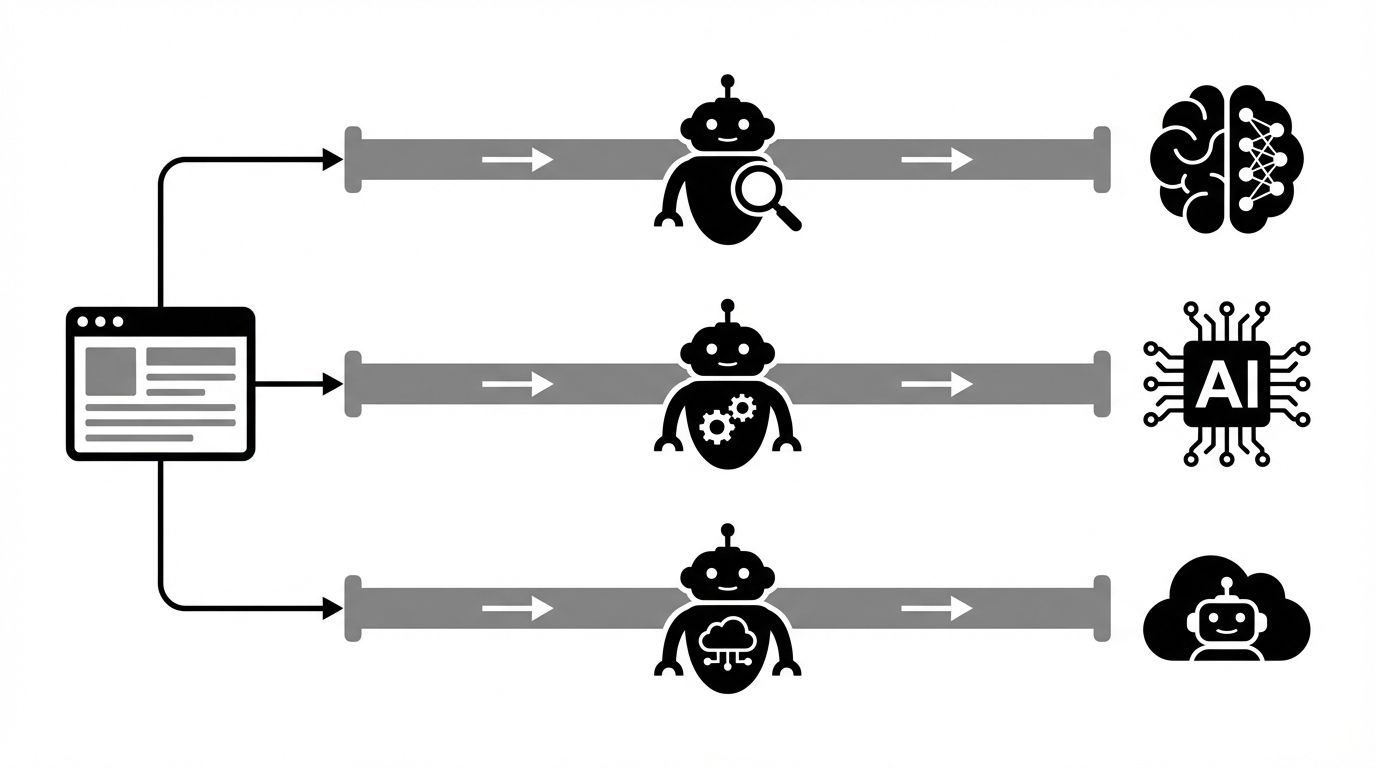
- GPTBot (OpenAI) crawls on behalf of ChatGPT. It respects robots.txt, identifies itself with the user-agent string `GPTBot`, and pulls full page content including headings, lists, and structured text. It does not execute JavaScript by default.
- PerplexityBot crawls for Perplexity's real-time answer engine. It has an aggressive crawl rate, respects robots.txt but re-crawls frequently to maintain freshness, and fetches content for real-time citation in answers.
- Google-Extended is Google's crawler for AI training and Gemini, separate from Googlebot (which handles Search). Blocking Google-Extended doesn't affect your Google Search rankings. It only prevents your content from training Google's AI models.
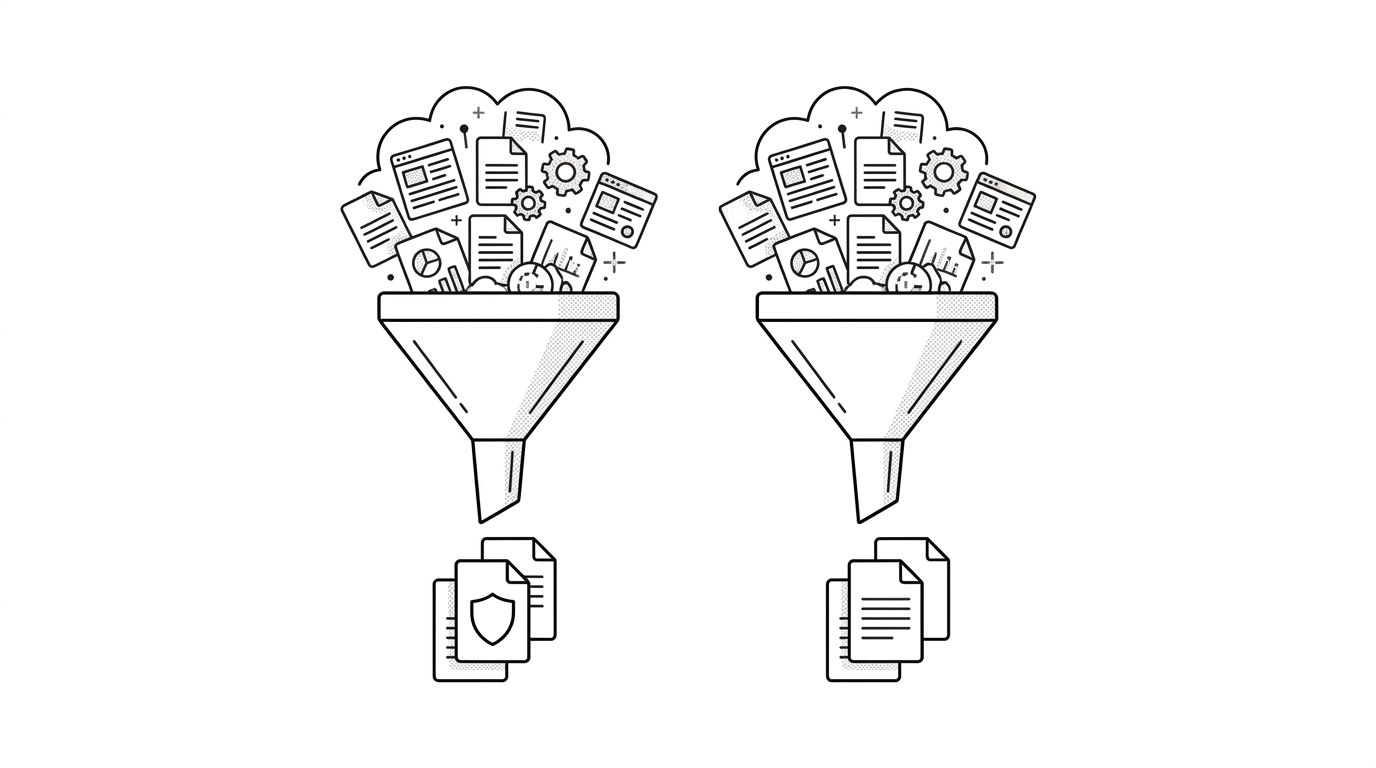
The diagram below shows how each AI crawler processes your site content through different pipelines.
How AI Crawlers Differ from Search Crawlers
Traditional search crawlers like Googlebot build a keyword-indexed map of your site. AI crawlers do something different: they extract semantic meaning to build knowledge representations.
What AI crawlers prioritize
- Structured headings. H1 through H3 tags create the semantic hierarchy AI models use to understand topic relationships.
- Question-answer pairs. FAQ sections and Q&A formatted content get extracted as discrete knowledge units.
- Factual claims with sources. Statements backed by citations, data points, or named sources get higher extraction confidence.
- Entity relationships. "Brand X is a [category] company that [does Y]" type statements help AI models build entity graphs.
- Concise definitions. Clear, direct definitions of terms get stored as high-confidence knowledge.
What AI crawlers struggle with
- JavaScript-rendered content. GPTBot and PerplexityBot don't reliably execute client-side JavaScript. If your content loads via React hydration, AI crawlers may see an empty page.
- Content behind authentication. Paywalls and gated content are invisible to AI crawlers.
- PDF and image-only content. Text embedded in images or PDFs isn't reliably extracted.
- Deeply nested navigation. Content requiring multiple clicks from the homepage gets crawled less frequently.
Robots.txt: The Gate You Might Not Know Is Closed
Your robots.txt file controls which AI crawlers can access your site. Many CMS platforms include default rules that block AI crawlers without the site owner knowing.
Check your robots.txt for `Disallow: /` directives targeting `GPTBot`, `PerplexityBot`, or `Google-Extended`. If any of these exist, the corresponding AI platform cannot crawl your site and your brand will not appear in their responses.
The recommended approach: allow AI crawlers access to your public marketing content. Block them only from admin pages, customer data, and internal tools.
Making Your Content AI-Ingestible
Beyond access control, structure your content so AI crawlers extract it accurately.
- Use server-side rendering. Ensure your pages deliver full HTML content without requiring JavaScript execution. This is the single most impactful technical change for AI visibility.
- Add structured data. Product, FAQ, Organization, and Article schemas give AI crawlers machine-readable context about your content. See our guide on structured data for AI visibility.
- Keep critical content above the fold. AI crawlers extract content in DOM order. Put your key messages, definitions, and claims early in the page structure.
- Use clean heading hierarchies. A logical H1 > H2 > H3 structure helps AI models segment and classify your content accurately.
- Maintain a flat site architecture. Pages within 2-3 clicks of the homepage get crawled more frequently and more completely.
What to Do Next
Start with your robots.txt. If you're blocking AI crawlers, fix that today. It takes five minutes and has an outsized impact on your AI visibility. Then audit your rendering method: if your site relies on client-side JavaScript, prioritize server-side rendering for your key content pages. Check your server logs for `GPTBot`, `PerplexityBot`, and `Google-Extended` user-agent strings to verify which AI platforms are actually crawling your site.
For a complete technical audit of how AI-ready your site is, check out our technical GEO guide for the full checklist.