Optimizing Your FAQ and Knowledge Base for AI Retrieval
Why is your FAQ page the asset AI platforms actually want to cite, and how do you structure it so ChatGPT or Perplexity pulls the answer from you?

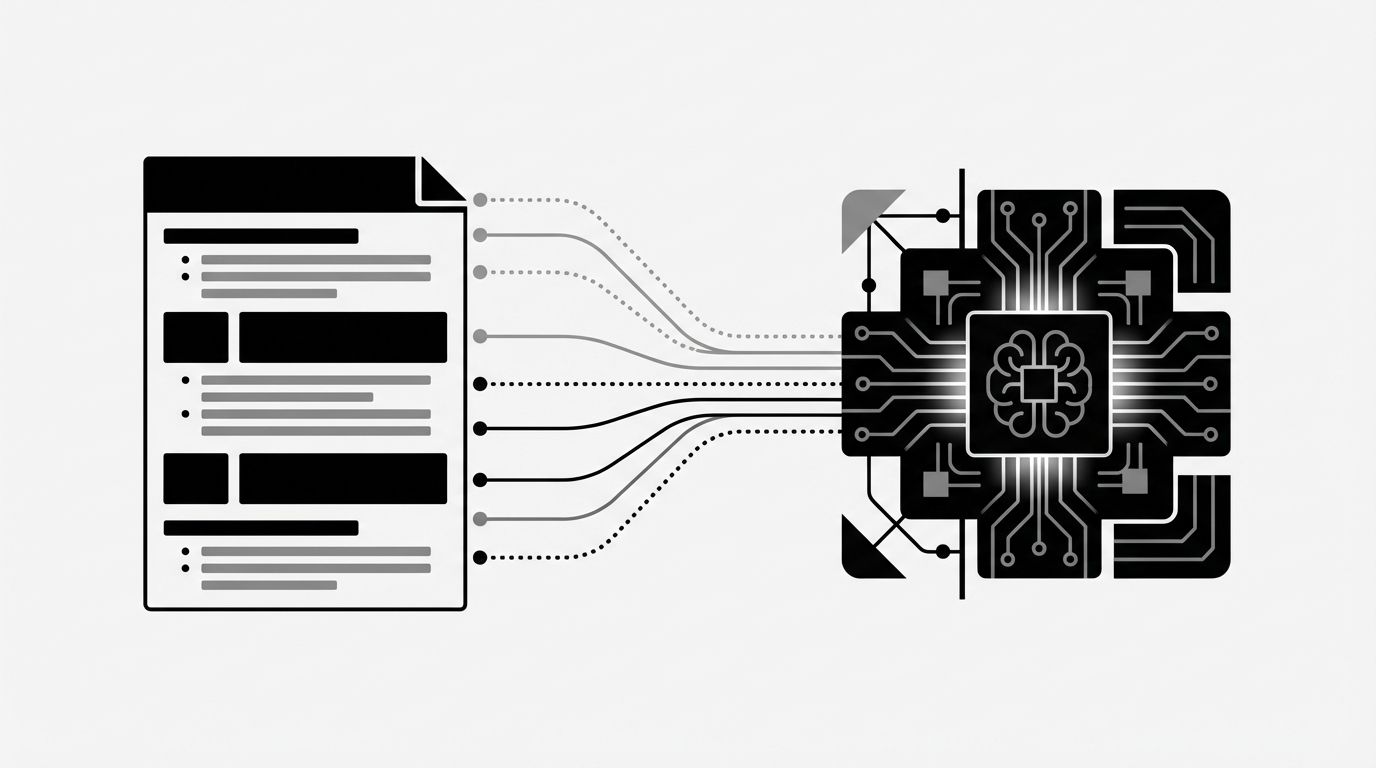
Your FAQ page is probably the most undervalued asset on your site for AI visibility, and the reason is structural. AI models retrieve answers by matching user queries to question-answer pairs in their training data and retrieval indexes. A well-structured FAQ gives AI models exactly what they need: a discrete question, a concise authoritative answer, and enough semantic context to match real user queries. Brands that restructure their FAQ around how retrieval-augmented generation (RAG) systems work see their content cited in AI responses at measurably higher rates than brands relying on long-form articles alone.
How AI Models Use FAQ Content
When a user asks ChatGPT or Perplexity a question, the system runs a retrieval step before generating a response. During retrieval, it searches indexed web content for passages that closely match the query. FAQ content has a structural advantage here because it's already organized as question-answer pairs, the exact format retrieval systems are optimized to match.
- Direct query matching. FAQ questions mirror how real users phrase their queries. "How long does shipping take?" maps directly to a user asking an AI the same question about your brand.
- Answer extraction. Concise, self-contained answers are easier for AI models to extract and cite than answers buried in paragraph three of a blog post.
- Schema amplification. FAQ schema markup gives AI crawlers a machine-readable signal that says "this is a question, and here is the answer," removing ambiguity from the extraction process.
The RAG-Friendly FAQ Structure
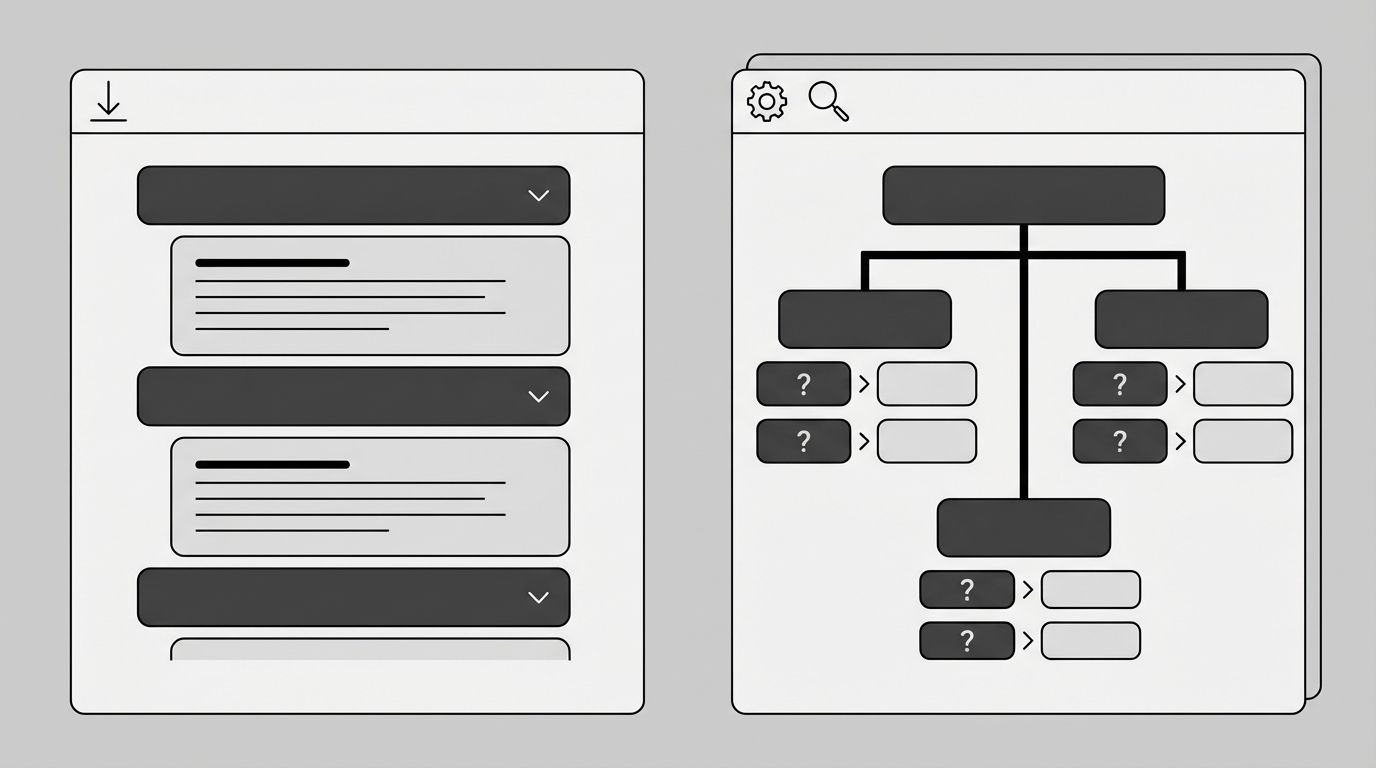
Most FAQ pages are written for human scanability: accordion dropdowns, vague category groupings, answers that say "contact us for details." None of this works for AI retrieval. Here's how to restructure for both humans and AI.
The diagram below illustrates the difference between a traditional FAQ structure and one optimized for AI retrieval.
Write Questions as Real Queries
Replace internal jargon with the actual language your customers use. AI models match queries semantically, so your FAQ questions need to sound like things people type into ChatGPT.
- Before: "What is our returns policy?" / After: "How do I return a product and get a refund?"
- Before: "SLA commitments" / After: "What uptime guarantee does [Brand] offer?"
- Before: "Pricing tiers" / After: "How much does [Brand] cost per month?"
Make Every Answer Self-Contained
Each answer must make sense on its own. AI models extract individual Q&A pairs. If your answer says "see above," the AI cites an incomplete answer.
- Include the key fact or number in the first sentence
- Keep answers between 2-4 sentences, useful enough to be cited verbatim
- End with a specific detail (a number, a timeframe, a feature) rather than a vague statement
Group by Semantic Topic, Not Department
Organize FAQ sections around user topics, not your internal org chart. AI retrieval performs better when related Q&A pairs are grouped together.
- Group by user journey stage: "Getting Started," "Using the Product," "Billing and Plans"
- Order questions from most common to most specific within each group
- Use H2 headings for groups and H3 for individual questions
Knowledge Base Optimization for AI
Knowledge bases follow the same principles as FAQs but at larger scale:
- Canonical definitions. Every key term should have one authoritative definition page. AI models prefer citing a single definitive source over piecing together fragments.
- Interlinked topic clusters. Link related articles to each other. AI models use link proximity as a topical authority signal. See our guide on content strategy for AI engines.
- Public accessibility. If your knowledge base requires login, AI crawlers can't index it. Keep core product documentation publicly accessible.
Implementing FAQ Schema for AI
Add FAQPage schema markup to every page that contains Q&A content. This is the single most impactful technical step for FAQ-based AI visibility. Implement it as JSON-LD in your page head, with each question-answer pair wrapped in `Question` and `Answer` schema types. Every Q&A pair on the page should be included, not just the first few. For implementation details, see our structured data guide.
What to Do Next
Audit your existing FAQ page this week. Pull up your top 10 customer support questions and check whether your FAQ answers them in clear, self-contained language an AI model could cite directly. Then add FAQ schema markup. It takes an afternoon and multiplies your FAQ's AI retrieval potential.
For a deeper look at structuring content for AI extraction, read our guide on content strategy for AI engines.