AI Visibility Reporting for Executives: What C-Suite Cares About
When your CMO or CEO asks about AI visibility, which numbers actually hold their attention, and which ones get cut from the slide?


Executives don't want your AI mention rate. They want to know if AI visibility is making or losing the company money. The reports that land with C-suite audiences are the ones that translate mention rate, citation frequency, and sentiment into market share, pipeline, and brand risk. If your AI visibility report looks like a marketing dashboard, it won't survive past quarterly review. If it looks like a CFO's slide deck with AI sources feeding the numbers, it gets funded.
Why Most AI Visibility Reports Don't Stick
The typical deck for an exec audience fails the same way. Too many metrics, no comparison to competition, no connection to revenue. Executives aren't hostile to AI visibility. They're skeptical that marketing teams can connect it to the P&L.
The fix is structural. Build the report around three executive-level questions and cut everything that doesn't answer one of them.
- Are we winning, losing, or flat versus named competitors?
- What is the revenue or pipeline at stake?
- Where is the biggest risk to brand reputation or compliance?
Every number on your deck should map to one of those questions. If it doesn't, move it to an appendix.
The Four Metrics Executives Actually Want
Boil your reporting down to four numbers. That's usually enough.
- Share of voice in AI responses. For every category-level query that matters, what percent of AI responses mention your brand versus the top three competitors? This is the AI equivalent of market share.
- Pipeline influenced by AI referrals. Track referral traffic from AI platforms and attribute to pipeline where possible. Even rough attribution is more persuasive than no attribution. See our AI visibility to pipeline attribution guide for models that work.
- Brand sentiment score. What percent of AI mentions of your brand are positive, neutral, or negative? Trend this monthly. A slow decline in sentiment is an early warning for reputation issues.
- Risk events count. Misrepresentations, hallucinations, or compliance-relevant statements from AI about your brand. One per quarter is normal. A sudden cluster signals an emerging problem.
Four metrics on one slide. Trends on a second slide. That's your executive report. If you're starting from scratch, our AI visibility dashboard template lays out exactly which tiles map to which question.
How to Structure the Slide
Executives scan, not read. Your slide structure needs to communicate direction in the first three seconds.
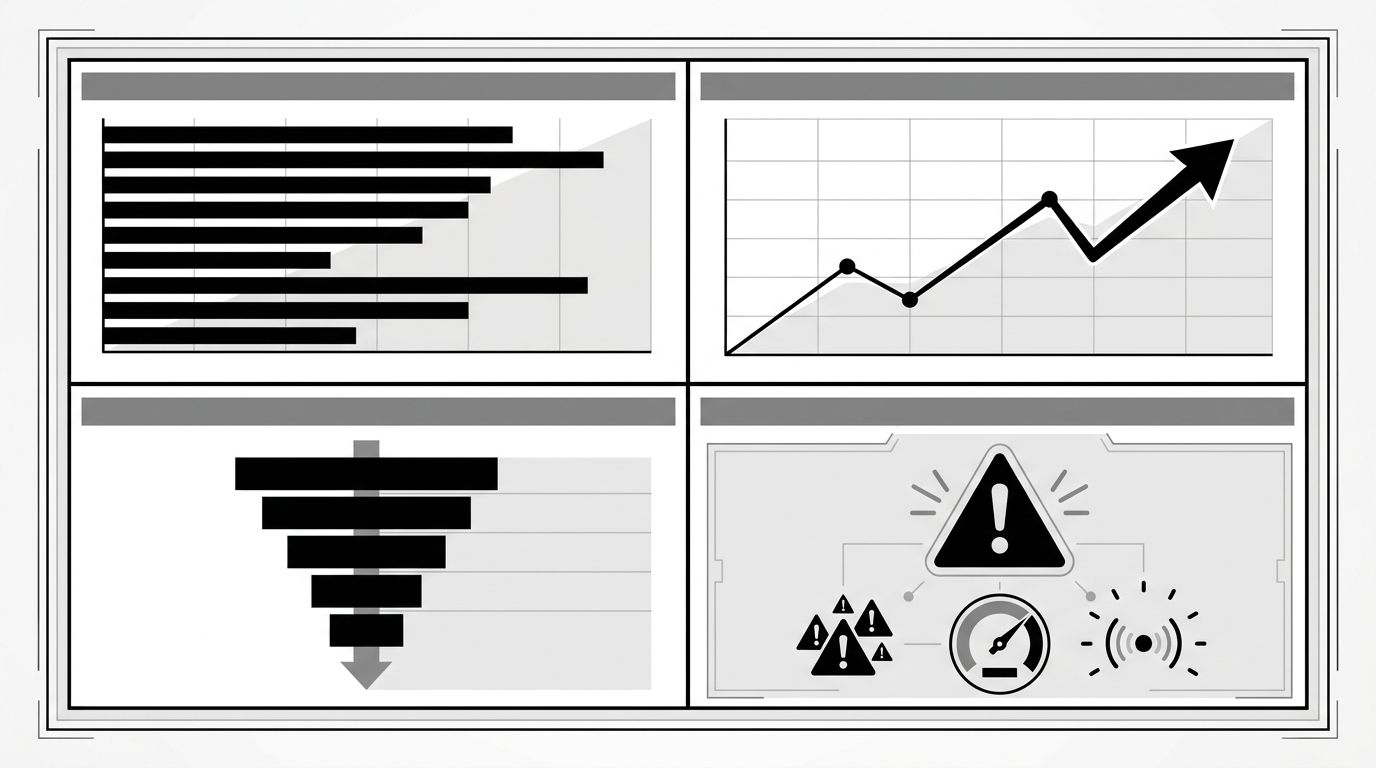
The layout above works because it leads with the comparison (you versus named competitors) and ends with risk. That matches how most exec conversations flow. Start with "where do we stand," move to "what is this worth," end with "what's the downside if we don't act."
Translate the Numbers Into Decisions
Every exec-level metric needs a decision attached. Raw numbers without recommended actions are why most reports die in the exec's inbox.
- Share of voice down versus competitor X? Recommend which two or three queries to prioritize for a content push, and what the expected lift is.
- Sentiment score declining? Point to the top three negative claims AI is making and recommend the specific pages that need updating or the PR work required.
- Pipeline attribution growing? Recommend moving budget from lower-performing channels. Be specific about the dollar amount.
- Risk events up? Name the risk, the affected audience, and the owner who will fix it.
Our GEO ROI guide covers the math for translating visibility into dollar terms. For enterprise rollouts specifically, our enterprise solution page outlines how large teams structure this work across regions and business units. Whether you stand up the reporting yourself or buy a platform comes down to the build vs buy decision for an AI visibility dashboard, which is usually a question of monitoring volume and cross-platform coverage.
How Often to Report
Monthly for the full dashboard. Quarterly for the executive narrative review. Weekly only for risk events that require intervention. The biggest mistake I see on enterprise accounts is over-reporting. Exec attention is finite. Save it for the decisions that actually require their input.
If you want a concrete template you can hand to your board, the insurance case study shows what the reporting looked like for a regulated-industry rollout. The structure translates cleanly to SaaS and financial services.