From AI Visibility to Pipeline: Attribution Models That Work
Which attribution model actually connects AI visibility to pipeline, and why do first-touch and last-touch understate the channel by so much?

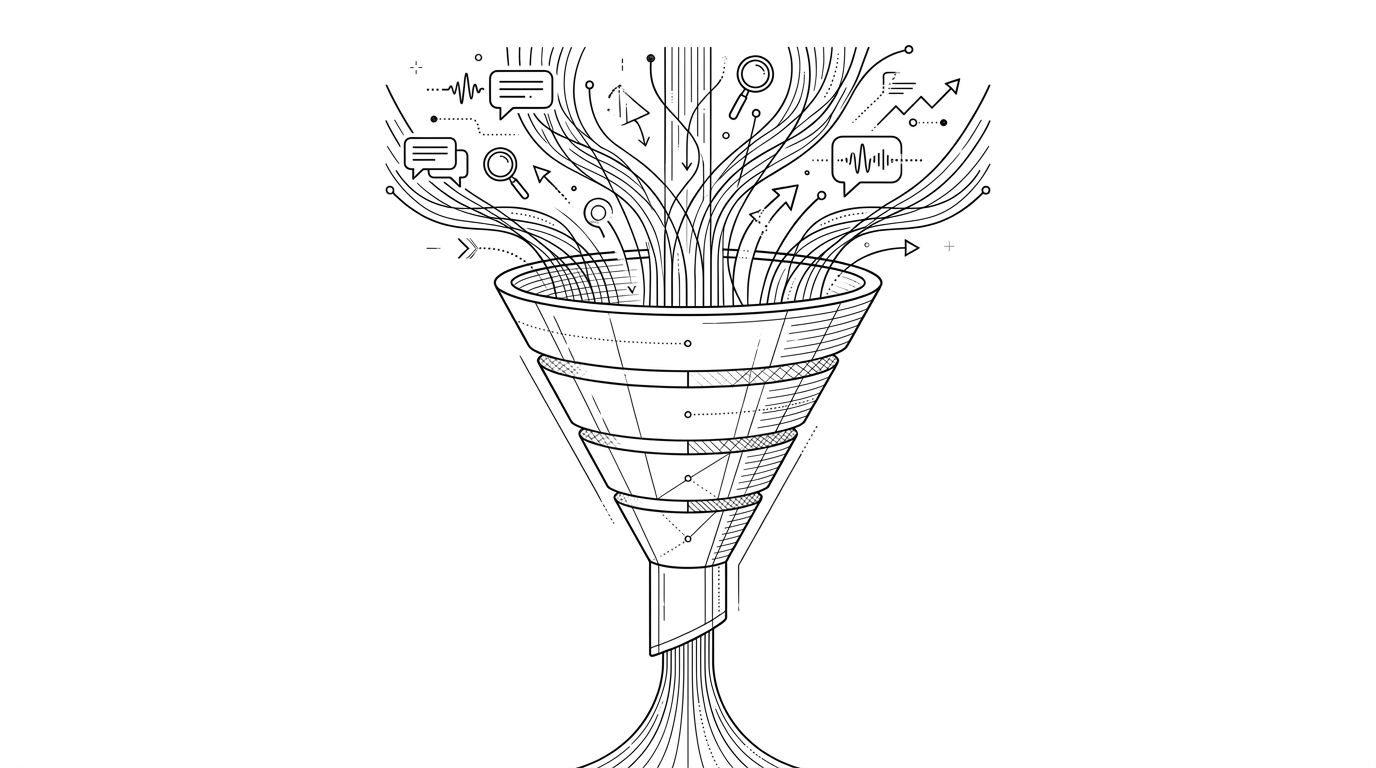
Most GEO programs stall at the pipeline question because teams try to attribute AI visibility the way they attribute paid search, and the numbers never add up. AI discovery is almost always a dark-funnel assist: a user reads an AI answer that mentions your brand, never clicks a trackable link, then shows up weeks later via direct traffic, branded search, or a sales outreach reply. First-touch attribution misses it. Last-touch credits organic or direct. The model that holds up is a mention-rate-to-pipeline regression, run quarterly, that treats AI visibility as a leading indicator of branded demand rather than a clickable channel. If your CRM only counts clicks, you are undercounting AI by 60 to 80%.
Why Click-Based Attribution Fails
Three structural problems break the standard model.
AI answers rarely produce a click. Perplexity and Google AI Overviews show citations, but most ChatGPT and Copilot responses summarize without linking. Users remember the brand, not a URL.
The referral header lies. When a user does click through, the referrer often reports as direct or a generic openai.com domain. Your analytics treats it as organic or direct type-in.
Sales cycles compress the signal. A SaaS buyer who hears your name in January may not convert until April, by which point the CRM credits the SDR's outreach or a March webinar.
The net effect: AI looks like a rounding error in the dashboard while your mention rate is driving 15 to 30% of new pipeline. Our piece on tracking AI referral traffic covers click-level tracking, but clicks alone never tell the full story.
The Model That Actually Works: Mention Rate to Branded Demand
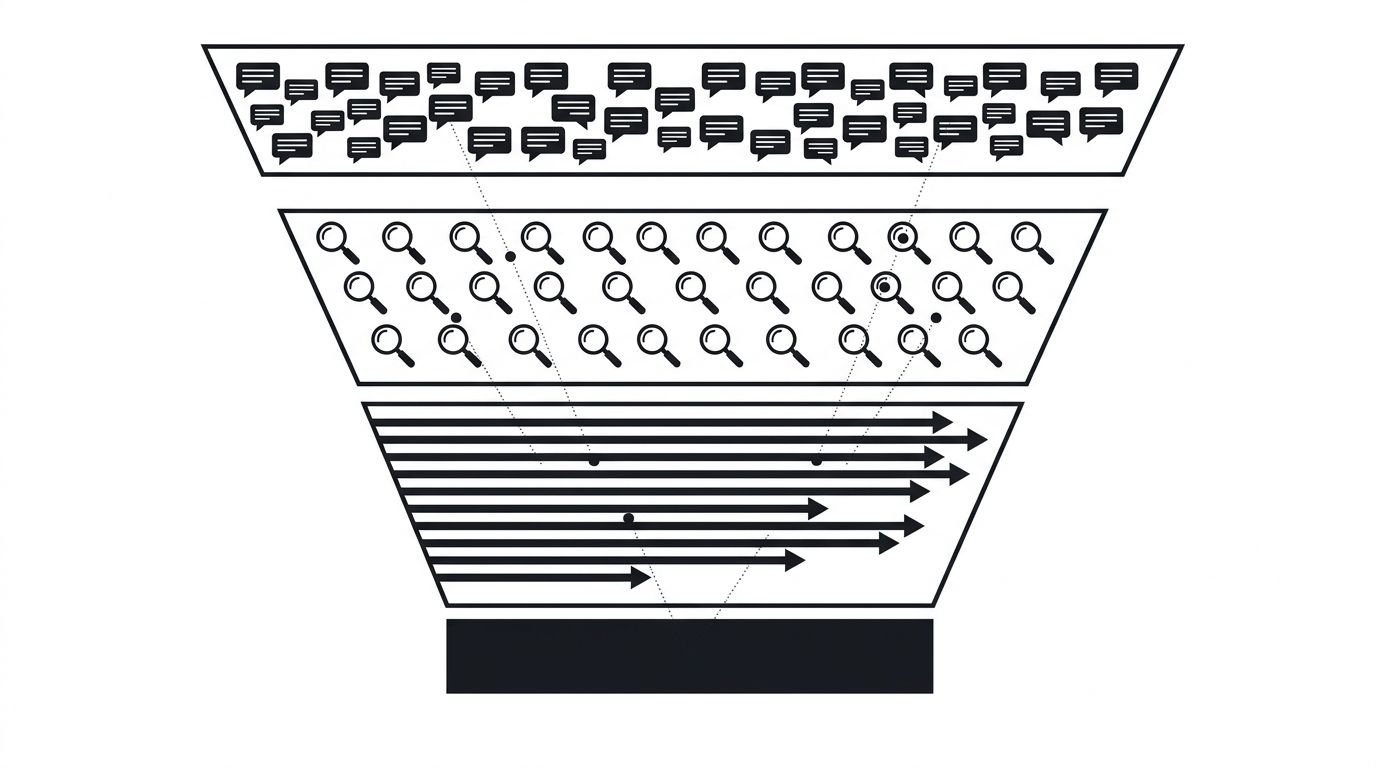
The diagram above shows the relationship that holds up under statistical scrutiny. You do not attribute a single deal to AI. You measure whether changes in mention rate correlate with changes in branded search, direct traffic, and pipeline created, with a 2 to 8 week lag.
The setup takes four inputs, measured weekly:
- Mention rate index per target query across the four platforms
- Branded search volume from Google Search Console
- Direct traffic with no UTM parameters
- Pipeline created by segment (not revenue closed, which has a longer lag)
Run a lagged regression. For most B2B SaaS brands, a 10-point mention rate increase correlates with a 6 to 12% lift in branded search 4 to 6 weeks later, and a 3 to 8% lift in pipeline 8 to 12 weeks later. Those coefficients are your attribution model. They hold up under CFO scrutiny because they come from your own data.
Three Attribution Models Ranked by Defensibility
Teams use different flavors depending on their maturity. Here is how they stack up.
- Self-reported attribution. Ask "how did you hear about us?" on demo forms. Cheap and directional, prone to recency bias, but reliable for AI because users remember AI conversations vividly. Expect 8 to 15% of respondents to name an AI platform once mention rate passes 25%.
- Incrementality testing. Raise GEO investment in one region or product line, hold another flat, measure the delta. The gold standard, but needs 90 days minimum.
- Regression modeling. What the section above described. Works once you have 12+ weeks of data.
The strongest CFO pitch uses all three: self-reported for human signal, regression for the numbers, incrementality for confirmation. Our calculate GEO ROI guide has the formulas.
What to Put in Your CRM Right Now
You will not solve attribution in one sprint, but you can instrument the basics this week.
- Add "Heard us from AI" as a lead source with sub-options for ChatGPT, Perplexity, Gemini, Copilot, and Google AI Overviews
- Capture an open-text discovery field on inbound forms and have SDRs fill it during qualification
- Tag branded search so you can slice volume by week
- Track direct traffic by landing page since AI referrals tend to hit specific pages, not your homepage
Within a quarter, patterns emerge. Deals with AI-sourced discovery close 15 to 25% faster in SaaS.
The Metric Executives Actually Need
CFOs do not care about mention rate. They care about AI-influenced pipeline: the rolling 90-day pipeline from accounts with self-reported discovery, regression-implied visibility, or at least one known AI referral click. One number.
A workable template:
- AI-influenced pipeline (current quarter)
- AI-influenced pipeline (prior quarter), with delta
- Mention rate index, quarter over quarter
- Cost per AI-influenced opportunity vs organic CAC
If mention rate is up but pipeline is flat, the issue is content-to-conversion, not visibility. Our GEO for SaaS guide covers the downstream fixes.
Where to Start
Run a baseline regression first. Pull 12 weeks of mention rate (even if spot-checked manually), branded search volume, and pipeline data. Look for the 2-to-8-week lag relationship. That chart is the foundation of every attribution conversation that follows.
For a deeper framework, explore our GEO optimization service.