
The Best AI SEO Agency in 2026: How to Choose
June 5, 2026
How do you tell an AI SEO agency that can move your citation share in AI answers from one that just renamed its SEO retainer?
Read article →
Digital Marketing Analyst & Search Technology Writer
David Mercer approaches marketing the way a researcher approaches a lab. He likes hypotheses, controlled tests, and he doesn't take conventional wisdom at face value. He has a background in statistics and a career that's covered data analytics, performance marketing, and search strategy, and he brings a numbers-first approach to an industry that often runs on gut feeling.
David spent his first five years as a data analyst at a large ecommerce retailer in Dallas. He built attribution models and ran experiments on everything from email subject lines to landing page layouts. That job showed him how organic search, paid media, and content marketing actually interact at scale, and how often the popular explanations for what drives growth are just wrong.
He moved into SEO and content strategy after noticing that organic search was the most misunderstood and underfunded channel at most companies. He worked at a performance marketing agency first, then went independent. He's helped companies in SaaS, insurance, retail, ecommerce, manufacturing, and local services build search programs based on actual data instead of guesswork. He's known for the kind of detailed analysis of search trends, competitor activity, and content performance that turns vague goals into specific plans.
David writes a lot about AI and search technology. He's interested in how large language models are changing what it costs to produce content, how generative search is changing which types of content get seen, and what the numbers actually show when you compare AI-written content to human-written content. He runs his own experiments, publishes the methods, and lets the results do the talking.
His GEO work is focused on measurement. He helps businesses figure out not just how to show up in AI-driven search results, but how to actually track whether it's working. He's built approaches for monitoring brand visibility in AI overviews and conversational search that a number of agencies and in-house marketing teams have picked up.
David studied applied statistics in college and has always been more comfortable with a spreadsheet than a slide deck. He lives in Austin, Texas, plays chess at a local club most weeks, and roasts his own coffee beans at home, a hobby his wife tolerates mostly because she gets to drink the results. He reads a lot across economics, behavioral science, and technology, and that mix of interests comes through in his writing. He covers search analytics, AI in marketing, GEO measurement, content performance, and how to make marketing decisions based on data instead of assumptions.
June 5, 2026
How do you tell an AI SEO agency that can move your citation share in AI answers from one that just renamed its SEO retainer?
Read article →
May 10, 2026
Which four panels does an AI visibility dashboard actually need before the rest becomes noise that no executive ever opens twice?
Read article →
May 9, 2026
What does an internal linking audit for AI visibility actually check, and can you really run a useful one in 30 minutes without buying a tool?
Read article →
April 21, 2026
Are AI platforms actually replacing search engines, or just quietly reshaping which of your queries they answer?
Read article →
April 20, 2026
Which attribution model actually connects AI visibility to pipeline, and why do first-touch and last-touch understate the channel by so much?
Read article →
April 13, 2026
What does a real AI visibility dashboard look like, and how do you tie ChatGPT, Perplexity, and Gemini mentions to pipeline your exec team can see?
Read article →
April 12, 2026
Manual spot-checks can't tell you if your AI visibility is rising or falling, so how do you track brand mentions across every AI platform consistently?
Read article →
April 9, 2026
Do backlinks still matter for AI visibility, or is it the citation context around them that decides whether ChatGPT or Perplexity mentions your brand?
Read article →
April 4, 2026
Why does your analytics miss traffic from ChatGPT, Perplexity, and Gemini, and how do you build a measurement layer that catches every AI-driven visit?
Read article →
April 1, 2026
How do you monitor what ChatGPT, Perplexity, and Gemini are saying about your brand, and spot sentiment shifts before they cost you customers?
Read article →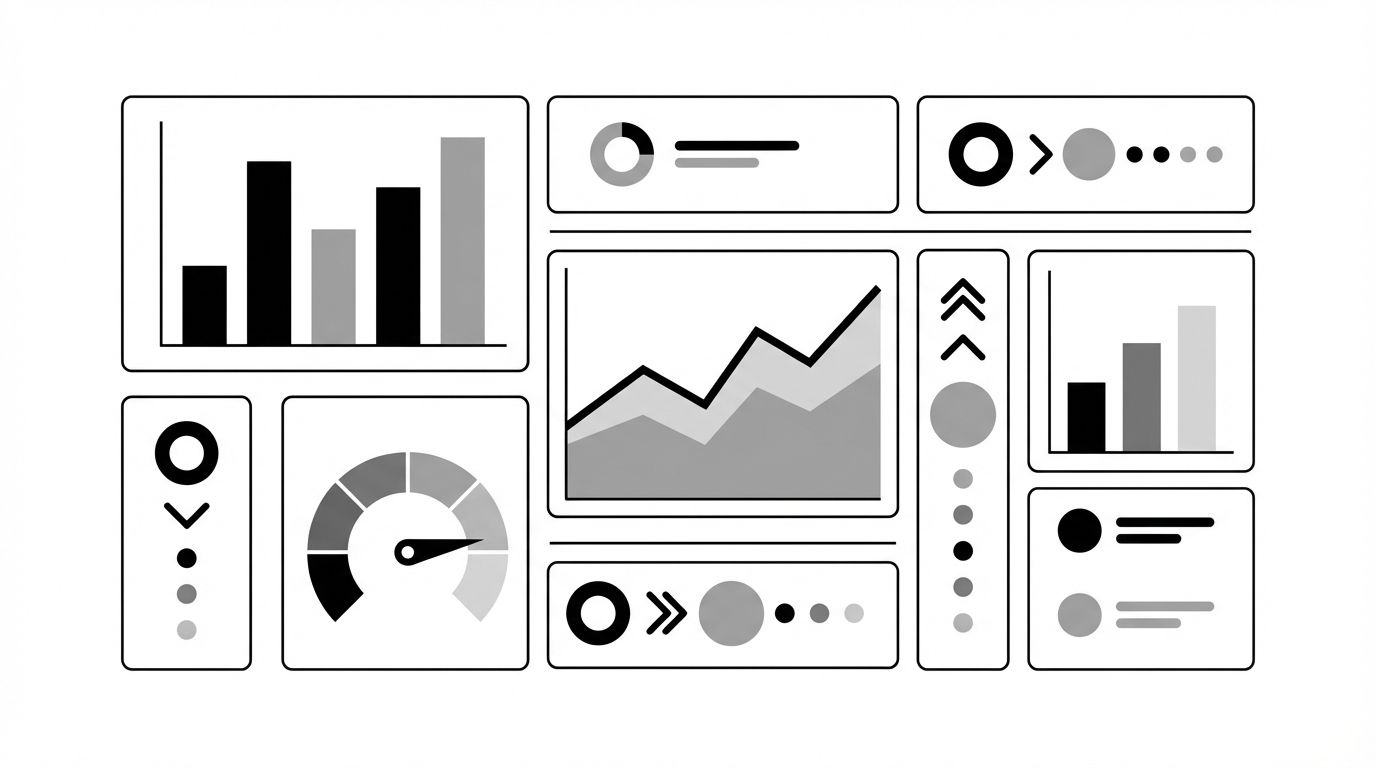
March 25, 2026
What should you actually measure to prove your brand is showing up in ChatGPT, Perplexity, or Gemini answers, and which AI metrics matter most?
Read article →
March 25, 2026
What decides whether ChatGPT, Perplexity, Gemini, or Copilot mentions your brand, and how can you influence the signals each AI model looks at?
Read article →