Sentiment Analysis in AI Responses, Is Your Brand Positioned Positively?
Being mentioned by AI isn't enough if ChatGPT calls you unreliable, so how do you measure and improve how AI platforms frame your brand?


Most brands tracking their AI visibility focus on a binary question: are we mentioned or not? That misses half the picture. A brand that appears in every ChatGPT response but gets characterized as "affordable but unreliable" or "popular but outdated" is worse off than a brand that appears less frequently with consistently positive framing. AI sentiment -- the qualitative positioning AI models assign to your brand -- compounds over time, shaping how millions of users perceive you before they ever visit your site. Tracking mentions without tracking sentiment is like counting impressions without reading the ad copy.
What AI Sentiment Actually Measures
AI sentiment analysis in the GEO context is not traditional social media sentiment analysis. It is specifically about how AI models frame and characterize your brand when they mention it in responses.
There are three dimensions to track:
- Valence: Is the overall characterization positive, negative, or neutral? Does the AI recommend your brand or merely acknowledge it exists?
- Positioning: Where does your brand sit relative to competitors in the same response? Are you the first recommendation, a notable alternative, or a cautionary mention?
- Attribute association: What qualities does the AI attach to your brand? Reliability, innovation, affordability, complexity, risk?
A brand might have high mention rates but negative valence -- it appears often but always with caveats. Another might appear less frequently but with strong positive positioning every time.
Where AI Sentiment Comes From
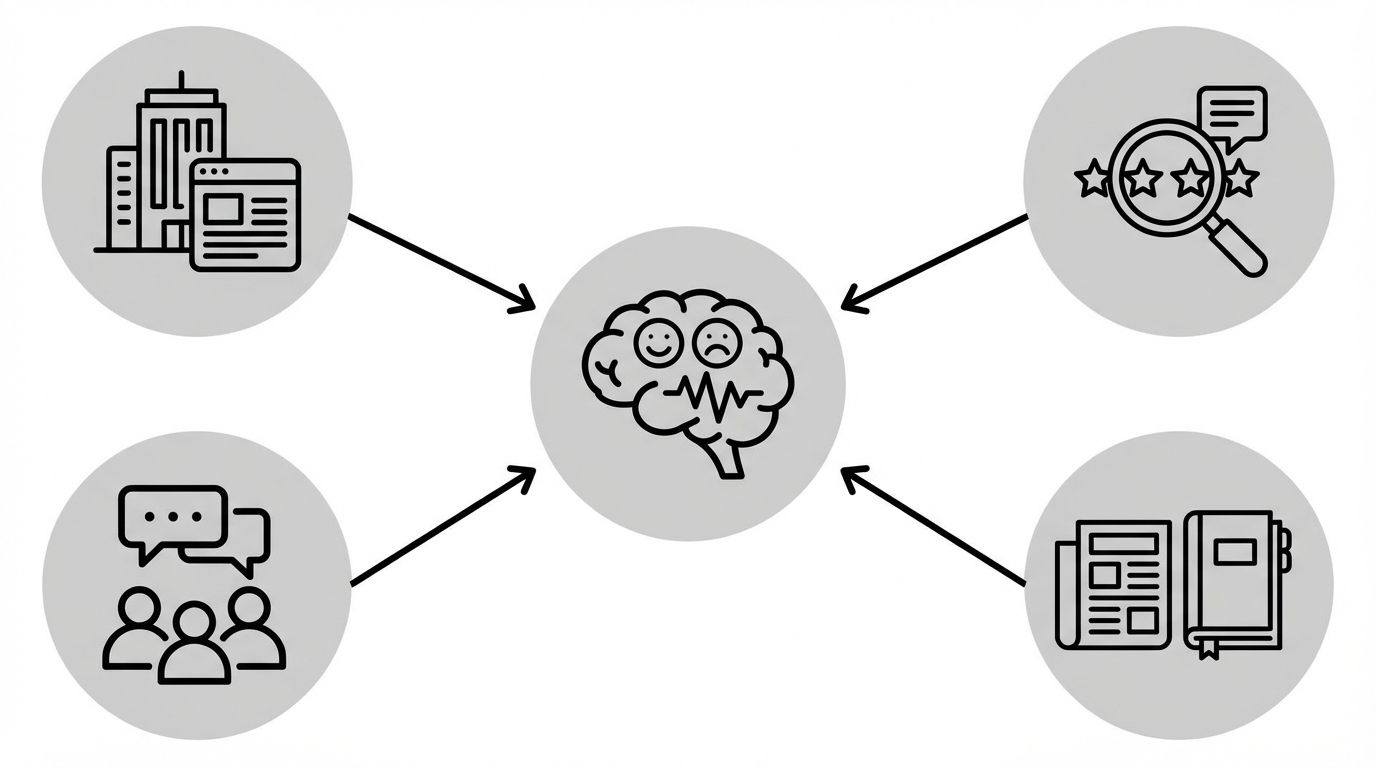
AI models do not decide on their own that your brand is "innovative" or "outdated." They synthesize sentiment from the sources they consume. Understanding these sources is the first step to influencing the outcome.
The diagram below maps the four primary sources that shape how AI models characterize your brand.
Owned Content
The language you use on your own site, in press releases, and in documentation shapes the default framing. If your product pages lead with "budget-friendly" and "basic," AI models will associate those attributes with your brand. If they lead with "enterprise-grade" and "precision-built," the association shifts accordingly.
Review Sites and Third-Party Mentions
AI models heavily weight review aggregators like G2, Capterra, and Trustpilot. A pattern of reviews mentioning "difficult onboarding" or "excellent support" gets absorbed into the model's characterization. Third-party brand reputation mentions compound this signal.
Industry Publications and Analyst Coverage
Coverage in recognized industry publications carries disproportionate weight. A single analyst report calling your product "the leader in X category" can influence AI responses more than dozens of minor blog mentions.
How to Audit Your Brand's AI Sentiment
Run a structured sentiment audit across all four major platforms:
- Select 15 to 20 category queries where your brand is likely to appear
- Record the full response text for each query on ChatGPT, Perplexity, Gemini, and Copilot
- Code each mention for valence (positive, neutral, negative), positioning (first, middle, last), and attribute associations
- Compare across platforms -- sentiment often varies significantly between them
- Benchmark against competitors by running the same queries and coding their mentions identically
This gives you a baseline sentiment profile. Repeat monthly to track changes, and pair it with a routine for catching outright misinformation about your brand in AI so factual errors do not get coded as merely "negative sentiment" and missed.
Shifting Negative or Neutral Sentiment
If your audit reveals problematic sentiment patterns, you can influence them -- but it takes sustained effort, not a quick fix.
- Reframe your owned content: Audit your site for language that inadvertently reinforces negative associations. Replace passive, defensive language with specific capability statements backed by data.
- Increase positive third-party coverage: Invest in analyst briefings, case studies, and guest contributions in industry publications that frame your brand the way you want AI models to see it.
- Address review site patterns: If negative reviews cluster around a specific issue, fix the underlying product problem. Then encourage satisfied customers to share their experience. AI models weight recent reviews more heavily.
- Build topical authority content: Publish deep, expert content that positions your brand as the knowledgeable leader in your space. AI models associate authority with positive sentiment.
What to Do Next
Run the five-step sentiment audit described above for your brand. If you discover sentiment gaps -- particularly if competitors are framed more positively for the same queries -- prioritize the remediation steps that match your weakest source category.
Enterprise brands managing reputation across multiple product lines and regions should review the enterprise case study for a structured approach to sentiment monitoring at scale.