Build vs Buy — When to Roll Your Own AI Visibility Dashboard
Should you build your own AI visibility dashboard or buy an off-the-shelf platform, and what's the real cost hiding underneath either choice?

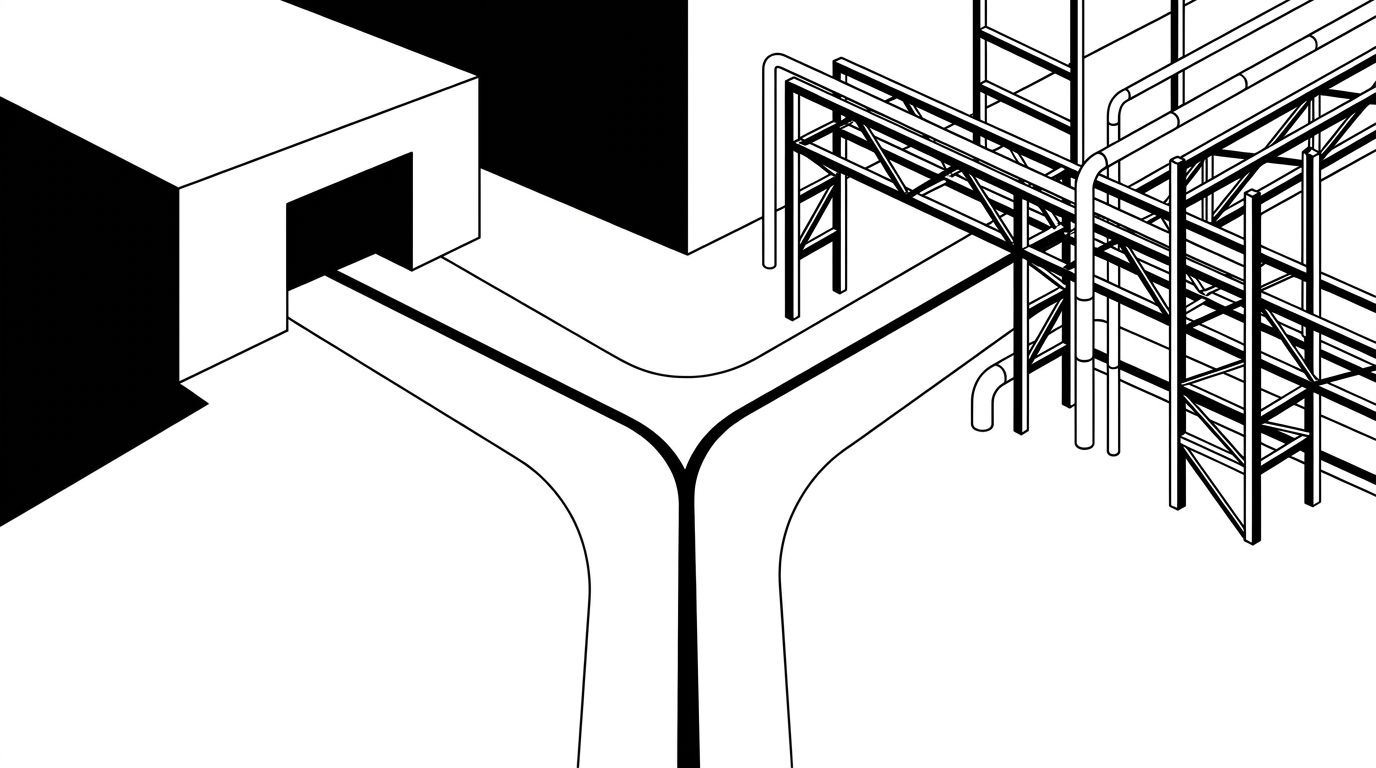
Build only if you already have a data team running marketing dashboards and at least three product lines to track. Below that bar, the cost is not in the visualization. It is in the data plumbing: citation scraping across five AI platforms, prompt sampling that catches drift, and entity extraction that knows whether "Geology" in a response means your company or a rock. That plumbing is what off-the-shelf platforms exist to provide, and rebuilding it is almost always a six-month detour from work that moves pipeline. The "we'll just build it" instinct sounds like control. It usually buys delay.
The Hidden Cost Is the Plumbing, Not the Dashboard
Most build conversations start with a wireframe. Four panels, some trend lines, a competitor overlay. A frontend engineer looks at it and says two weeks. They are not wrong about the wireframe. They are wrong about the inputs.
Behind every panel is a pipeline that has to:
- Run prompts daily across ChatGPT, Perplexity, Gemini, Copilot, and Google AI Overviews, using API access where available and headless browser sampling where it isn't
- Parse responses to extract brand mentions and citation URLs, then disambiguate similar-named entities so a competitor's name does not register as yours
- Store time-series data with versioning so you can replay how a response shifted after a model update
- Reconcile platforms with different rate limits, citation formats, and definitions of "answer"
The dashboard is the visible tip. The plumbing is everything underneath.
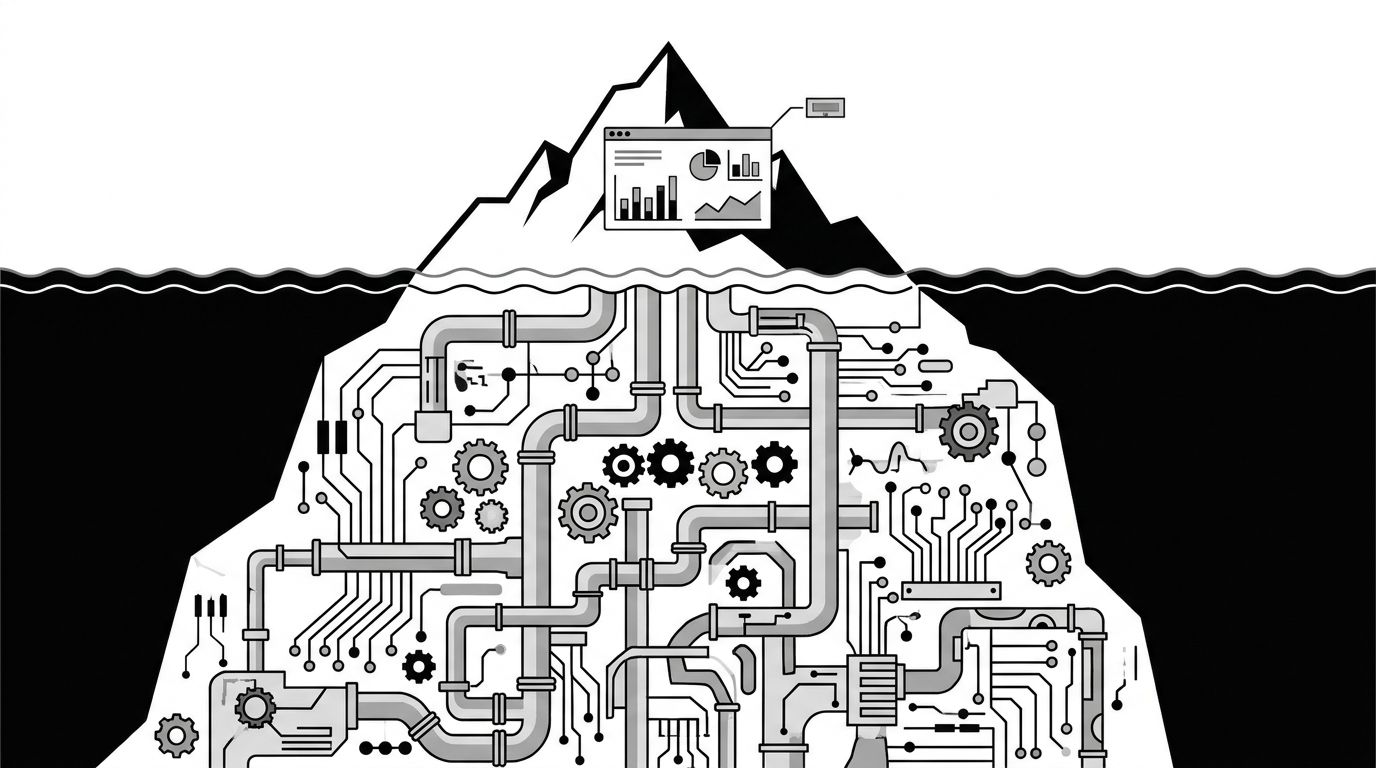
For in-house teams that started a build, the dashboard was about 15% of the effort. The plumbing was 70%. The remaining 15% was the part nobody planned for: maintenance when an AI platform changed its response format, which happens roughly every quarter. The team that built it becomes the team maintaining it forever.
When Build Makes Sense
There is a real case for building. All three conditions must be true.
- You already run a data team that ships marketing dashboards. Not "we have a BI tool." A team that owns ETL, schemas, and data quality.
- You have at least three product lines or business units to track. A single-product company gets thinner ROI from a custom build because the prompt set, competitor list, and metric model are narrow enough that a platform configuration covers them.
- You have a data requirement no platform can serve. The most common version is joining AI mentions to closed-won deals at the account-record level inside a proprietary CRM. If your reason is "we want our own colors," that is not it.
If two of three are true, you are looking at a hybrid. If only one is true, buy.
The honest test: if you cannot name the senior data engineer who will own this on day 90, you cannot build it. The project will be reassigned, and the data will rot in a dashboard nobody trusts.
When Buy Makes Sense (and What to Evaluate)
For most teams the question shifts to what to evaluate. Five things matter:
- Platform coverage of ChatGPT, Perplexity, Gemini, Copilot, and Google AI Overviews. Three of five leaves the same gap you started with.
- Sampling cadence. Daily is the working minimum. Ask how often each platform is queried, not the dashboard refresh rate.
- Entity disambiguation. Test the platform with your brand against a similarly named competitor. If it cannot tell you apart in week one, it never will.
- Export and integration. CSV is the floor; API access is better. This is what lets you join AI visibility to pipeline data later.
- Pricing model. Per-prompt pricing scales painfully. Flat or tiered pricing is more predictable.
If you are weighing this against zero-cost options first, the free AI visibility tools guide covers what manual methods can show before you spend a dollar.
The Hybrid Path: Buy the Plumbing, Build What's Actually Yours
The most common outcome in mature teams is hybrid. Buy the data layer. Build what no vendor can sell you.
What gets built in-house when teams do this well:
- A view that joins AI mention data to closed-won deals from your CRM, attributing pipeline by account and deal stage
- A weekly executive narrative generated from the platform's API, written in your company's voice
- An alerting layer wired into your incident tooling, so a competitor surge triggers a Slack channel rather than an email digest
This works because the platform handles what is the same for every customer (the plumbing) and the in-house team builds what is unique (the connection to revenue). The shape of a useful dashboard is covered in our hub on AI visibility dashboards, a starting point for the panels you will want to mirror.
For SaaS teams specifically, the hybrid path is usually the right call by year two. Geology's SaaS solution is built for this case, with both the prebuilt dashboard layer and the API access teams need to extend it.
What to Do Next
Run a one-week test before either decision. Pick five buying-intent prompts. Track them daily by hand across two AI platforms. If you can answer your VP's questions from what you collected, free works longer than you think. If you cannot, the choice is between a six-month project and a same-week deployment. The math almost always points to buy for the plumbing, with a small in-house layer added once the data is flowing.