Healthcare Brands and AI Overviews: What HIPAA Changes
Does HIPAA really restrict what your hospital or wellness brand can publish for AI Overviews, or is your team blocking the wrong risk?

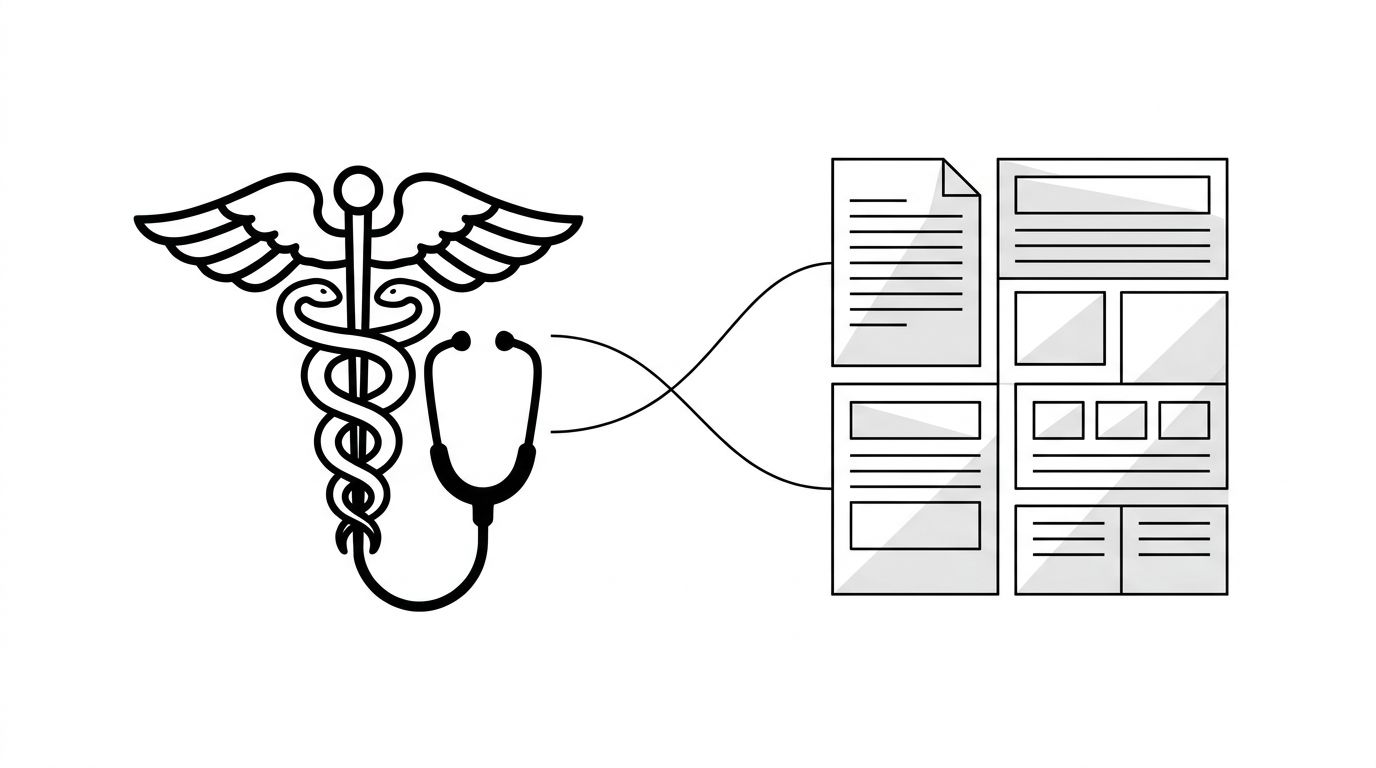
HIPAA does not regulate what AI says about your healthcare brand. It regulates what your brand publishes about identifiable patients. Most healthcare marketers respond to AI Overviews by going silent, treating every condition page as a compliance risk. The result is predictable: a competitor or a consumer forum gets cited in your category, and the AI presents that source with the same confidence it would give your clinic. The safe playbook is to publish more, not less, with the right structure.
What HIPAA Actually Covers for AI Marketing
HIPAA's Privacy Rule governs protected health information: data tied to an identifiable individual through names, dates, MRNs, photos, and the eighteen identifiers in the de-identification standard. If your content does not contain those identifiers, HIPAA is not the rule that constrains you.
A page on how rotator cuff surgery works is not PHI. A page describing your joint replacement program is not PHI. A clinician explainer on type 2 diabetes is not PHI. None become PHI when ChatGPT or Google AI Overviews cites them.
What does cross the HIPAA line:
- A patient testimonial that identifies the patient, used without a signed authorization
- A case study with conditions, dates, and demographics tight enough to single out an individual
- Photos of patients in clinical settings without consent
- Internal AI tools that ingest PHI from records without a Business Associate Agreement
The boundary is identifiability and authorization, not whether content is medical or whether AI reads it.
The "Go Silent" Mistake and What It Costs
When your hospital does not publish a structured page on a procedure your surgeons perform routinely, the AI cites whatever it can find: an out-of-state competitor, a 2019 forum thread, an aggregator on scraped insurance data, or a wellness blog with no clinical review. The patient researching their next step never sees your brand.
Three concrete costs follow:
- Patient acquisition leaks to lower-authority sources. Patients ask AI Overviews "best hospital for [procedure] near me" and get a recommendation built on Yelp and a directory page, not your outcomes data.
- Misinformation hardens. Whatever the AI cited first tends to get cited again. A wrong claim about recovery time becomes the default answer.
- Competitors get the entity signal. Each citation reinforces who matters in the category. A year of silence is a year of compounding entity loss.
The hub on AI compliance for regulated industries covers the broader argument across healthcare, finance, and legal. The healthcare-specific point: the cost of silence is patient-facing, not just commercial.
The diagram below shows the line that actually matters: what stays inside the HIPAA fence, and what belongs in your published content.

Three Content Patterns That Are HIPAA-Safe and AI-Citable
Pattern 1, clinician-authored explainers. A named physician writes or reviews a page on a condition, procedure, or treatment pathway. No patient details. Add Person schema with `hasCredential`, a visible review date, and peer-reviewed references. AI Overviews favor this format because it carries the trust signals retrieval filters check first. Our GEO for healthcare post breaks down those signals.
Pattern 2, aggregated and de-identified outcomes data. Outcomes reported at the population level (90-day readmission rates, length of stay, complication rates against national benchmarks) are not PHI. Publish them with methodology, time window, and source dataset. Aggregated reporting sits inside the de-identification standard.
Pattern 3, process and access-of-care content. How to prepare for a procedure, what to bring to a first appointment, how billing typically works, what to expect after discharge. None of this involves identifiable patients, and it answers the long tail of questions patients type into ChatGPT.
Run any draft through one question: does this page identify a person, or does it explain a topic? If it explains a topic, compliance's role is accuracy review, not blocking publication.
When to Involve Compliance and When Not To
Compliance is a partner here, not a checkpoint to route around. The work is calibrating what they review.
Pages that need a compliance pass:
- Anything referencing a specific patient, even anonymized
- Outcomes data, with methodology attached
- Efficacy or comparative claims about treatments you provide
- Pages tied to ad copy regulated under FDA, FTC, or state advertising rules
Pages that usually do not:
- General condition and procedure explainers with no patient detail
- Process and access-of-care guides
- Provider directory pages with credentials and schema
- FAQ sections answering common patient questions in plain language
Set this split with compliance once, in writing, and you remove the bottleneck behind most go-silent decisions. The output is ten to fifteen AI-citable pages a quarter instead of two. For health systems running this across service lines, the enterprise solution is built around the workflow that keeps calibration consistent at scale.