
How to Track Your Brand Across Multiple AI Platforms
Manual spot-checks can't tell you if your AI visibility is rising or falling, so how do you track brand mentions across every AI platform consistently?


Manual brand monitoring -- querying ChatGPT, Perplexity, Gemini, and Copilot one by one and recording what they say -- breaks down the moment you try to do it consistently. The question that actually matters is whether your visibility is stable, improving, or declining across platforms over time -- and manual spot-checks cannot answer that question. Brands that treat AI monitoring as a data problem rather than a browsing exercise gain a structural advantage: they catch drops before competitors notice the gap.
Why Single-Platform Monitoring Is Not Enough
Each AI platform retrieves information differently. ChatGPT blends training data with browsed results. Perplexity cites live web sources. Gemini leans on Google's Knowledge Graph. Copilot pulls from Bing. A brand that appears consistently on ChatGPT might be invisible on Perplexity, or mentioned negatively on Gemini.
- Platform-specific visibility gaps are invisible unless you track all platforms simultaneously
- Competitor rankings shift independently on each platform -- your biggest threat on Perplexity might not be the same brand outranking you on Copilot
- Sentiment can vary by platform depending on which sources each model weights
If you only monitor one platform, you are making decisions with partial data.
Setting Up Cross-Platform Tracking
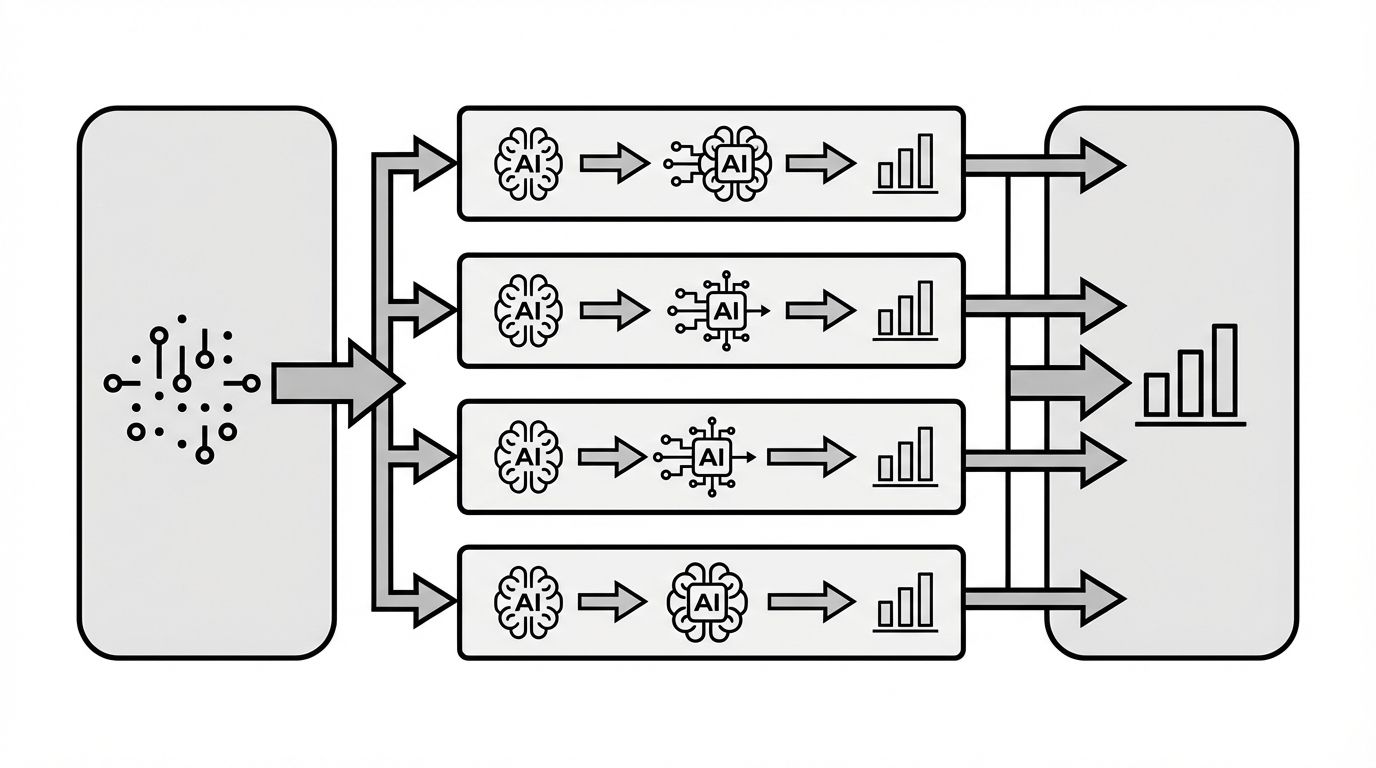
Building a reliable monitoring system requires three components: query sets, measurement cadence, and metric standardization.
The diagram below shows how these three components connect in a cross-platform tracking workflow.
Define Your Query Sets
Start by identifying the queries that matter to your business. These fall into three categories:
- Brand queries: Direct mentions of your brand name, product names, and key personnel
- Category queries: Questions buyers ask when researching your product category (e.g., "best project management tools for remote teams")
- Competitor queries: Queries where competitors are likely to appear and you want to track share of voice
Aim for 20 to 50 queries total. Too few and you miss important patterns. Too many and signal gets buried in noise.
Set a Measurement Cadence
Track each query across all four platforms at least weekly. AI model outputs shift more frequently than search rankings -- a brand that appeared in ChatGPT recommendations last Tuesday might be absent by Thursday after a model update.
- Weekly tracking catches trends before they compound
- Daily tracking is valuable for high-priority brand queries during active campaigns
- Monthly tracking is too slow -- by the time you spot a decline, you have lost weeks of visibility
Standardize Your Metrics
Cross-platform tracking only works if you measure the same things on every platform. Build your dashboard around these core metrics:
- Mention rate: Percentage of tracked queries where your brand appears in the response
- Position: Where your brand appears in the response -- first recommendation, middle of a list, or a brief mention at the end
- Sentiment: Whether the platform characterizes your brand positively, neutrally, or negatively
- Citation source: Which of your pages or third-party sources the platform references when mentioning you
- Competitor share: How your mention rate compares to each tracked competitor on the same queries
Turning Tracking Data Into Action
Data without action is just a dashboard. Use your cross-platform tracking to make three types of decisions:
Diagnose Platform-Specific Drops
When your mention rate drops on one platform but stays stable on others, the cause is usually platform-specific. Perplexity drops often trace to a competitor publishing fresher content. Gemini drops may follow Google index changes. ChatGPT shifts sometimes correlate with training data updates.
Identify Content Gaps
If competitors consistently appear for category queries where you do not, map those queries back to your content inventory. The gap is usually a missing or thin content cluster on the topic. Fill it with authoritative content following a content strategy approach.
Benchmark Against Competitors
Track the same queries for three to five direct competitors. Over time, you will see which competitors are investing in GEO (their metrics will trend upward) and which are not. This intelligence informs both your content priorities and your competitive positioning.
What to Do Next
Build your initial query set of 20 to 30 brand, category, and competitor queries. Run them manually across all four platforms once to establish your baseline. Then decide whether to continue with manual tracking or move to an automated system that handles the cross-platform complexity.
For teams managing multiple brands or client accounts, the agency solution shows how to scale cross-platform monitoring without multiplying manual effort.