Internal Linking Audit for AI Visibility — A 30-Minute Self-Test
What does an internal linking audit for AI visibility actually check, and can you really run a useful one in 30 minutes without buying a tool?

A useful AI-visibility internal-linking audit takes 30 minutes if you check the right four things: orphan pages, hub-page link counts, anchor text patterns, and inbound entity signals. Most audits run for a day, generate a 40-tab spreadsheet, and check signals AI models do not read. The shorter audit wins because it stops measuring what does not matter.
Block 30 minutes, open your sitemap and your CMS, and work through the four steps below.
What an AI-Visibility Internal-Linking Audit Actually Checks
Traditional internal-link audits check crawlability, link equity flow, and click depth. AI models care about something narrower: an entity graph built from co-occurrence patterns and link context. Four things drive that judgment:
- Whether every meaningful page is reachable from related content
- Whether hub pages get enough inbound signal to read as canonical
- Whether anchor text describes the relationship, not just the destination
- Whether surrounding paragraphs make the entity link explicit
Page speed and crawl budget belong in a different audit. The internal linking strategies that boost AI visibility post explains the entity-graph model behind these four checks.
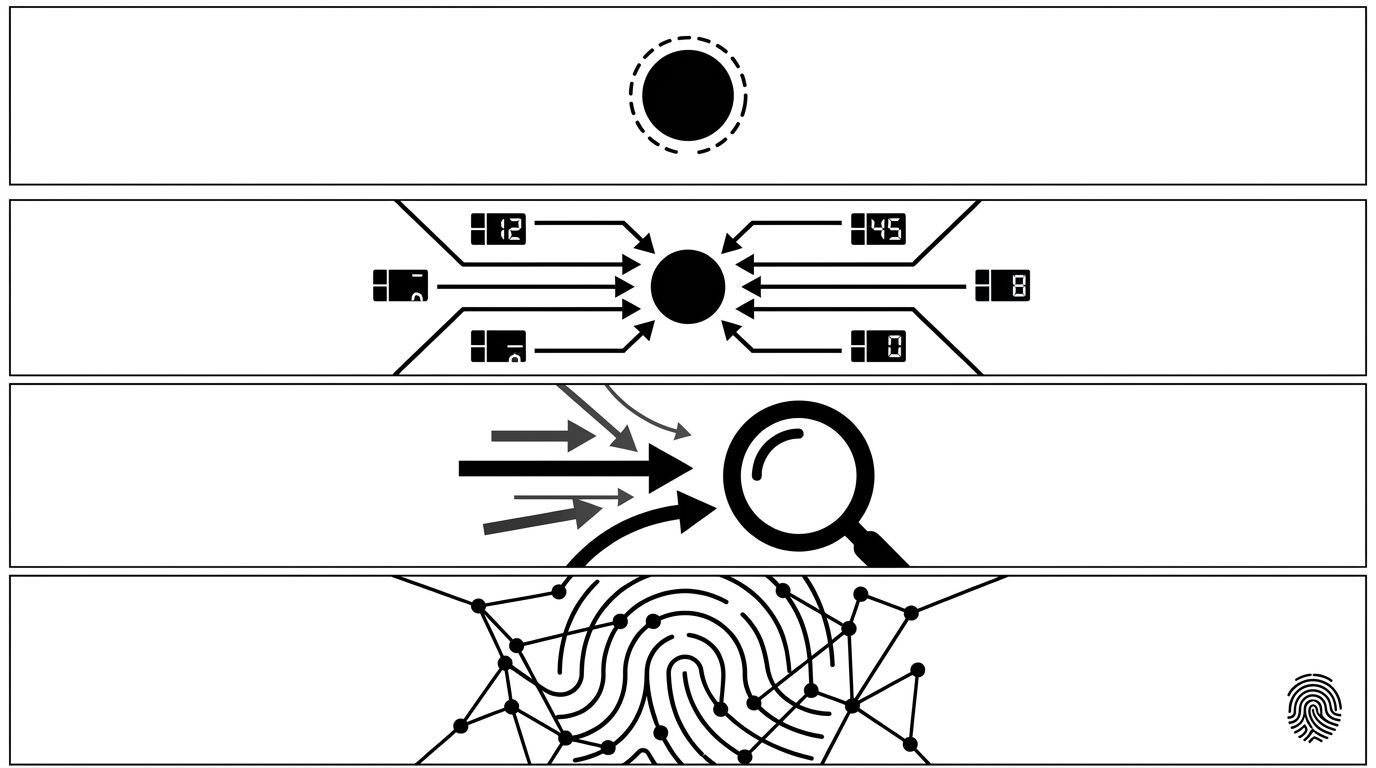
The diagram below shows the four steps in the order you run them.
Step 1: Find Orphan Pages (5 Minutes)
An orphan page here is not one with zero internal links. It is a page with no link from a topically related page. A product page linked only from the global navigation is an orphan for entity purposes.
Pull your sitemap into a spreadsheet. For each priority page, run a `site:yourdomain.com "page title"` search or pull your CMS's backlink report. Flag any page whose only inbound links come from the header, footer, or sitewide sidebar.
Most sites find three or four orphans in five minutes. The fix is one or two contextual links from related posts or service pages, written into the body copy.
Step 2: Count Inbound Links Per Hub Page (10 Minutes)
Pick your three most important hub pages: pillar posts, category pages, or flagship service pages you want AI models to treat as canonical.
Count the inbound internal links to each hub from body copy on related pages. Ignore navigation and footer links. Body-copy links carry entity weight.
A working threshold from sites that get cited consistently: at least eight body-copy inbound links per hub from pages in the same topic cluster. Below five, the hub reads as one more page in a flat library. Above twelve without a clear topical pattern, the signal blurs.
If a hub is under the threshold, write two or three new cluster posts that link back, or add contextual links from existing posts. The content gap audit method covers how to find those existing posts quickly.
Step 3: Sample 10 Anchor Texts (10 Minutes)
Pick ten internal links at random from your last quarter of content. Look at the anchor and the surrounding sentence. For each, ask:
- Does the anchor describe the relationship between the two pages, or just name the destination?
- Could a reader who skipped the link still infer what the linked page is about?
- Is the anchor specific enough that a model parsing the sentence learns something about both pages?
Generic anchors like "click here," "this guide," or a bare brand name fail all three. Exact-match keyword anchors often fail the first because they describe what the destination ranks for, not how it connects to the current page.
If more than three samples fail, anchor text is your weakest signal and the highest-impact fix. Rewrite anchors to read like short descriptions of the relationship.
Step 4: Check Entity Signals (5 Minutes)
Open the page that hosts each of your top three inbound links to a hub. Read the paragraph around the link. It should make the entity relationship explicit, not implicit.
Implicit: "We covered this in our pricing guide." Explicit: "Our pricing structure for SaaS startups, covered in detail in our SaaS pricing guide, uses the three-tier model described above."
The explicit version names the entity on both sides of the link. Models build associations from that co-occurrence, not from the anchor alone.
Sample five paragraphs. If three or more are implicit, your entity signals are weak even when link counts and anchors look healthy.
What to Fix First
Rank your fixes in this order: orphans first because one contextual link turns an invisible page into a discoverable one, anchor rewrites second because they compound across readers and crawlers, hub inbound counts third, entity-signal paragraphs last because they take careful editing.
If the audit surfaces more than ten issues, get a baseline view of where AI platforms currently place you before picking fixes. A free audit gives you that baseline and shows which clusters sit closest to the citation threshold.