How to Build an Internal Linking Strategy for SEO and AI Visibility
How do you build an internal linking strategy that wins both Google rankings and AI visibility, instead of just flowing page authority around?

To build an internal linking strategy that serves both SEO and AI visibility, you do six things: map your content into topics, choose a pillar page for each topic, link supporting pages to that pillar and to each other, set a sensible link density, write descriptive anchor text that names the relationship between two pages, then audit the result and fix the gaps. The rest of this guide walks through each step, but that is the whole shape of it. The reason the order matters is that AI models do not read your links the way Google does.
Most SEO professionals treat internal linking as a PageRank distribution exercise. Add links, spread authority, watch rankings improve. That playbook does not transfer to internal linking AI visibility. AI models do not crawl your site the way Google's spider does. They do not follow links to distribute a ranking score. What they do is assess whether your site demonstrates topical depth on a subject, and internal links are one of the signals they use to make that judgment.
Here is the distinction that matters: in traditional SEO, internal links move authority between pages. In GEO, internal links create topical clusters that AI models interpret as evidence of thorough expertise. A site with ten loosely connected pages on AI visibility will lose to a site with five tightly interlinked pages, because AI models read link density within a topic as a signal of depth, not breadth.
This shift changes how you should structure every link on your site.
AI internal linking vs traditional internal linking
If you only remember one contrast, make it this one. Traditional internal linking is about flow: where does authority go, and which page ends up strongest in the crawl graph. AI internal linking is about meaning: which pages an AI model reads as one coherent body of work on a subject, and how confidently it can state the relationship between them.
So the same link can do two jobs at once. The link itself feeds Google's crawl graph. The descriptive anchor and the sentence around it feed an AI model's understanding of how two ideas connect. A traditional strategy optimizes the first job and ignores the second. An AI-aware strategy writes every link so it earns both, which is exactly what the build steps below produce.
Traditional search engines use links as votes. Each internal link passes a fraction of the linking page's authority to the target page. The more links pointing to a page, the more important it appears in the crawl graph.
AI models trained on large web corpora process links differently. Research from the Allen Institute for AI has shown that language models build entity-topic associations from the co-occurrence patterns in their training data. When your pages on a subject link densely to each other, those co-occurrence signals compound. The model learns that your domain covers the topic thoroughly.
Key differences between SEO and GEO internal linking:
- SEO: Links distribute PageRank. More links to a page = higher authority for that page.
- GEO: Links signal topical clustering. Dense interlinking within a topic = higher perceived expertise on that topic.
- SEO: Link anchor text helps rank the target page for specific keywords.
- GEO: Link anchor text reinforces the semantic relationship between two pieces of content, strengthening the overall topic cluster.
This means a page with three internal links from topically related pages carries more GEO weight than a page with ten links from unrelated pages across your site.
How to build it from scratch
If you are starting with a pile of unconnected pages, here is the order to work in. Each step builds on the one before it, so resist the temptation to jump straight to adding links.
- Map your content into topics. List every page you have and tag each one with the single subject it covers. Do not let a page sit in two topics; if it genuinely spans two, that is a sign it should be split. You want clean buckets, because the buckets become your clusters. Spreadsheet, whiteboard, or a quick export of your sitemap all work for this.
- Pick one pillar per topic. For each bucket, choose the page that covers the subject most broadly. That is your pillar. If no page does the broad job, that gap is your next thing to write, not a link to fake. A topic without a clear pillar reads to an AI model as a scatter of related-but-unranked pages.
- Build the cluster around each pillar. Link every supporting page up to its pillar, and link the pillar back down to every supporting page. That gives you the hub. Then add cross-links between supporting pages wherever the content actually connects, so the hub becomes a mesh. Two to three cross-links per supporting page is plenty.
- Set your link density. Count the internal links inside each cluster and divide by the number of pages. Aim for a ratio above 2.0, with five to eight pages per cluster. If a cluster is below that ratio, you have orphans or weak hubs to fix. If a cluster has ballooned past fifteen pages without proportional links, split it into two tighter clusters before adding more.
- Write the anchor text. Go link by link and replace anything generic. Each anchor should name what the destination page does in the context of the page it sits on, so the surrounding sentence plus the anchor states a relationship an AI model can read in one pass. The next section goes deep on the phrasing that works.
- Audit and repeat. Run the audit steps further down to catch orphan pages, weak hubs, and bare anchors. Then treat the audit as a recurring habit, because every new page you publish either joins an existing cluster or starts a new one. A strategy you build once and never revisit decays as your content grows.
Work these six steps once, in order, and you have a real internal linking strategy rather than a scatter of links. Everything below expands the parts that need more than a sentence.
Building Topical Clusters That AI Models Recognize
A topical cluster is a group of pages that cover different facets of a single subject and link to each other. For GEO, the structure of these clusters matters more than the volume of content within them.
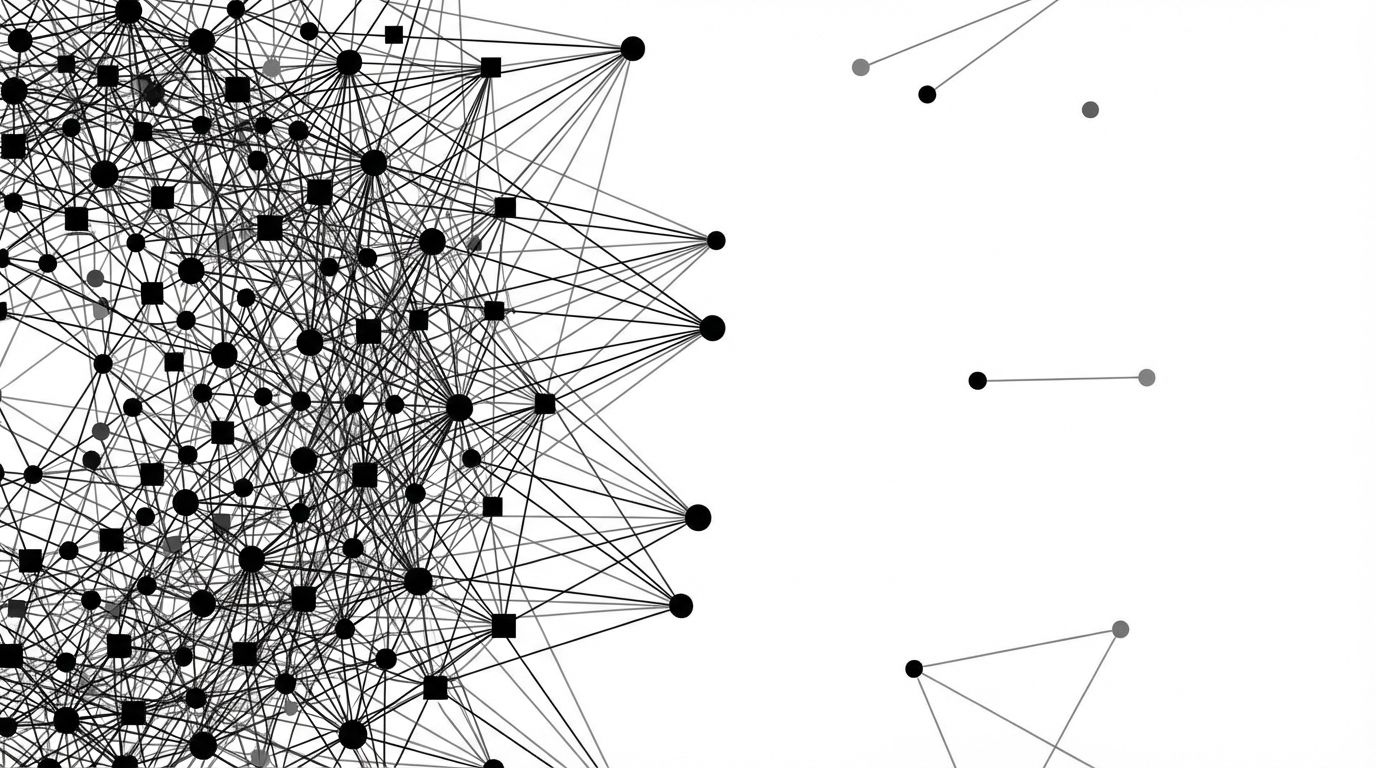
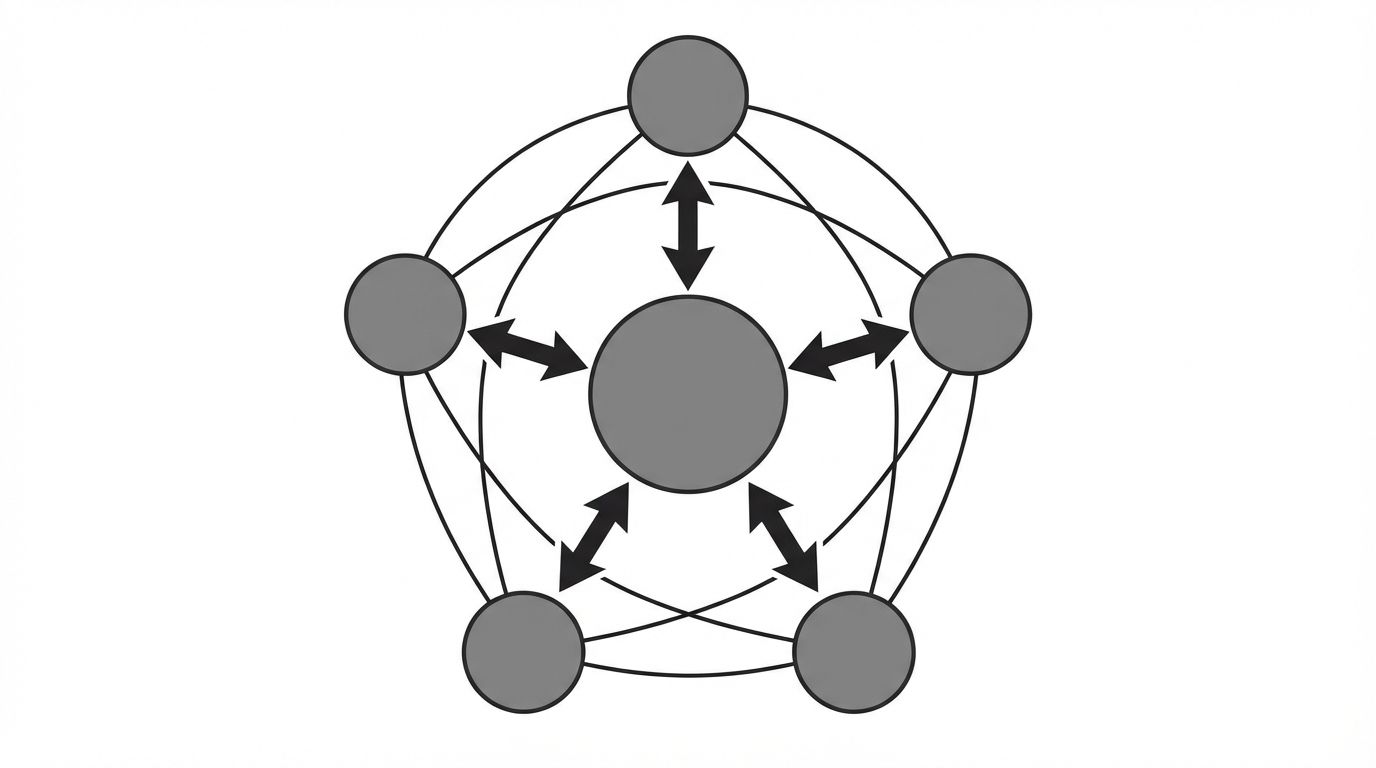
The diagram below shows how a well-structured topical cluster connects a pillar page to supporting content through bidirectional internal links.
Start With a Pillar Page
Your pillar page covers the broad topic comprehensively. Every supporting page should link back to it, and it should link out to every supporting page. This creates a hub that AI models can identify as your primary resource on the subject.
For example, if your pillar page covers topic authority and AI trust, supporting pages might address specific tactics like writing content AI models cite, internal linking strategies, and structured data implementation.
Cross-Link Supporting Pages
Most sites link supporting pages to the pillar but not to each other. This is a missed opportunity. When supporting pages link to one another, the cluster becomes a mesh rather than a hub-and-spoke. AI models interpreting this mesh see a domain that covers every angle of a topic, not just the top-level overview.
Cross-linking rules that work:
- Link when the content actually connects. Forced links between unrelated pages dilute the cluster signal.
- Use descriptive anchor text. "Learn more" tells an AI nothing. "How AI shopping assistants evaluate product pages" tells it exactly how two pages relate.
- Limit cross-links to 2-3 per supporting page. Overloading links creates noise.
The Link Density Threshold
Not all clusters are equal. A cluster with three pages and six links between them produces a stronger signal than a cluster with ten pages and twelve links. The ratio of links to pages, what you might call link density, matters more than absolute numbers.
Based on analysis of sites that consistently appear in AI recommendations across ChatGPT, Perplexity, and Gemini, high-performing clusters share these characteristics:
- 5-8 pages per cluster (enough depth without dilution)
- Every page links to at least 2 other pages in the cluster (no orphans)
- Bidirectional links between the pillar and every supporting page
- At least 3 cross-links between supporting pages
Sites that exceed 15 pages in a single cluster without proportional interlinking actually see diminishing returns. The AI interprets the cluster as broad but shallow, the opposite of what you want.
Anchor Text Strategy for GEO
In SEO, anchor text optimization means using target keywords in your link text. In GEO, anchor text serves a different function: it defines the semantic relationship between two pages.
Consider these two approaches to linking from a content strategy page to an AI visibility audit page:
- SEO approach: "Run an AI visibility audit to check your rankings."
- GEO approach: "Use a free audit to measure how AI platforms currently represent your brand and identify gaps in your topical coverage."
The second version tells an AI model what the linked page does in the context of the linking page's topic. It reinforces the relationship between content strategy and AI visibility measurement.
Practical anchor text guidelines:
- Describe the destination page's value, not just its title
- Include topical context that connects the two pages
- Vary anchor text across different links to the same page to avoid pattern repetition
- Keep anchors under 10 words for readability
Anchor text and entity relationships AI can parse
To use internal linking and anchor text to reinforce entity relationships in a way AI models read cleanly, you write the link so the sentence around it states the relationship in plain language and the anchor names the destination as an entity. The link is the structure. The sentence is the claim. An AI model extracts the claim, and the anchor tells it which entity the claim is about.
Think about what a model actually has to do. It reads a page, spots a link, and tries to answer one question: what does the page I am on say about the page it is pointing to? A bare anchor like "this guide" gives it nothing to attach. A descriptive anchor sitting inside a sentence that names both sides of the relationship gives it a fact it can store and repeat. That stored fact is what shows up later when someone asks an AI which sites cover a subject well.
Compare these two links from a page about content depth:
- Weak signal: "We also wrote about this here."
- Strong signal: "Depth is what earns AI citations, which is why our guide to writing content AI models cite shows which formats get pulled into answers."
The second link teaches the model a relationship: content depth connects to citation, and the destination page is the entity that holds that detail. The first teaches it nothing it can act on.
Phrasings AI models extract reliably share a few traits. They name the destination as a thing, not a navigation cue. They sit in a sentence that uses a concrete verb to connect the two pages, words like covers, maps, measures, compares, explains. And they keep the relationship close to the anchor, in the same sentence, so the model does not have to guess which earlier subject the link refers to. Anchors built this way read as descriptions, while exact-match keyword anchors increasingly read as templated.
Two posts in the cluster below go further than this section can. Entity relationships in internal linking covers what the surrounding paragraph teaches a model and why three context-rich links beat twenty bare ones. Anchor text patterns AI models parse reliably shows which exact phrasings ChatGPT and Perplexity actually extract a relationship from. If entity signals are the part of this you care about most, read those two next.
Auditing Your Current Internal Link Structure
Before building new clusters, audit what you have. Most sites discover that their internal linking is either random or purely navigational, neither of which helps GEO.
Steps to audit your internal links for AI visibility:
- Map your existing content by topic. Group every page into a subject category.
- Count internal links within each topic group. If pages in the same topic rarely link to each other, the cluster signal is weak.
- Identify orphan pages. Pages with zero or one internal link from topically related content are invisible to AI clustering.
- Check anchor text quality. Flag generic anchors like "click here," "learn more," or "read this" that provide no semantic value.
- Measure link density per cluster. Divide the number of intra-cluster links by the number of pages. Aim for a ratio above 2.0.
A free AI visibility audit gives you a baseline for how AI platforms currently perceive your brand's topical authority. Combine that with an internal link audit to identify where link building and restructuring will have the most impact.
What to Do Next
Internal linking for GEO is not a one-time project. As you publish new content, every page should be woven into an existing cluster or used to start a new one. The brands that AI models recommend most consistently are the ones whose content forms a tight, navigable mesh on the topics they own.
Start by auditing your current link structure against the density thresholds above. Identify your weakest clusters, add cross-links between supporting pages, and rewrite generic anchor text with topical context. Then run a free AI visibility audit to measure whether the changes shift how AI platforms represent your brand.
Deeper into internal linking for GEO
If the cluster idea above is the spine, the posts below are the joints. Each one takes a single piece of the internal-linking-for-GEO problem and goes deeper than this guide can.
Anchor text is where most teams lose the entity signal first. Anchor text patterns AI models parse reliably shows which phrasings ChatGPT and Perplexity actually extract a relationship from, and why exact-match anchors now read as templated rather than relevant.
The link itself is only half the signal. Entity relationships in internal linking covers what the surrounding paragraph teaches a model, and why three context-rich links beat twenty bare ones.
Before adding new clusters, find the broken ones. Internal linking audit for AI visibility is a 30-minute self-test that flags orphan pages, weak hubs, and the anchor patterns AI does not parse.
If you are deciding between two link architectures, hub-and-spoke vs pillar-cluster linking for GEO explains why pillar-cluster wins for AI citations and where the older hub pattern still earns its keep.
For the broader structural picture, pillar-cluster content architecture for GEO sits beside this guide as the content-shape companion to the linking strategy here.
And for the off-site half of the same question, link signals and AI covers how external citations and backlinks interact with the internal graph you are building.