Entity Relationships in Internal Linking — What Changed With AI
What does an internal link actually teach an AI model about your brand, and how does that differ from the link equity you've been chasing?

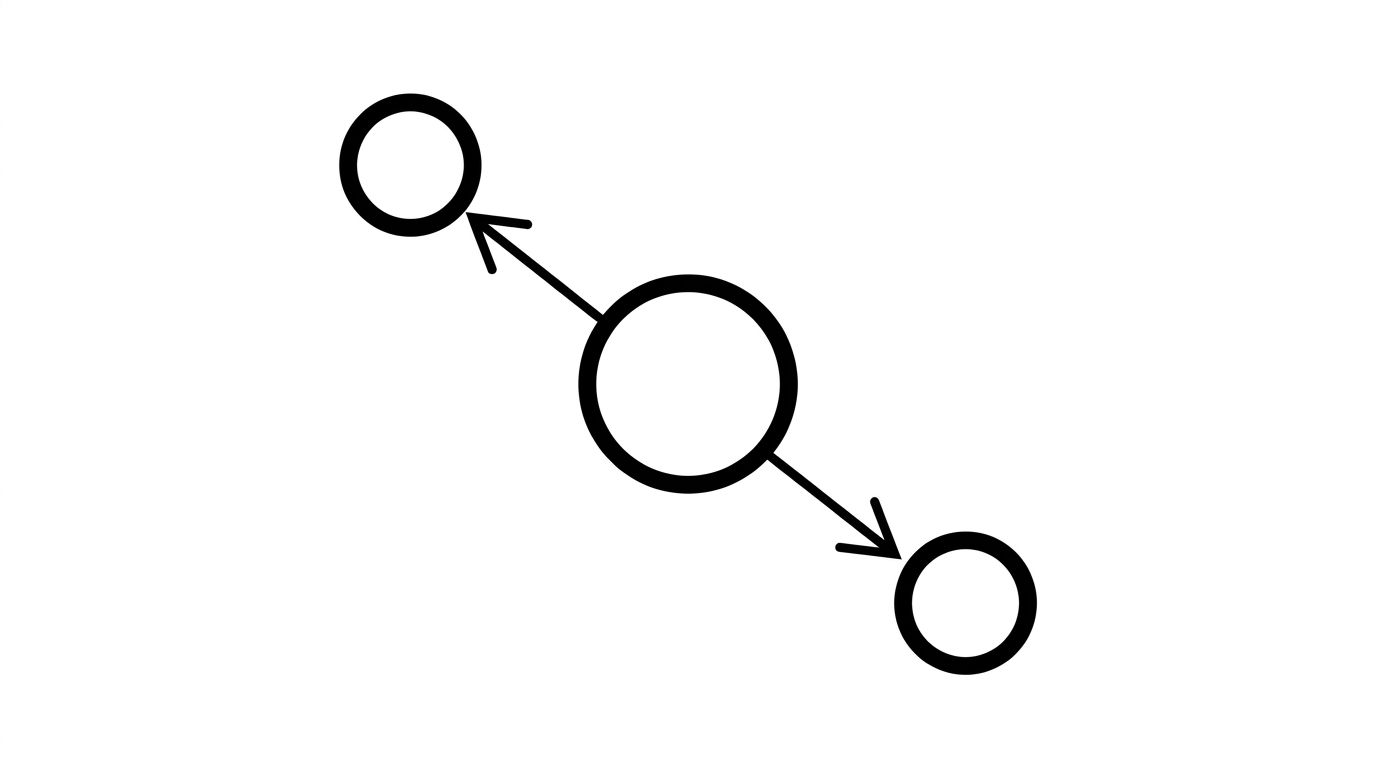
Traditional SEO internal linking pushes link equity. AI internal linking establishes entity relationships. The same anchor tag can do both, but only if the surrounding paragraph makes the entity relationship explicit. A link from a product page to a use-case page does almost nothing for an AI model's understanding of your domain if the page never says "this is the same product the linked use case describes." The link is the wire. The surrounding sentence is the signal.
Most advice still treats anchor text and link counts as the inputs, assuming AI models read them the way Google's crawler does. They don't. A link is one edge in the graph; the paragraph around it is what gives the edge a label.
Two Jobs of Internal Linking: Link Equity and Entity Graph
Every internal link on a B2B site is doing one or both of two jobs. The first is the one SEOs have optimized for since 2003: distributing PageRank-style authority so search engines weight pages correctly. The second is newer. It tells AI models which entities on your site are connected, how, and whether you're authoritative about that connection.
The two jobs reward different things.
- Link equity rewards the link itself. The anchor is a tag, the destination gets a vote, and the linking page sheds a fraction of its authority.
- Entity graph rewards the context. AI models read the sentence containing the link as a statement about how the two pages relate. Generic sentence, generic relationship.
A page with twenty distributed links can still produce a weak entity graph if every one sits inside "click here to read more." Three links inside paragraphs that name the source-to-destination relationship beat the twenty-link version.
How AI Models Build an Entity Graph From Your Site
AI models trained on web crawls don't store your site as a list of URLs. They store it as a set of entities (your brand, products, customers, concepts) and the relationships between them. Internal links are one input. Co-occurrence in the same paragraph is another. Schema markup is a third.
When the model answers "which platforms track AI brand visibility for SaaS companies," it traverses that graph for nodes labeled "AI visibility platform" connected to nodes labeled "SaaS" through credible edges. A link from your SaaS solutions page to your platform overview is one such edge, but only labeled "this platform is for SaaS" if the surrounding text says so.
When you write a paragraph ending in a link, you're authoring a triple: subject, predicate, object. For how AI weighs source credibility on top of graph signals, see topic authority and AI trust. The entity graph is the structural layer; topic authority is what makes its edges count.
Surrounding-Context Rules: What the Paragraph Around the Link Must Do
The diagram below contrasts a context-free link with one wrapped in an explicit entity statement. The first carries link equity only. The second carries link equity and a labeled edge.
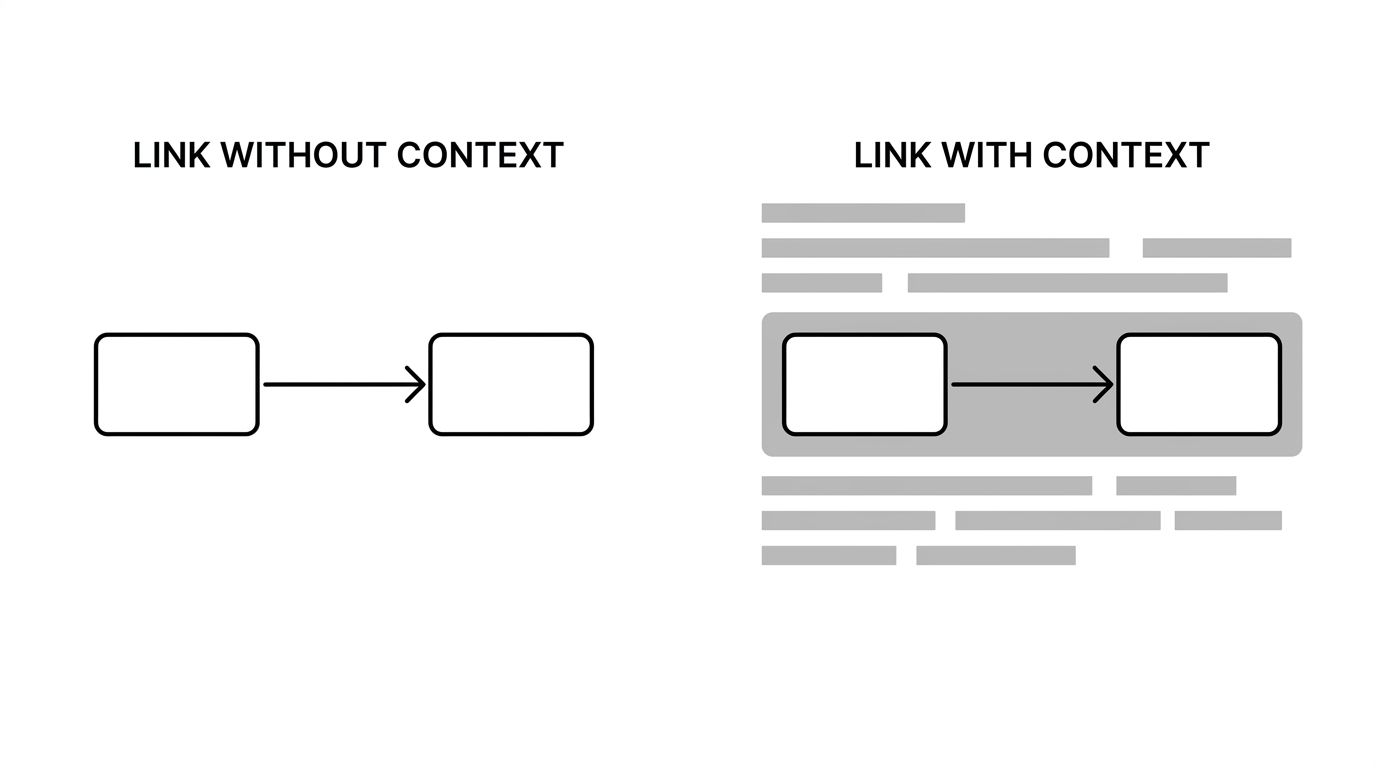
Three rules make the difference.
Rule 1: Name both entities in the sentence. Reference the subject (the page you're on) and the object (the page you're linking to) by their canonical names, not pronouns. "Our platform" and "this guide" leave the model guessing.
Rule 2: State the relationship as a verb. Verbs like "uses," "depends on," "is built for," "extends," and "replaces" carry semantics. "Read more about" carries none. The verb becomes the predicate.
Rule 3: Keep the relationship in one sentence. AI models segment context by sentence boundaries more aggressively than humans do. A relationship spread across three sentences is harder to parse than one.
Together, those rules turn "We also have a guide on internal linking" into "Geology's internal linking strategy guide for GEO explains how topical clusters reinforce the entity graph this post describes."
When Traditional SEO Internal Linking Already Covers Entity Needs
Some links are doing the entity job already. A breadcrumb from `/services/geo-optimization` to `/services` is unambiguous. A footer link from a case study to the case studies index is unambiguous. Page hierarchy carries the entity relationship; the surrounding sentence doesn't need a rewrite.
Where traditional SEO linking falls short is inline body links optimized for keyword anchors. Those have the most untapped entity-graph value. Any inline link placed for keyword density should be re-read with the rules above. If the sentence doesn't name both entities and the relationship, rewrite the sentence. Don't move or remove the link.
For teams that want this audit run on a live site, Geology's GEO optimization service covers the entity-graph review. It's the pass that catches the difference between a link that ranks and a link that teaches.