Anchor Text Patterns AI Models Parse Reliably
Why do AI models reward descriptive anchor text over exact-match keywords, and which patterns do ChatGPT and Perplexity parse reliably?

AI models read anchor text as an entity-relationship signal, not a keyword-relevance signal. A descriptive anchor like "our pricing page for early-stage SaaS startups" carries more weight in an AI response than the exact-match anchor "SaaS pricing" because it tells the model who the destination is for and how it relates to the source page. Most internal-linking advice still optimizes for keyword density, which is the wrong target now.
If your team is auditing anchor text against a 2018 SEO playbook, you are tuning the wrong instrument. The patterns below parse reliably across ChatGPT, Perplexity, and AI Overviews.
What AI Models Actually Do With Anchor Text
A traditional crawler treats anchor text as a label for the destination URL, one input into a ranking score. Mechanical and keyword-shaped.
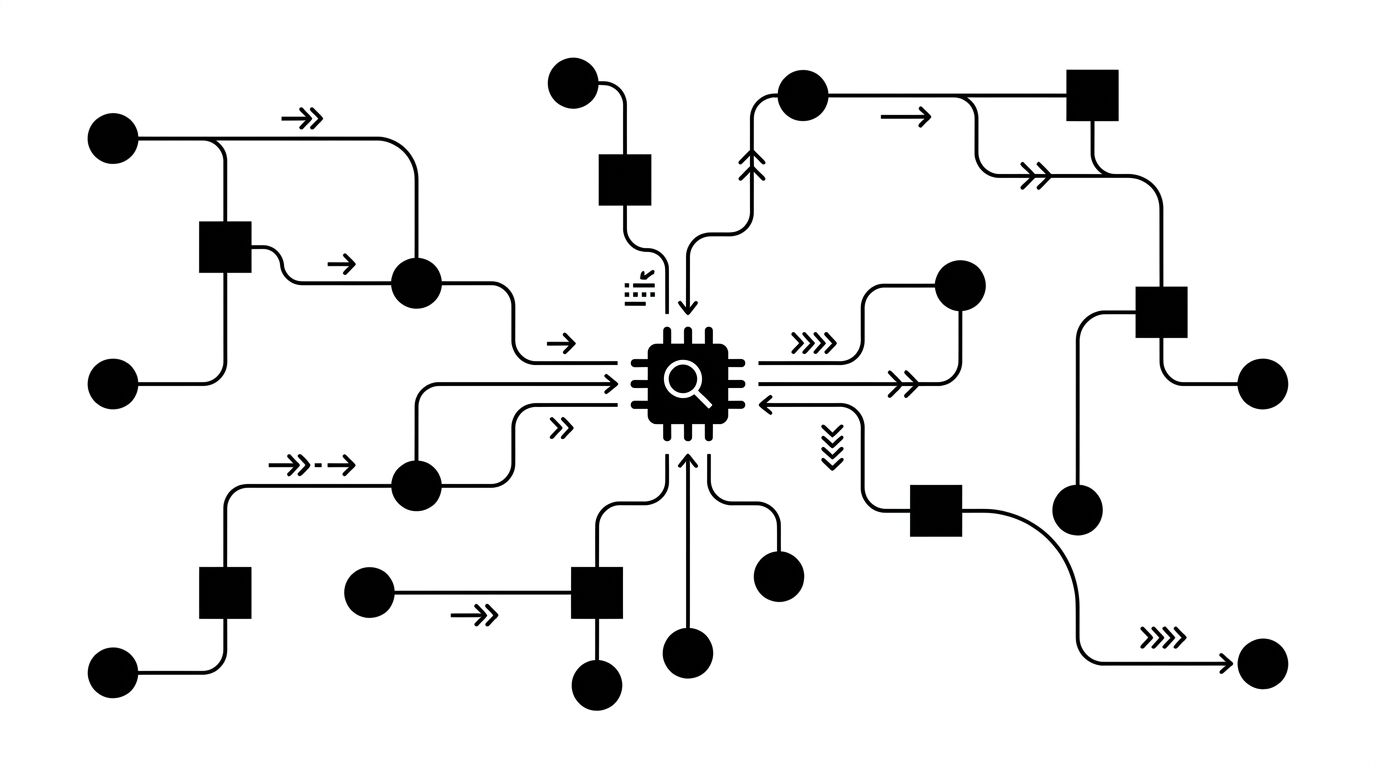
Language models work differently. They read the anchor as a span inside a larger paragraph. The anchor, the surrounding sentence, and the destination page get processed together, and what the model extracts is a relationship: page A says that page B is this kind of thing for these readers.
Three consequences follow:
- Anchor text without context is weak signal. "Click here" sits inside a sentence that says nothing about the linked entity.
- Repeated exact-match anchors look templated. Ten internal links all reading "AI visibility platform" flag as machine-written.
- Descriptive anchors compound with surrounding prose. "The free audit that scores how often ChatGPT cites your brand" gives the model entity, function, and use case in one span.
That is the foundation of every recommendation in our internal linking strategy guide. Anchor text is the layer where entity relationships get explicit.
Three Anchor Text Patterns That Parse Reliably
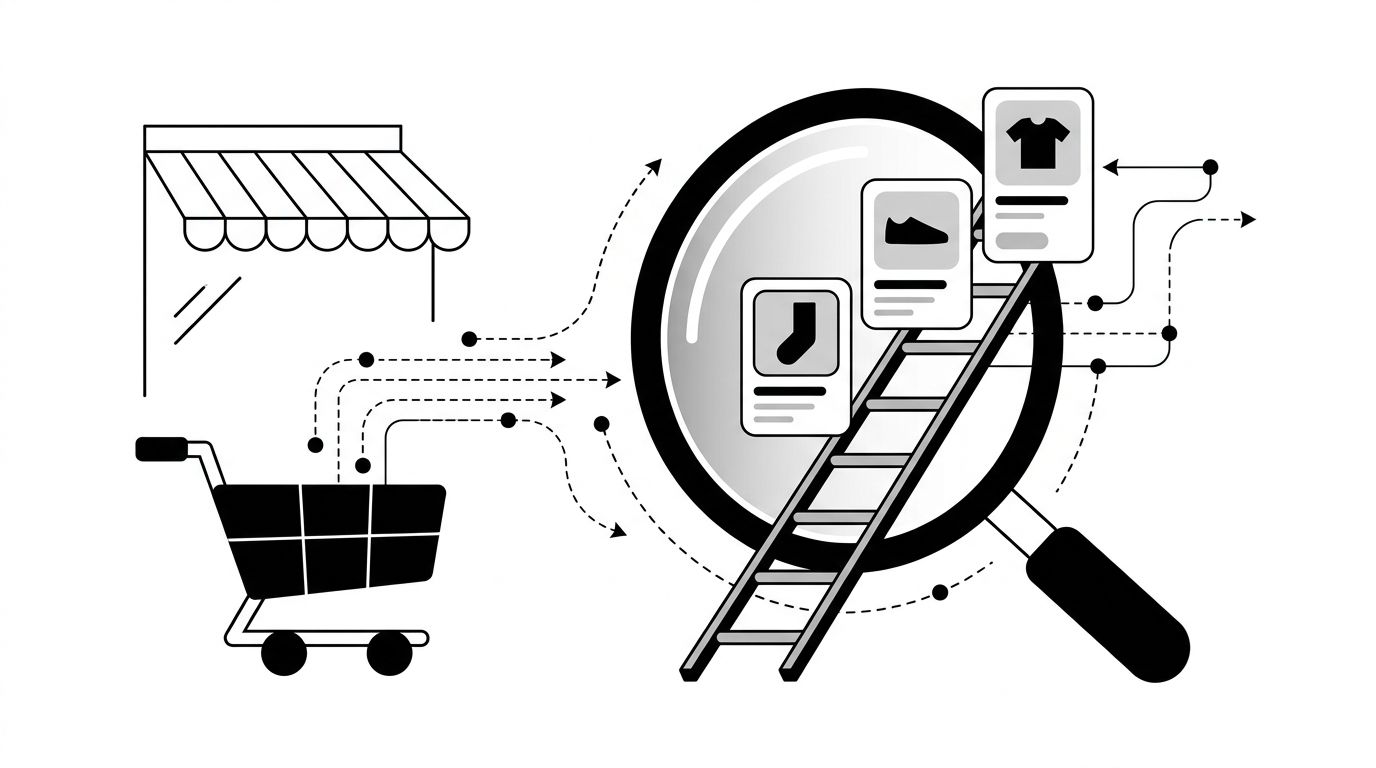
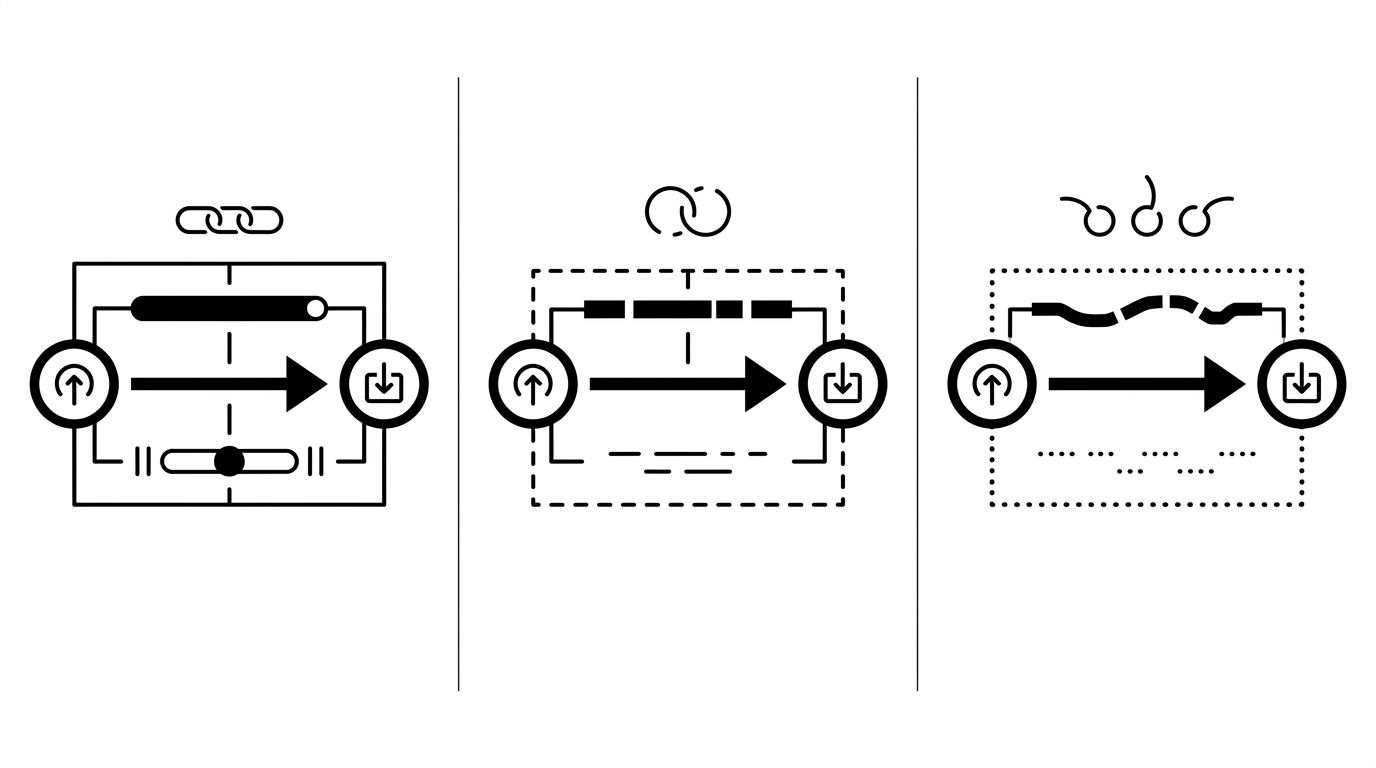
The image below contrasts three anchor styles AI models read with high confidence against the generic patterns they tend to discard.
1. Entity-with-Qualifier
Format: entity name plus audience or use-case qualifier. Example: "the GEO content strategy service for B2B SaaS teams". The model learns that the destination is a service, that it belongs to a category, and that it serves a defined audience.
2. Function-Plus-Outcome
Format: what the page does plus the outcome it produces. Example: "a free audit that scores how AI platforms describe your brand". The anchor maps onto how users phrase queries to AI.
3. Disambiguating Anchors for Ambiguous Targets
When a destination overlaps with other pages or brands, add a disambiguating phrase inside the anchor. "Our schema markup guide for AI citation rather than rich results" tells the model which slice the linked page owns. Same logic as the entity work in structured data for AI visibility: reduce ambiguity at the source.
Patterns to Retire
A few anchor habits do real damage in an AI-first link graph. The reason to retire them is no longer "Google might penalize over-optimization." It is that AI models cannot extract a useful relationship from them.
- Exact-match keyword anchors at scale. "SaaS pricing", "SaaS pricing tool", "SaaS pricing software" pointing at one URL across forty pages reads as keyword stuffing.
- Generic CTA anchors like "click here" and "learn more". The destination is opaque and the surrounding sentence rarely compensates.
- Brand-only anchors when the topic is not the brand. Anchoring "Geology" on a pricing page while the sentence is about competitive pricing tells the model nothing.
- Synonym-cycled anchors to one destination. Three different anchors to one URL in one paragraph reads as templated rephrasing.
Audit Your Anchor Text in 15 Minutes
You do not need a crawler to spot the worst offenders. Open the five most-linked-to pages on your site, list every inbound internal anchor, and run this triage:
- Count generic anchors. Anything matching "click here", "learn more", "read more". If more than 10% are generic, that page is bleeding entity signal.
- Count exact-match repeats. If the same anchor appears more than three times, rewrite all but one with an audience or use-case qualifier.
- Read the surrounding sentence. Cover the anchor and ask whether the sentence still tells you what the destination is. If not, rewrite it.
- Check disambiguation on overlapping topics. Where two pages cover similar ground, confirm the anchors describe different slices.
- Sample three competitor pages. The gap between their anchor context and yours is the work.
A 90-minute pass across the top twenty linked pages closes the largest gaps. The work is editorial, not technical, which is why it lives inside a content remit.
What to Do Next
Anchor text is small surface, high impact. A page can have clean schema and well-structured headings, then still confuse AI models because every inbound anchor reads "click here". Fix the anchors and the entity graph AI builds for your site sharpens fast.
Start with the audit above on your five most important destination pages. If the gap is wide, our content strategy service covers anchor text and internal linking as part of a structured GEO program.