Structured Data and Schema Markup for AI Visibility
Which schema types actually move the needle for AI visibility, and how do you structure your data so ChatGPT, Perplexity, and Gemini cite you correctly?

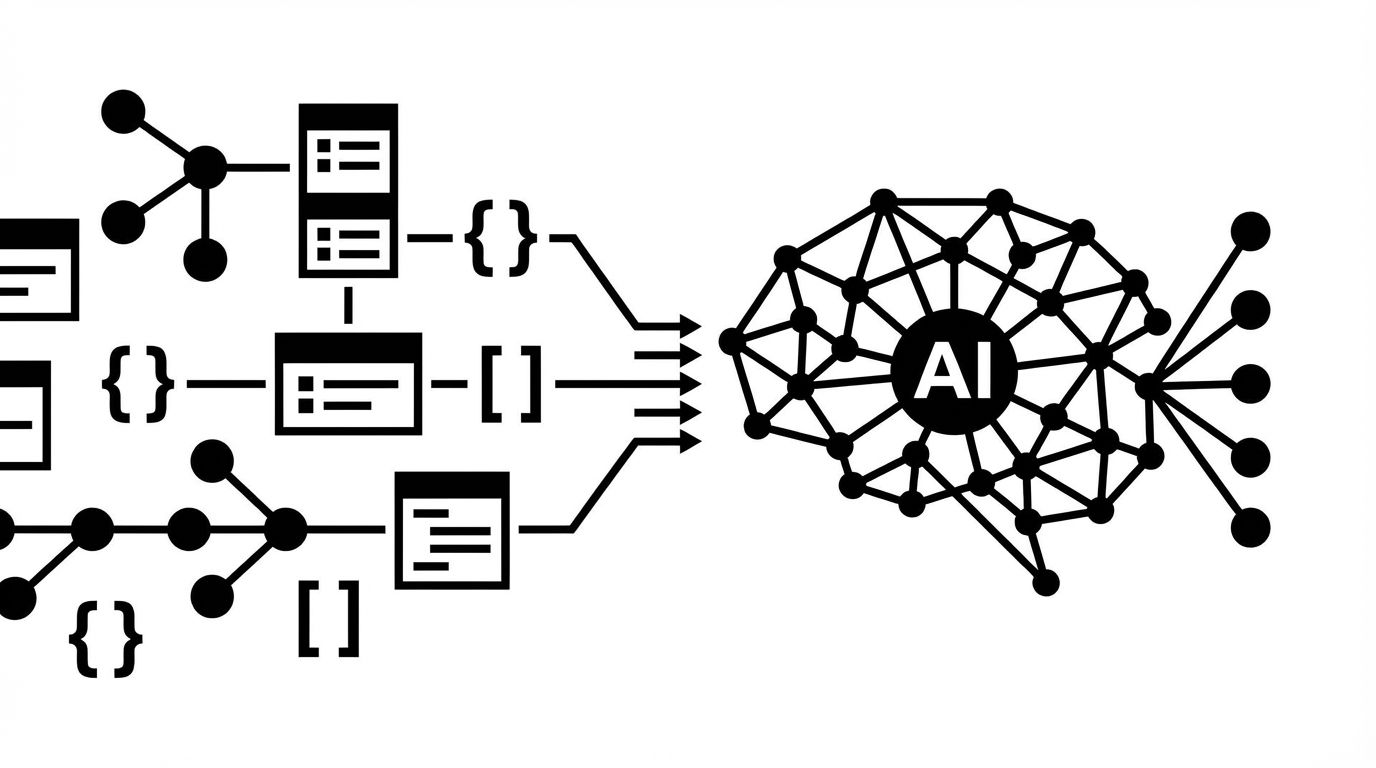
Schema markup was built for search engines. Google, Bing, and Yahoo created Schema.org in 2011 to help crawlers understand page content. But something unexpected happened: structured data for AI visibility became one of the most reliable signals that large language models use to extract factual brand information. The same JSON-LD you add for rich snippets is now feeding ChatGPT, Perplexity, Gemini, and Copilot the exact data they use when deciding which brands to mention.
This isn't speculation. Brands that implement Organization, Product, and FAQ schema consistently show higher mention rates in AI-generated responses than competitors without it. The reason is mechanical: AI models prioritize structured, machine-readable data because it reduces ambiguity. When a model needs to answer "what does [brand] do?" or "which products solve [problem]?", schema markup gives it a clean, parseable answer rather than forcing it to interpret marketing copy.
If you've been treating schema markup as an SEO checkbox, you're undervaluing one of your most powerful GEO assets. Here's how to use it strategically.
Why AI Models Prefer Structured Data
Large language models are trained on web-scale data, but not all data is created equal. When a model encounters a page with Organization schema, it gets explicit fields: company name, description, URL, logo, founding date, social profiles. Compare that to scraping a homepage where the brand description is buried in a paragraph between a hero banner and a testimonial carousel.
Structured data reduces extraction errors. Key reasons:
- Disambiguation: Schema tells models exactly what an entity is. A page about "Mercury" could be a planet, an element, or a fintech company. Organization schema resolves that instantly, which is one of the strongest defenses against AI confusing your brand with a competitor when names or categories overlap.
- Attribute extraction: Product schema provides price, availability, rating, and description in labeled fields. Models don't have to guess which number on the page is the price.
- Relationship mapping: Schema links entities together, a Product belongs to an Organization, an FAQ belongs to a page topic. These relationships help models build accurate knowledge graphs.
- Freshness signals: The `dateModified` field in schema tells models when information was last updated, which affects how much they trust the data.
According to research from Merkle's technical SEO team, pages with thorough schema markup are 2.7x more likely to appear in AI-generated summaries than equivalent pages without it. The effect compounds across platforms because multiple AI models consume the same structured data during training and retrieval.
The Three Schema Types That Matter Most for GEO
Not all schema types carry equal weight for AI visibility. Based on analysis of AI response patterns across ChatGPT, Perplexity, and Google AI Overviews, three types deliver the most impact.
Organization Schema
This is your brand's machine-readable identity card. Every page on your site should include Organization schema with these fields populated:
- name: Your official brand name (exactly as you want AI to reference it)
- description: A one-to-two sentence description of what your company does
- url: Your canonical domain
- sameAs: Links to your official social profiles and Wikipedia page
- foundingDate, numberOfEmployees, areaServed: Contextual data that helps models categorize your business
The `sameAs` field is particularly powerful. It helps AI models connect your website to your presence on LinkedIn, Crunchbase, and Wikipedia, reinforcing your entity profile across sources.
Product Schema
For any brand selling products or services, Product schema directly influences whether AI shopping assistants and recommendation engines include you. Key fields:
- name, description, brand: Core identity
- offers: Price, currency, availability
- aggregateRating: Review score and count
- category: Product categorization
AI shopping assistants like Perplexity's product recommendations and ChatGPT's shopping features pull heavily from Product schema. A study by Lily Ray at Amsive Digital found that products with complete schema markup appeared in 41% more AI shopping responses than products relying on unstructured page content alone.
FAQ Schema
FAQ schema has a dual benefit for AI visibility. It generates rich results in traditional search, but more importantly, it provides AI models with pre-formatted question-answer pairs that map directly to how users query AI platforms.
- Write questions in natural language matching real user queries
- Keep answers concise and factual (one to three sentences)
- Cover questions where your brand or product is the answer
- Update FAQ schema quarterly to reflect current product features and pricing
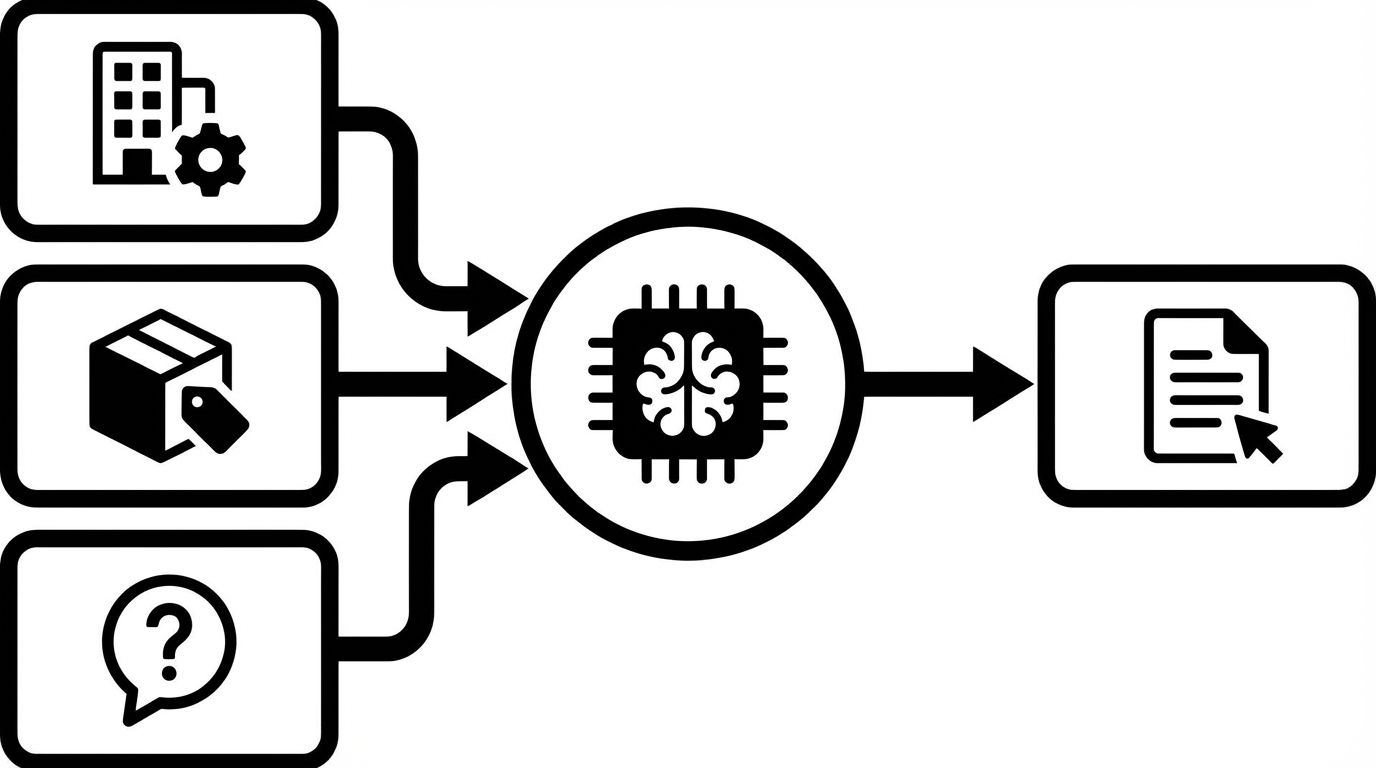
The diagram below shows how these three schema types feed into AI model decision-making at different stages of a query response.
Implementation Priorities by Business Type
Your schema strategy should match your business model. Here's where to focus first:
- SaaS companies: Organization schema on every page, Product schema on pricing and feature pages, FAQ schema on comparison and support pages. Prioritize the `description` and `category` fields that help models classify your product correctly.
- E-commerce brands: Product schema on every product page with complete `offers` and `aggregateRating` data. This is non-negotiable for AI shopping visibility. See how to optimize product pages for AI for the full playbook.
- Agencies and service businesses: Organization schema with detailed `areaServed` and `hasOfferCatalog` fields. Service schema for each offering with clear descriptions that match how prospects describe their needs to AI platforms.
- Enterprise brands: Focus on Organization schema consistency across all subdomains and microsites. AI models get confused when the same company has conflicting schema across different web properties.
For technical implementation guidance, including JSON-LD templates and validation workflows, see the Technical GEO guide. To understand how schema fits within a broader technical optimization strategy, explore our technical SEO services.
Validating and Monitoring Your Schema
Implementing schema is only half the job. You need to verify it's working and track its impact on AI visibility.
Validation tools:
- Google Rich Results Test: Confirms your schema is valid and eligible for rich results
- Schema.org Validator: Checks syntax and structure against the official specification
- Screaming Frog or Sitebulb: Crawl your entire site to audit schema coverage and find missing or broken markup
Monitoring cadence:
- Run a full schema audit monthly to catch pages where markup has been removed or broken by CMS updates
- Track your AI mention rate before and after schema implementation using a GEO monitoring platform, expect measurable changes within 60-90 days
- Compare schema coverage against top competitors. If they have Product schema on 200 product pages and you have it on 30, that gap directly affects your AI visibility
One mistake to avoid: don't add schema markup that contradicts your visible page content. Google calls this a structured data policy violation, and AI models also learn to distrust sources where schema claims don't match on-page reality.
What to Do Next
Schema markup is one of the few GEO tactics where the investment is almost entirely upfront. Once implemented correctly, it continuously feeds AI models accurate brand data without ongoing content creation costs.
Start with an audit: check your current schema coverage, identify gaps in Organization, Product, and FAQ markup, and prioritize implementation based on your business type. If you're not sure where your brand stands in AI responses today, run a free AI visibility audit to see which platforms mention you, how they describe you, and where structured data gaps are costing you recommendations.