AI Content Auditing: Finding Gaps in Your Content Library
How do you find the specific queries where AI recommends competitors instead of you, and what's actually missing from your content to fix it?

An AI content audit isn't a SEO content audit. In SEO, you look for keyword gaps: queries where competitors rank and you don't. In GEO, you look for recommendation gaps: queries where AI recommends your competitors by name while your brand doesn't even get mentioned. The fix isn't more keywords. It's specific kinds of content AI models extract and cite: definitional, comparative, and evidence-backed. Most content libraries fail that test on 70% or more of their priority queries, and the pattern of what's missing is surprisingly consistent.
Keyword Gap Is the Wrong Frame
The mental model most marketers bring to content audits is keyword-based. It doesn't transfer. AI models don't care about keyword density or search volume. They care about whether your content contains an extractable, specific answer to a question.
The new question is: for each priority query, does AI mention my brand, cite my content, or both? If neither, that's a recommendation gap. Recommendation gaps are what AI content audits are designed to find.
The Three Types of Recommendation Gaps
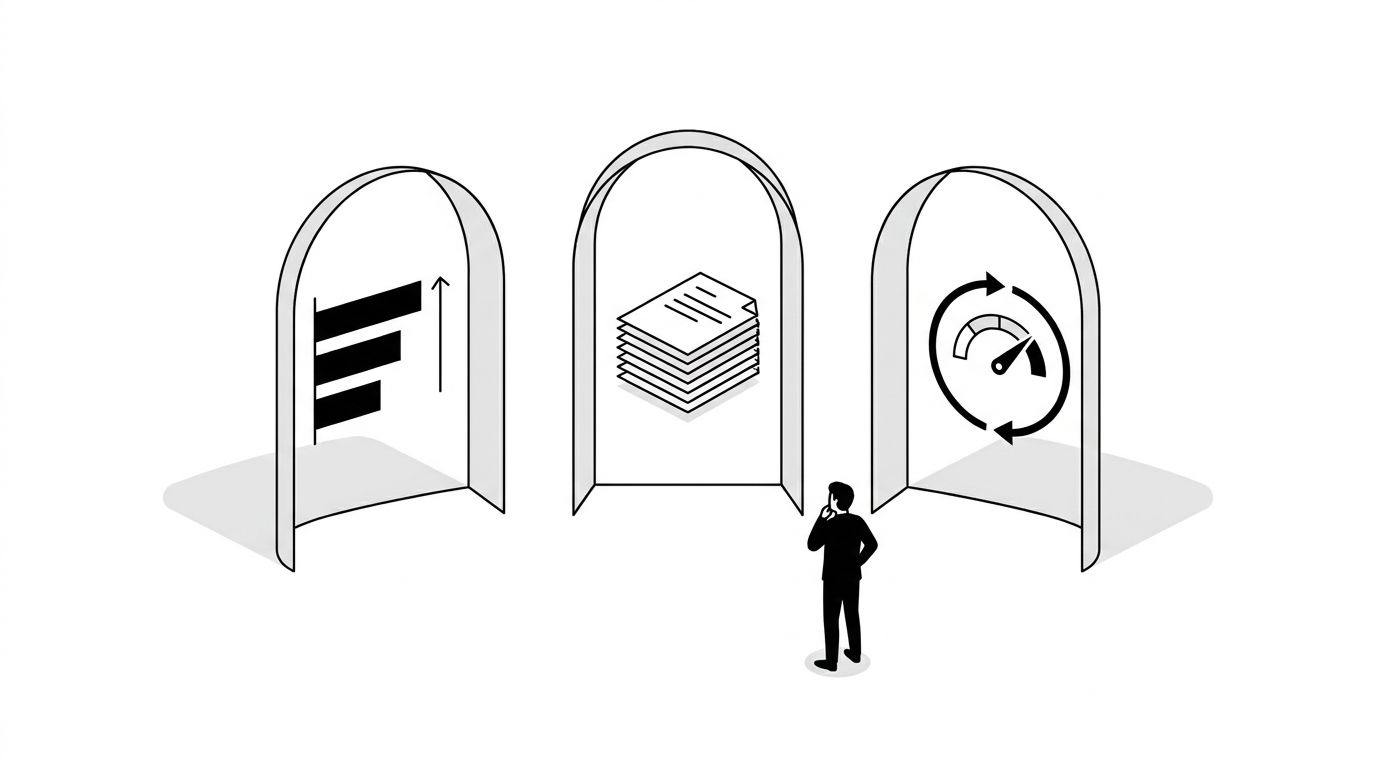
When you audit AI responses for your priority queries, gaps fall into three categories. Each one has a different fix.
- Invisibility gap. Your brand is never mentioned in responses on a priority query. Usually means your content doesn't exist for that topic or is structurally weak (no schema, buried answer, thin page).
- Citation gap. AI mentions your brand but doesn't cite your content. Your brand identity is known, but your pages aren't retrievable or aren't extractable. Usually a content quality or structure issue.
- Misrepresentation gap. AI mentions your brand but the details are wrong. The model has outdated or conflicting information and is settling on incorrect defaults.
Most brands focus on the first and ignore the third, which is dangerous because misrepresentation compounds. Our AI gets brand wrong post covers what to do when this happens.
How to Run the Audit
Three steps. No fancy tools required for the first pass.
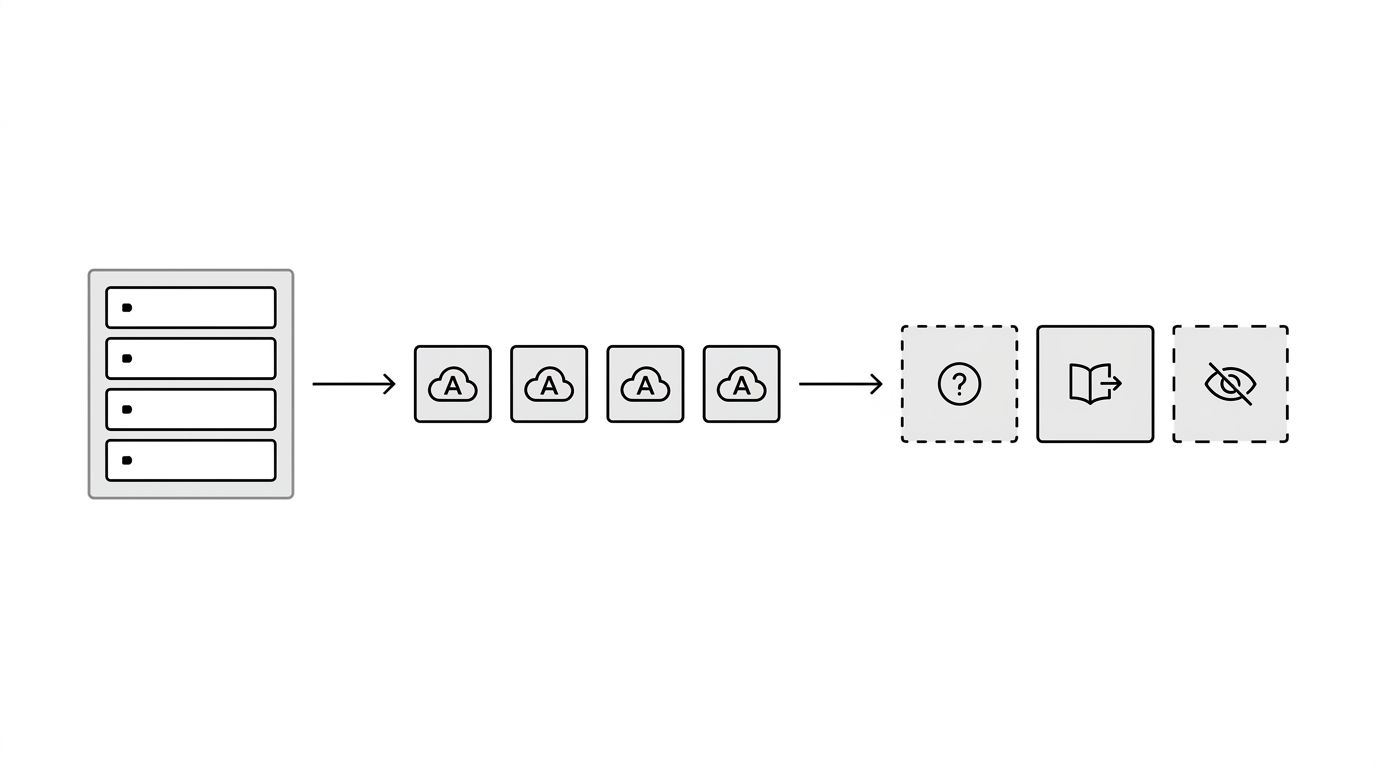
- Define your priority query set. Between 30 and 100 queries. Mix category-level ("best [category] tools"), problem-based ("how do I [task]"), and comparison ("[competitor] alternatives"). Bias toward queries your buyers would actually run.
- Capture responses across AI platforms. Run each query in ChatGPT, Perplexity, Google AI Overviews, and Copilot. Record: was your brand mentioned? Was your content cited? Were the details accurate?
- Categorize every gap. Assign each query to invisibility, citation, or misrepresentation. That categorization drives the fix.
For scaled programs, automation helps. Our first AI visibility audit guide walks through the automated approach.
What Actually Fills the Gaps
The fix depends on the gap type. This is where keyword-era playbooks fail and GEO-specific approaches matter.
For invisibility gaps:
- Publish content that directly answers the query with a definitional, first-paragraph answer.
- Add FAQPage schema with the exact phrasing of the query as the question.
- Link from authoritative pages on your site to the new content.
- Get external citations (press mentions, relevant forum discussions) to boost retrievability.
For citation gaps:
- Restructure existing content so the answer is near the top.
- Add Article and FAQ schema.
- Strengthen internal linking from topic-relevant pages -- a focused internal linking audit for AI is the fastest way to find the gaps where pages are stranded from the rest of your topical structure.
- Consider whether the content needs more specific data or named methodologies.
For misrepresentation gaps:
- Publish a clear, structured correction on your own site.
- Pursue Wikipedia or Knowledge Graph updates where feasible.
- Push corrected messaging through press and partnerships.
- Track the misrepresentation until AI responses shift.
Our repurpose-content guide covers how to transform existing assets into gap-filling content without starting from scratch.
What to Prioritize
You can't fix every gap at once. Rank your gaps by buyer impact, not by query volume.
- Gaps on queries that your sales team says they hear from prospects.
- Gaps on queries where a named competitor is winning and you've lost deals to them.
- Gaps where misrepresentation affects compliance or legal positioning.
Those three categories should get 80% of the remediation effort. Everything else waits.
If you want a benchmark against your category, run a free-audit to see which gaps are unique to your brand versus which ones are structural across the space. For ongoing work, our content strategy service includes recurring gap audits.