Measuring AI-Driven E-Commerce Revenue
How do you actually attribute ecommerce revenue to AI visibility when the buyer never clicks a traceable link, and which proxies get closest?

Ecommerce attribution for AI is ugly. Users hear a product recommendation in ChatGPT or Perplexity and then open Amazon or your site directly, with no referral header to trace. Classic attribution breaks. The fix isn't a perfect model. It's a triangulated approach: referral traffic, branded search lifts, and controlled holdout tests. Brands that wait for a clean AI attribution number miss two years of budget decisions. The ones that triangulate are already moving spend and showing board-level results.
Why Standard Attribution Misses AI Revenue
Most AI product recommendations don't click through. ChatGPT sometimes cites a source, but often summarizes and sends the user elsewhere entirely. Perplexity includes citations but many users read the answer and open a new browser tab manually. Google AI Overviews keep users inside the SERP.
The result: AI-influenced revenue shows up as "direct" or "organic branded search" in analytics, with no indication that AI was involved. Traditional attribution models charge that revenue to the last traceable channel and underestimate AI's contribution.
The Three Proxies That Actually Work
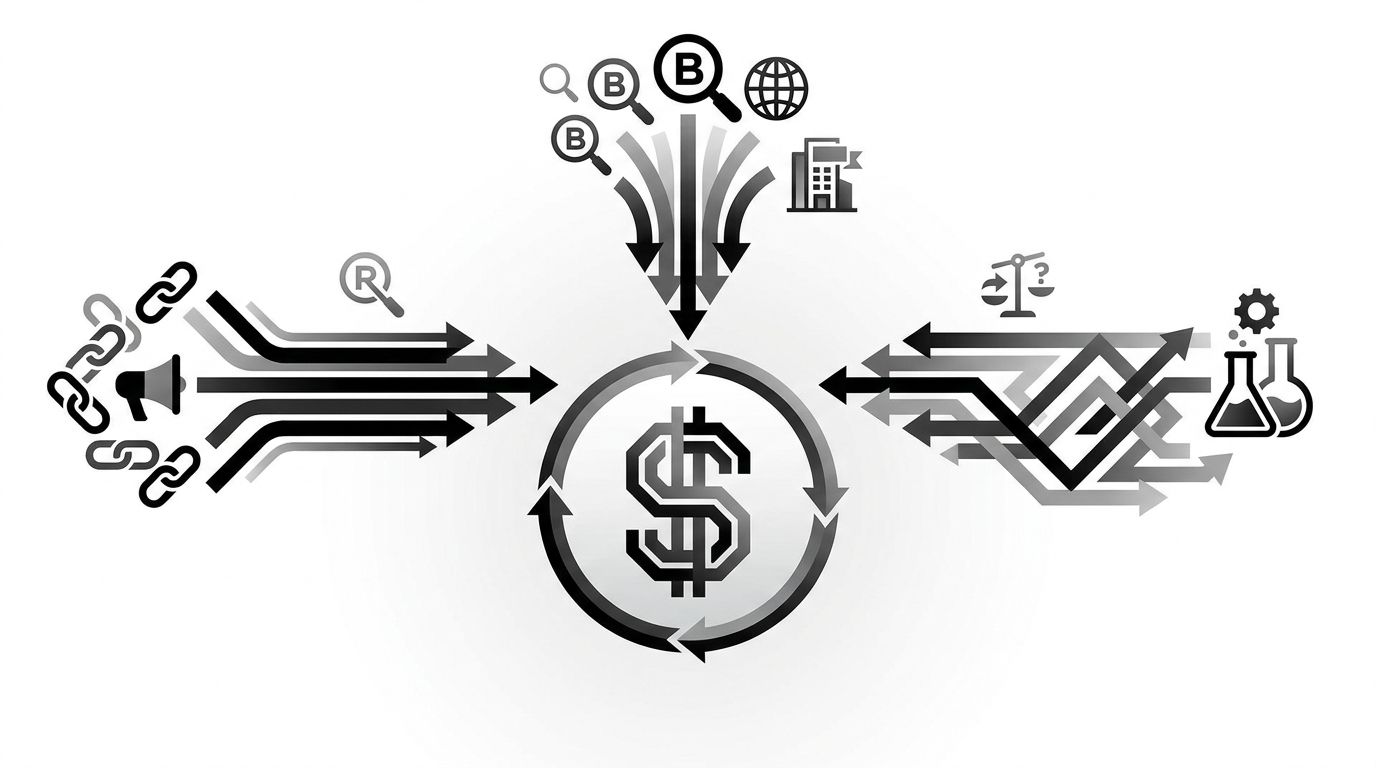
No single metric solves this. Three used together get you close enough for decisions.
- AI referral traffic. Direct traffic from AI platforms when the platform does include a clickable link. Underreports total AI influence but is the only traceable data point.
- Branded search lift. When you appear more in AI responses, branded searches for your product usually rise two to six weeks later. The correlation is consistent across categories.
- Holdout tests. The cleanest method. Push an AI visibility campaign on one product line and not on another similar one. Compare revenue trajectories.
The diagram below shows how the three signals combine into a usable attribution view.

How to Run the Measurement
A workable ecommerce AI revenue measurement doesn't require new tools. Most of it is already in your analytics stack. What's missing is the structure.
- Segment AI referral traffic. Tag traffic from ChatGPT, Perplexity, Copilot, and any other AI source you see in the referrer list. Track sessions, conversion rate, and revenue per session separately. You'll likely find AI traffic converts well above generic organic.
- Track branded search lifts. Pull Google Search Console data for brand-specific and product-specific queries. Plot against AI mention rate on category queries. A two to six week lag is common.
- Run quarterly holdouts. Pick a product or category. Invest in AI visibility work for 90 days. Compare revenue against a matched product where you didn't invest. Expect 3 to 10% lift for well-executed campaigns.
- Triangulate into a single number. Blend referral revenue, incremental branded-search revenue, and holdout-implied revenue. Even a directional number beats no number in the budget conversation.
Our calculate GEO ROI guide walks through the full math. The AI visibility metrics guide covers the upstream metrics that feed these calculations.
What the Numbers Look Like in Practice
In ecommerce accounts I've helped set up, a typical AI attribution picture after two quarters of measurement looks like this.
- AI referral traffic: 1 to 4% of total sessions.
- AI-influenced conversion rate: 2 to 3x higher than generic organic. Users arrive with clear intent.
- Branded search lift correlated with AI visibility: 5 to 20% above baseline after sustained investment.
- Holdout-implied revenue uplift: 3 to 10% on treated product lines.
Those numbers don't sound huge. They add up to a meaningful top-line contribution for most ecommerce brands, and the trajectory has been pointing up quarter over quarter.
What to Tell Finance
Finance doesn't want a story. Finance wants a model they can audit. Give them one.
- Show the math for referral-attributed revenue (direct and traceable).
- Show the branded-search correlation with a lag analysis.
- Show holdout test results with a defensible methodology.
- Explain what you can't attribute with confidence and say so explicitly. Honest uncertainty builds more trust than false precision.
For ecommerce brands running this at scale, our ecommerce solution page covers the standing measurement framework. The GEO ROI business impact guide has the broader revenue framework across channels.