Agentic Commerce: When AI Buys on Behalf of Consumers
AI agents are starting to buy on behalf of shoppers, so how do you make sure your brand lands in an AI agent's cart instead of a competitor's?


Agentic commerce is the shift from AI recommending products to AI researching, comparing, and purchasing them autonomously. Instead of a consumer asking ChatGPT "what's the best running shoe for flat feet" and then visiting a retailer to buy it, the AI agent handles the entire chain: evaluating options, comparing prices, checking availability, and completing the transaction. The human approves the final decision, or increasingly, delegates that too.
The market is moving fast. McKinsey estimates that agentic commerce could reshape over $1 trillion in US retail spending. Morgan Stanley projects $190 billion to $385 billion in AI-mediated purchases by 2030. OpenAI's Agentic Commerce Protocol, Google's agent-to-agent commerce tools, and Perplexity's "Buy with Pro" feature are all live and expanding. The infrastructure is operational.
Most coverage of agentic commerce focuses on the consumer experience: how AI agents compare products, what trust barriers remain, and which retailers are participating. That framing matters, but it misses the most consequential risk for brands. When an AI model gets updated, brand market share in AI-mediated purchases reshuffles, even when nothing about your product, pricing, or reviews has changed.
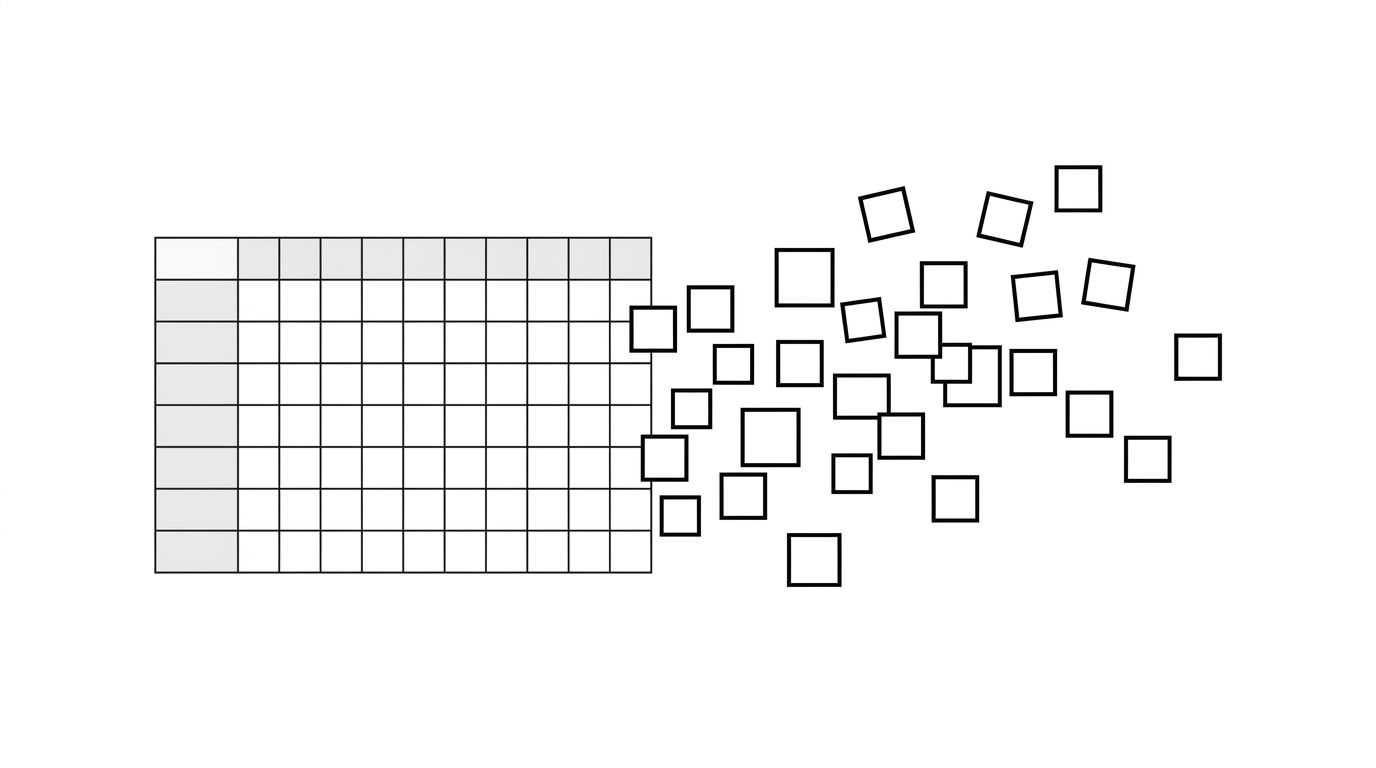
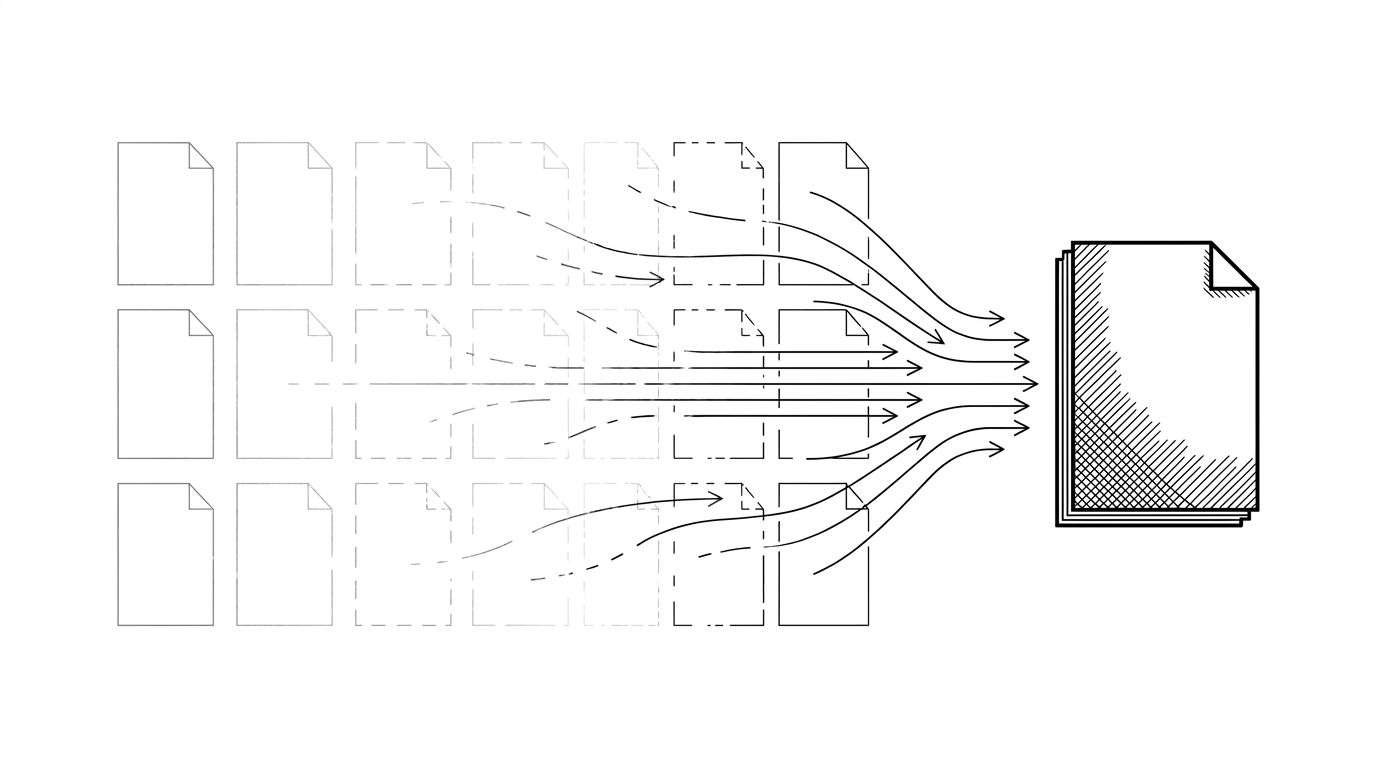
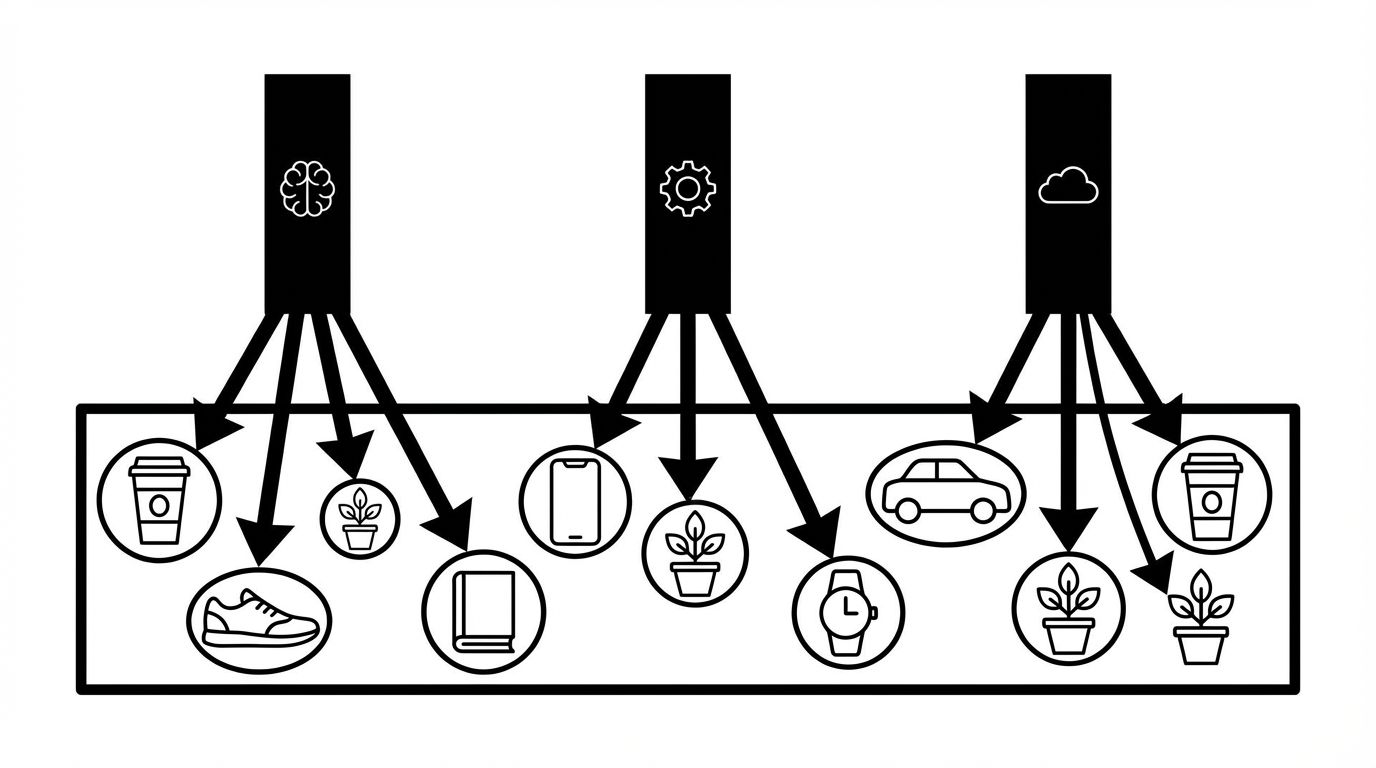
A Columbia Business School analysis and an arxiv study on AI shopping agents surfaced this finding, but almost no marketing article has fully unpacked it. When a platform like Gemini switches from one model version to another, the purchasing decisions its agents make shift dramatically. In controlled experiments, Claude, GPT-4.1, and Gemini 2.5 Flash made meaningfully different product selections for identical shopping queries. In one product category, a brand that dominated under one model version was literally never selected by the replacement model. Same products, same reviews, same prices, completely different outcome.
The diagram below illustrates this reshuffle effect. Each model version selects a different set of products from the same pool, with no predictable pattern connecting one version's choices to the next.
This is fundamentally different from the SEO analogy most brands reach for. Google algorithm updates shift rankings gradually, and the signals that matter (backlinks, content quality, page speed) are known and relatively stable. AI model updates are more like a complete reset. The model's internal weighting of brand signals, product attributes, and review patterns can change in ways that are not disclosed, not predictable, and not reversible. There is no changelog. There is no deprecation notice. You wake up one morning and your brand has been removed from the consideration set by an opaque model swap.
The existing GEO advice for agentic commerce is to optimize your content, build citations, and make sure your brand has strong structured data. That advice is necessary but insufficient, because it frames AI visibility as a stable state you achieve and maintain. The model-update risk reveals that AI visibility in agentic commerce is a fragile, non-transparent variable that can be reset at any time by events entirely outside your control. The only defense is continuous monitoring: tracking your brand's presence in AI shopping recommendations across every major platform, flagging drops immediately, and having a response playbook ready for when a model update pushes you out.
For brands preparing for agentic commerce, the strategic priorities layer on top of each other. First, make sure your product data is machine-readable and complete. AI agents making purchasing decisions need structured product attributes they can compare programmatically: pricing, specifications, availability, warranty terms, return policies, and compatibility information. This goes beyond schema markup on a webpage. It means product data feeds submitted to merchant programs and exposed through APIs that agents can query directly.
Second, build redundant brand signals across multiple platforms. An AI agent deciding between products draws on reviews, comparison content, community discussions, and press coverage. The broader and more diverse your signal footprint, the more resilient your brand is to any single model update. A brand that appears across G2, Reddit, Trustpilot, independent review sites, and industry publications is harder to dislodge than one that relies on a single strong signal source.
Third, monitor continuously. This is not optional. When a model update drops your brand from AI shopping recommendations, you need to know within days, not months. Brands that detect the shift early can accelerate their response (publishing fresh comparison content, generating new reviews, reinforcing third-party presence) while brands that discover it through revenue declines have already lost the formation window for the new model's recommendation pattern.
Fourth, prepare for agent-specific optimization. As AI agents become more sophisticated, they will increasingly evaluate factors that consumers do not: API response times, data feed freshness, structured pricing consistency across sources, and verified security credentials. Building this infrastructure now positions your brand for the channel as it matures.
The shift to agentic commerce is an ongoing transition, not a single event. The brands that treat it as a monitoring and responsiveness challenge, rather than a one-time optimization task, will maintain market share through the inevitable model updates ahead. Track your AI visibility across platforms continuously, and start with a free audit to establish your baseline before the next model update catches you off guard.