AI Platform Optimization, Winning Visibility on Every AI Engine
Why does your brand show up on one AI engine and disappear on the next, and how do you win visibility across every major AI platform?

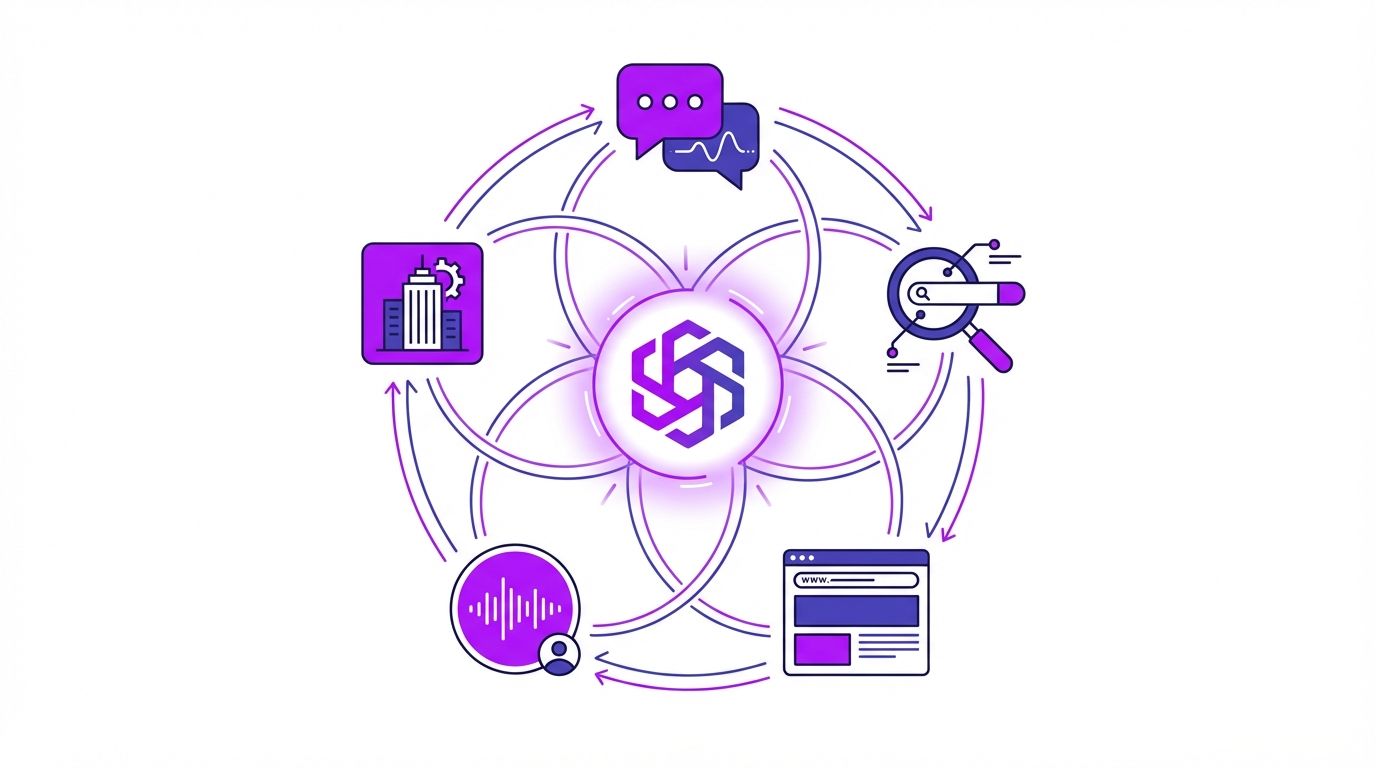
Your brand might rank on ChatGPT but be completely invisible on Perplexity. You could show up in Google AI Overviews but get zero mentions from Microsoft Copilot. And if you're only optimizing for one AI engine, you're reaching a fraction of the audience that's now turning to AI for buying decisions.
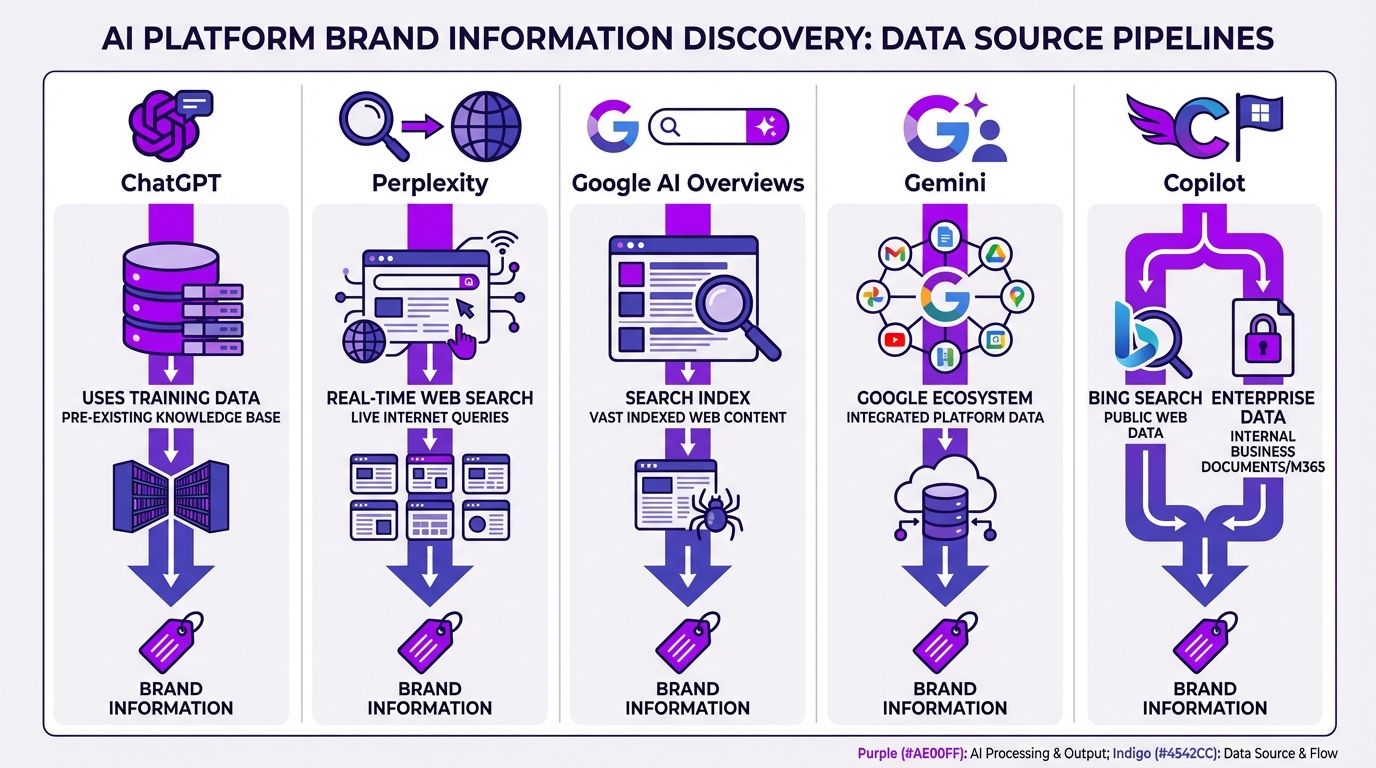
Here's the problem: each AI platform discovers, retrieves, and surfaces brands differently. ChatGPT leans on training data. Perplexity searches the live web. Google AI Overviews pulls from its own index. Gemini blends Google's ecosystem with multimodal signals. Copilot runs on Bing plus enterprise context. A strategy built for one platform leaves gaps on the others.
This guide breaks down how each major AI engine works, what it takes to win visibility on each one, and how to build a unified AI platform optimization strategy that covers all five. No other resource puts this together in one place, most advice focuses on ChatGPT alone and ignores the rest.
How AI Platforms Actually Differ
Before optimizing for anything, you need to understand what you're optimizing for. The five major AI platforms that generate brand recommendations each operate on different architectures, pull from different data sources, and weight signals differently.
Training Data vs. Real-Time Retrieval
The most important distinction is whether a platform relies on static training data or real-time web retrieval, or both.
- Training-data-heavy platforms (ChatGPT, Gemini) learned brand associations during training. Changing how these models talk about your brand requires sustained content investment that shows up in future training runs.
- Retrieval-heavy platforms (Perplexity, Google AI Overviews, Copilot) search the live web every time a user asks a question. Changes to your content can show up in responses within days or weeks.
- Hybrid platforms, most engines are moving toward hybrid approaches. ChatGPT now browses the web for many queries. Gemini pulls from Google's real-time index. The line is blurring, but the emphasis still varies.
This distinction shapes your entire strategy. If you want fast wins, focus on retrieval-heavy platforms first. If you want durable, compounding advantages, invest in the content and brand signals that feed training data.
Platform-Specific User Behavior
Users interact with each AI platform differently, and that affects which brands get surfaced:
- ChatGPT users tend to ask open-ended questions ("What's the best CRM for a 50-person sales team?") and expect conversational recommendations
- Perplexity users ask research-oriented queries and expect sourced answers with citations
- Google AI Overview users are searching traditionally and get AI-generated summaries above organic results
- Gemini users often interact through Google Workspace, asking questions in the context of their work
- Copilot users ask questions inside Microsoft products, Outlook, Teams, Edge, with enterprise context
Understanding these patterns tells you what kind of content each platform needs to find about your brand.
Optimizing for ChatGPT
ChatGPT is the platform that gets the most attention, and for good reason. With over 200 million weekly active users, it's where many people first encounter AI-generated brand recommendations. Understanding how ChatGPT decides what brands to recommend is foundational to any AI visibility strategy.
What Drives ChatGPT Recommendations
ChatGPT surfaces brands based on a combination of:
- Training data signals, What was written about your brand across the web before the model's training cutoff. Volume, authority, and consistency of mentions all matter.
- Web browsing results, For queries where ChatGPT searches the web, it retrieves and synthesizes current content. This behaves more like a retrieval system.
- Brand association strength, How strongly your brand is linked to specific categories, use cases, and attributes in the model's learned representations.
Tactical Playbook for ChatGPT
Build category-defining content. ChatGPT recommends brands it associates with specific categories. If you sell project management software, you need deep content that explicitly connects your brand to project management, not just feature pages, but guides, comparisons, and use-case breakdowns.
Get mentioned on authoritative third-party sources. ChatGPT's training data includes content from high-authority sites. A mention in a TechCrunch article, a Gartner report, or a G2 category review carries more weight than ten blog posts on your own site.
Structure content with explicit answers. When your content directly answers a question, "The best CRM tools for small businesses are X, Y, and Z because...", ChatGPT is more likely to pick up and reproduce that framing.
Maintain consistency across channels. ChatGPT synthesizes information from multiple sources. If your homepage says one thing, your LinkedIn says another, and your product docs say a third, the model gets a weak, conflicted signal about your brand.
- Audit your brand messaging across all public-facing properties
- Ensure your value proposition, category positioning, and key differentiators are stated consistently
- Update outdated content that contradicts your current positioning
ChatGPT-Specific Metrics to Track
- Brand mention rate for your target category queries
- Positioning (are you mentioned first, second, or last in a list?)
- Accuracy of brand description (does ChatGPT correctly describe what you do?)
- Sentiment of mentions (positive, neutral, negative characterization)
Optimizing for Perplexity
Perplexity is the fastest-growing AI search engine, processing over 100 million queries per month. It operates fundamentally differently from ChatGPT, it's a retrieval-first platform that searches the web in real time and builds every answer from live sources.
What Makes Perplexity Different
Perplexity cites its sources. Every answer includes numbered references that link back to the original content. This means Perplexity optimization has a direct, measurable traffic benefit, your content doesn't just influence the AI's answer, it drives clicks back to your site.
The other key difference: Perplexity's answers change immediately when web content changes. You don't need to wait for a training cycle. Publish authoritative content today, and Perplexity can surface it tomorrow.
Tactical Playbook for Perplexity
Win traditional search first. Perplexity's retrieval system favors content that already ranks well in search engines. Pages in the top 10 organic results for a query are more likely to be retrieved and cited.
Write citation-worthy content. Perplexity needs to pull a specific claim, statistic, or recommendation from your page. Content that buries the answer under 500 words of preamble gets skipped in favor of pages that state the answer clearly upfront.
- Lead every section with the key point or finding
- Include specific data points, percentages, and benchmarks that Perplexity can quote
- Use descriptive H2 and H3 headings that match how people phrase questions
- Add FAQ sections with direct question-and-answer formatting
Optimize for featured snippets. Perplexity often retrieves the same content that Google selects for featured snippets. If you're already optimizing for snippet capture, you're halfway there.
Publish fresh content regularly. Perplexity weights recency. A guide published this month outperforms one published two years ago, all else being equal. Keep your most important content updated with current data and examples.
Perplexity-Specific Metrics to Track
- Citation frequency (how often your pages are cited as sources)
- Click-through rate from Perplexity citations
- Query coverage (which target queries cite your content, which don't)
- Source position (are you citation #1 or citation #5?)
Optimizing for Google AI Overviews, Gemini, and Copilot
These three platforms share some retrieval characteristics but each has unique signals worth optimizing for independently.
Google AI Overviews
AI Overviews appear above traditional organic results in nearly 40% of Google searches. They pull from Google's own index, which means your SEO performance directly determines your AI Overview presence.
Key tactics:
- Rank in the top 5 organically. Google AI Overviews overwhelmingly cite content that already ranks on page one. If you're on page three for a query, you won't appear in the AI Overview for it either.
- Optimize for featured snippets. Pages selected as featured snippets have a significantly higher chance of being included in AI Overviews.
- Use schema markup aggressively. FAQ schema, HowTo schema, Product schema, and Organization schema all help Google's AI systems parse your content accurately. A technical SEO audit can identify gaps in your schema implementation.
- Build topical authority through content clusters. Google's AI Overviews favor brands that demonstrate deep expertise on a topic, multiple interlinked pages covering a subject from different angles.
One critical detail: AI Overviews can reduce click-through rates for informational queries since the answer is displayed directly. But for commercial and transactional queries, the ones that drive revenue, AI Overview inclusion builds trust and drives qualified traffic.
Gemini
Gemini is deeply embedded in Google's ecosystem, which gives it access to signals no other AI platform has.
Unique Gemini signals:
- YouTube content, Gemini processes video content. Brands with authoritative YouTube channels on their topics get an additional visibility channel that ChatGPT and Perplexity can't access the same way.
- Google Business Profile, For local and service-based queries, Gemini pulls from GBP data. Complete, optimized GBP listings feed directly into Gemini's responses.
- Google Workspace integration, Gemini operates inside Gmail, Docs, and Sheets for enterprise users. Content that surfaces in Google's ecosystem (Drive, Docs) has additional touchpoints.
- Google's Knowledge Graph, Entities in Google's Knowledge Graph get preferential treatment. If your brand has a Knowledge Panel, Gemini has a structured representation of your business to work from.
Key tactics:
- Claim and fully optimize your Google Business Profile
- Build a YouTube presence with search-optimized video content on your core topics
- Ensure your brand has a Google Knowledge Panel (or work toward one through Wikipedia, structured data, and authority building)
- Publish content on Google-indexed properties beyond your website (YouTube descriptions, Google Docs published as web pages, Google Merchant Center for e-commerce)
Microsoft Copilot
Copilot is the AI platform marketers most often overlook, and that's a mistake. It's embedded across Microsoft 365 (Word, Excel, Outlook, Teams, Edge), reaching hundreds of millions of enterprise users daily.
What makes Copilot different:
- Bing-powered retrieval, Copilot searches the web using Bing's index. If your content doesn't rank well on Bing, Copilot won't find it.
- Enterprise context, Copilot often operates inside enterprise tools where users ask work-related questions. B2B brands have outsized opportunities here.
- LinkedIn integration, Microsoft owns LinkedIn. Content published on LinkedIn and LinkedIn's authority signals feed into Copilot's recommendations.
Key tactics:
- Optimize for Bing specifically. Bing's ranking factors differ from Google's. Bing places more weight on exact-match keywords, social signals, and domain authority. Run a Bing Webmaster Tools audit and address any crawling or indexing issues.
- Invest in LinkedIn content. Executive thought leadership, company page posts, and LinkedIn articles create signals that feed Copilot's understanding of your brand. This is especially valuable for B2B companies.
- Ensure strong technical SEO for Bing. Submit your sitemap to Bing Webmaster Tools, verify your site, and check that Bing is crawling and indexing your key pages. Many companies optimize only for Google and discover Bing has crawl issues they never noticed.
- Target enterprise-focused queries. Copilot users are often asking questions in a work context, vendor evaluations, tool comparisons, process recommendations. Content tailored to these professional use cases performs well.
Building a Unified Cross-Platform Strategy
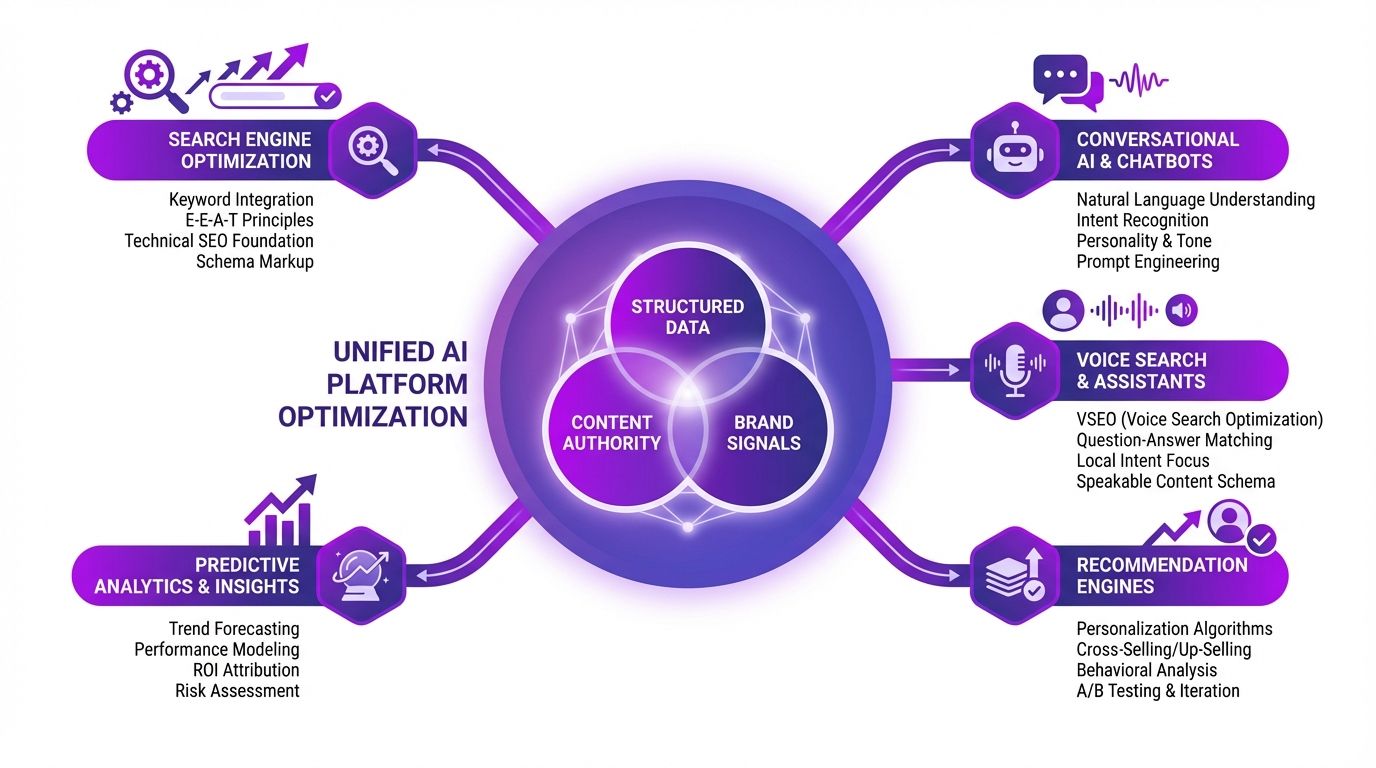
Optimizing for each platform individually creates fragmented effort. The smarter approach is to build a unified strategy with shared foundations and platform-specific adaptations.
The Shared Foundation (80% of Your Effort)
Most of what makes your brand visible across AI platforms is the same regardless of which platform you're targeting:
- Authoritative, well-structured content on your core topics, this feeds every platform
- Consistent brand messaging across all properties, reduces signal confusion for all models
- Strong third-party presence, reviews, press coverage, expert mentions carry weight everywhere
- Technical optimization, schema markup, fast load times, clean architecture benefit all retrieval systems
- Regular content updates, freshness matters for every retrieval-based platform
If you do these five things well, you'll capture most of the available AI visibility across platforms.
Platform-Specific Adaptations (20% of Your Effort)
Layer these platform-specific tactics on top of your shared foundation:
| Platform | Priority Adaptation |
|---|---|
| ChatGPT | Third-party authority building, brand-category association content |
| Perplexity | Citation-optimized content, featured snippet targeting, content freshness |
| AI Overviews | Top-5 organic rankings, schema markup, topical clusters |
| Gemini | YouTube content, Google Business Profile, Knowledge Graph |
| Copilot | Bing optimization, LinkedIn content, enterprise-focused queries |
Prioritization Framework
Not every brand needs to optimize for all five platforms equally. Prioritize based on where your audience spends time:
- B2B SaaS, ChatGPT and Copilot first (enterprise buyers use both), then Perplexity (research-heavy buyers)
- E-Commerce, Google AI Overviews and Perplexity first (product search queries), then ChatGPT (AI shopping queries are growing fast)
- Enterprise, Copilot first (embedded in the enterprise stack), then ChatGPT and Gemini
- Local businesses, Google AI Overviews and Gemini first (Google ecosystem dominance for local queries)
- Agencies, All platforms matter, since different clients need different priorities. Start with the platforms that overlap most with your current client base.
Measuring Cross-Platform AI Visibility
You can't run a multi-platform optimization strategy without multi-platform measurement. Checking each AI platform manually for every target query is impractical at scale.
What to Measure
Track these metrics across all five platforms:
- Brand mention rate, For your target queries, what percentage of responses mention your brand? Break this down by platform.
- Mention positioning, When you are mentioned, are you first, second, or fifth in the list? First-position mentions get disproportionate attention.
- Sentiment, AI platforms don't just mention brands; they characterize them. "X is a leading tool known for reliability" is very different from "X has been criticized for poor customer support." Track how each platform talks about you.
- Competitor share of voice, Your visibility only matters in context. If competitors appear in 70% of responses and you appear in 20%, you know the gap.
- Citation and referral traffic, For retrieval-based platforms (Perplexity, AI Overviews), track which pages get cited and how much traffic those citations drive.
Building Your Measurement Cadence
- Weekly: Check brand mention rate and sentiment for your top 20 target queries across all platforms
- Monthly: Full query coverage analysis, competitor benchmarking, citation traffic review
- Quarterly: Strategy review, which platforms are you gaining ground on? Where are you losing? What content investments had the biggest impact?
The manual version of this process takes hours per week and still misses changes between checks. Geology's platform automates this monitoring across ChatGPT, Perplexity, Gemini, Copilot, and Google AI Overviews, tracking your brand visibility, sentiment, and competitive positioning continuously.
What to Do Next
AI platform optimization is not a single-platform problem. The brands winning AI visibility in 2026 are the ones treating all five major platforms as a connected system, not isolated channels.
Here's how to get started:
- Audit your current visibility across all platforms. Run a free AI visibility audit to see where your brand stands on ChatGPT, Perplexity, Google AI Overviews, Gemini, and Copilot. You'll get a platform-by-platform baseline in minutes.
- Identify your highest-value platform gaps. Where are competitors getting mentioned and you're not? Which platforms matter most for your audience? Focus your first optimization efforts there.
- Build the shared foundation. Invest in authoritative content, consistent brand messaging, structured data, and third-party presence. These drive results across every platform simultaneously.
- Layer in platform-specific tactics. Once your foundation is solid, add the platform-specific adaptations, YouTube for Gemini, LinkedIn for Copilot, citation-optimized content for Perplexity.
- Set up continuous monitoring. AI responses change constantly as models update and new content gets indexed. Monthly or quarterly audits aren't enough. You need ongoing tracking to catch shifts and capitalize on opportunities in real time.
Every week you spend optimizing for only one AI platform is a week your competitors are building visibility on the other four. The cross-platform approach isn't just more effective, it's the only approach that matches how your customers actually use AI today.