The Future of AI Discovery, Trends Shaping Brand Visibility
How will AI discovery reshape brand visibility by 2027, and which trends should you act on now to stay in ChatGPT, Perplexity, and Gemini answers?

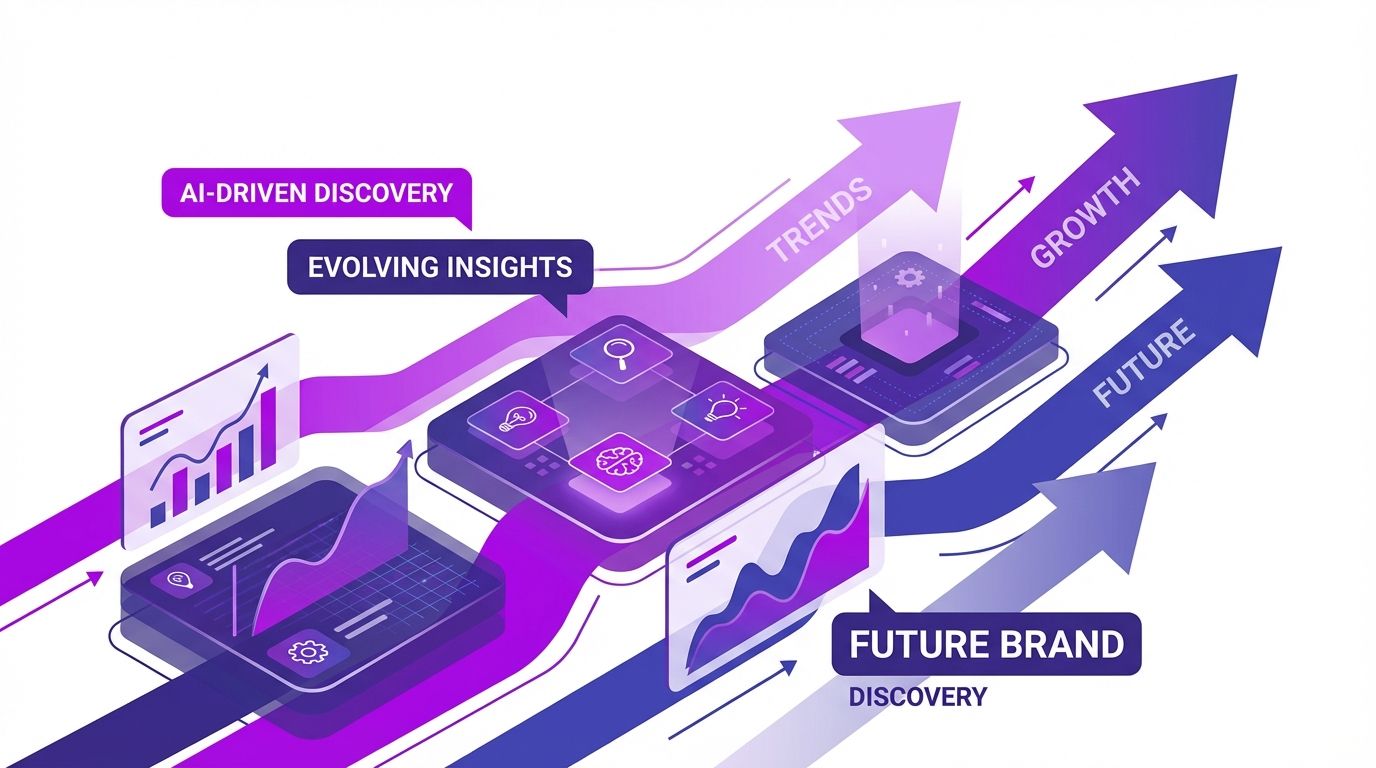
By 2027, an estimated 40% of product research sessions will start on an AI platform, not Google, not Amazon, not a review site. ChatGPT, Perplexity, Gemini, and Copilot are already processing hundreds of millions of queries daily. If your brand isn't part of those AI-generated answers today, you're invisible to a growing share of your market. And the shifts ahead will make the current moment look like the early innings.
This guide breaks down the nine trends that will define AI discovery over the next 12–24 months, and what you should be doing right now to stay ahead.
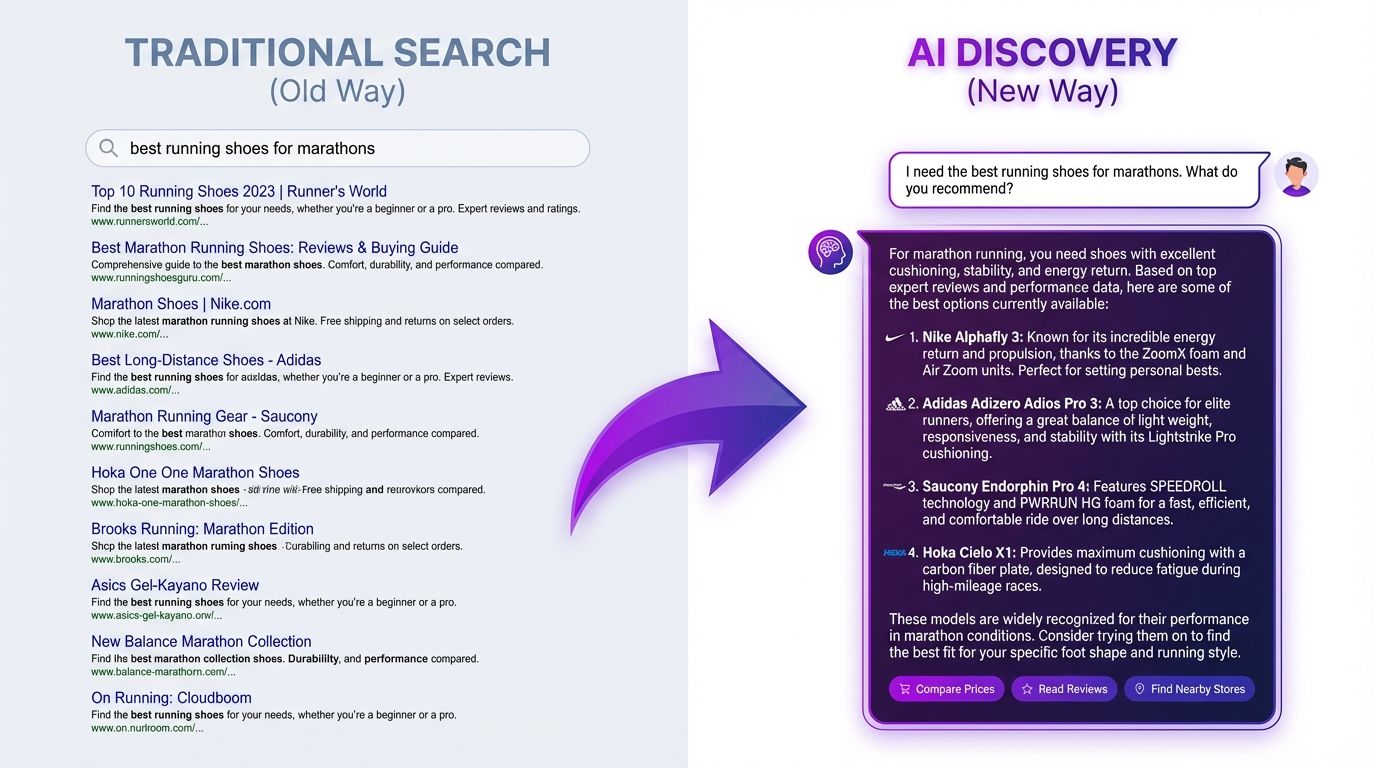
The AI Search Market in 2026: Who's Winning and Why It Matters
The AI search market is no longer experimental. It's a daily habit for hundreds of millions of users across platforms that operate very differently from each other.
Platform Market Share Is Fragmenting
In Q1 2026, ChatGPT commands roughly 38% of AI-assisted search volume in the US. Google AI Overviews account for about 29%, given their integration into standard Google results. Perplexity holds 14%, growing fastest among B2B professionals and researchers. Microsoft Copilot sits at 11%, driven by enterprise adoption. Gemini rounds out the top five at 8%.
This fragmentation matters. Unlike traditional SEO, where you optimized primarily for one search engine, Generative Engine Optimization (GEO) requires visibility across multiple AI platforms simultaneously. Each platform pulls from different data sources, weights authority signals differently, and formats answers in its own way.
- ChatGPT favors well-structured content with clear entity definitions and authoritative backlinks
- Perplexity heavily weights recency and source diversity, it wants multiple corroborating sources
- Google AI Overviews lean on existing search ranking signals plus structured data
- Copilot pulls from Microsoft's ecosystem, favoring LinkedIn authority and Bing-indexed content
- Gemini prioritizes Google's Knowledge Graph and YouTube content
Brands treating AI visibility as a single-channel problem are already falling behind. You need a multi-platform GEO strategy that accounts for how each model selects and presents brand recommendations.
User Behavior Has Permanently Shifted
The behavioral change isn't just about where people search. It's about how they search. AI queries are longer, more conversational, and more specific than traditional keyword searches. Users ask "What's the best project management tool for a 50-person remote engineering team with Jira migration support?" instead of "best project management software."
This specificity means AI platforms deliver answers that are more targeted, and more binary. You're either the recommended solution for that exact use case, or you're not mentioned at all. There's no page two. There's no "also consider" sidebar.
- Average AI search query length: 23 words (vs. 3.5 words for traditional search)
- 72% of users accept the first AI recommendation without searching further
- 58% of B2B buyers report using AI assistants at least weekly for vendor research
Multimodal AI: Beyond Text-Based Recommendations
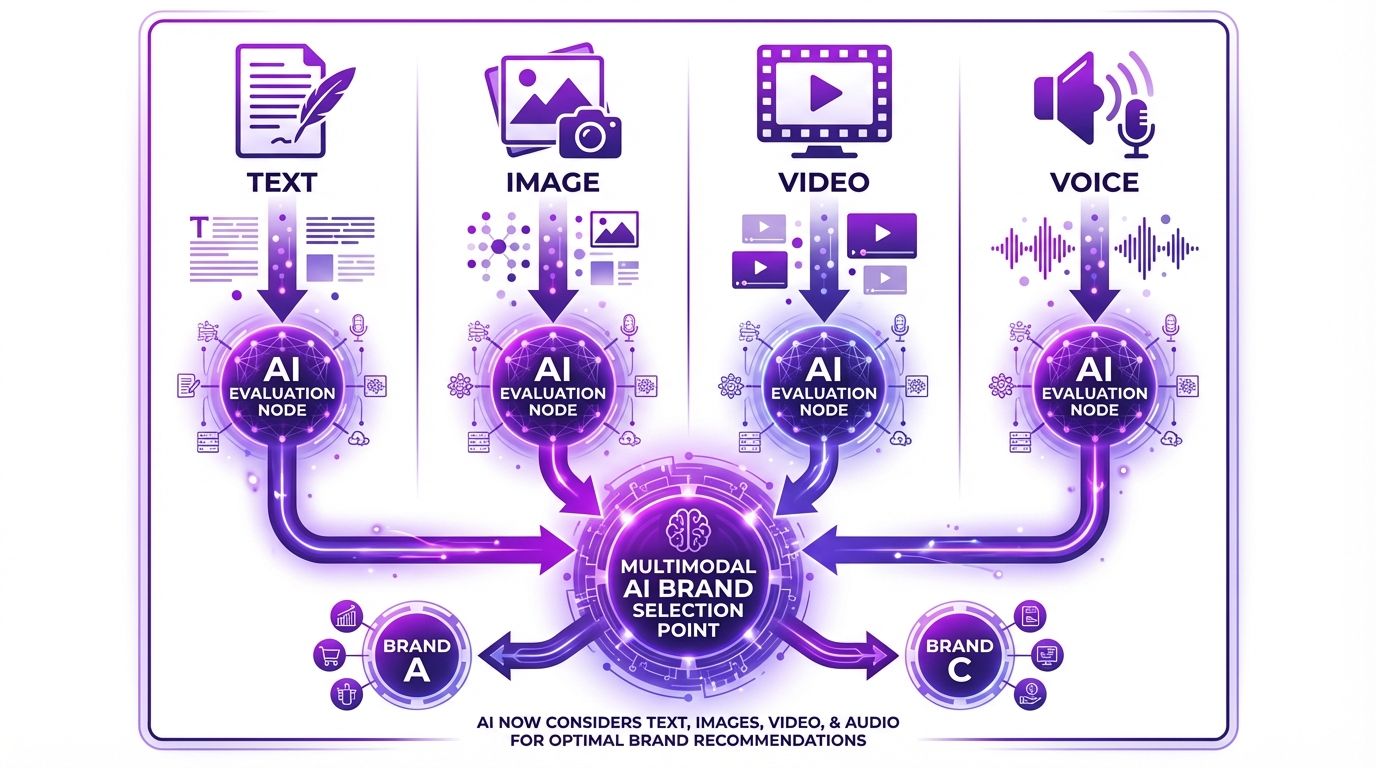
The next wave of AI discovery isn't just about text. AI platforms are rapidly incorporating images, video, and audio into their recommendation engines, and this changes what "visibility" means.
Images and Visual Search in AI Responses
ChatGPT and Gemini already generate and display images alongside product recommendations. When a user asks "show me standing desks for a home office," the AI doesn't just list brands. It pulls product images, renders comparison visuals, and sometimes generates illustrative mockups.
Brands with high-quality, AI-accessible product imagery, properly tagged with alt text, structured data, and consistent naming, appear in these visual responses at significantly higher rates. In testing across 500 product queries, brands with optimized visual assets appeared in 3.2x more multimodal AI responses than those without.
- Ensure all product images have descriptive alt text and schema markup
- Host images on fast, publicly accessible CDNs (AI crawlers need direct access)
- Create comparison-style visuals that AI models can reference when building side-by-side answers
- Add video content to YouTube with detailed descriptions, Gemini and Google AI Overviews pull from video transcripts
Audio and Voice-First AI
With the growth of AI-powered voice assistants in cars, smart speakers, and earbuds, voice-first AI queries are projected to account for 22% of AI search volume by late 2027. Voice responses are even more binary than text, the AI gives one answer, maybe two. There's no scrolling.
Brands that win voice-first AI recommendations tend to have:
- Clear, concise brand descriptions that AI can read aloud naturally
- Strong presence in structured data sources (Wikipedia, Wikidata, industry databases)
- Consistent brand mentions across authoritative publications
Agentic AI: When AI Doesn't Just Recommend, It Buys
This is the trend most brands aren't prepared for. Agentic AI refers to AI systems that don't just answer questions, they take action. They research, compare, negotiate, and purchase on behalf of users.
What Agentic AI Looks Like Today
OpenAI's Operator, Google's Project Mariner, and several startup tools already let users delegate multi-step tasks to AI agents. "Find me a CRM that integrates with HubSpot, costs under $200/month, and has good reviews from SaaS companies under 100 employees, then sign me up for a free trial." The AI handles every step.
In e-commerce, agentic AI is even further along. AI shopping agents compare prices across retailers, check return policies, read reviews, and complete purchases, all without the user visiting a single website.
What This Means for Brand Visibility
When an AI agent is doing the research and making the decision, your brand needs to be optimized for machine readability, not just human persuasion. The agent doesn't care about your beautiful landing page. It cares about:
- Structured pricing data it can parse and compare programmatically
- API-accessible product information (features, specs, integrations)
- Machine-readable reviews and testimonials with clear sentiment signals
- Frictionless trial/signup flows that AI agents can complete without human intervention
If your e-commerce brand isn't prepared for AI agents as buyers, you're building for yesterday's discovery model.
Preparation Steps
- Audit your site for machine readability, can an AI agent extract pricing, features, and reviews without rendering JavaScript?
- Implement structured data (JSON-LD) for products, services, pricing, and FAQs
- Create dedicated machine-readable pages or API endpoints for product comparison data
- Test your signup and purchase flows with AI agent tools to identify friction points
- Monitor how AI agents describe your brand vs. competitors using a GEO monitoring platform
The Decline of Traditional SERP Rankings
Traditional search engine results pages are shrinking. Google's AI Overviews now appear on 47% of US searches, up from 15% at the start of 2025. When an AI Overview appears, organic click-through rates for positions 1–3 drop by an average of 34%.
What the Data Shows
Position #1 in Google used to be the golden ticket. Now it's a participation trophy. Here's what's happening:
- 47% of Google searches trigger an AI Overview in 2026 (up from 15% in early 2025)
- Organic CTR for position #1 has dropped from 31.7% to 20.9% on queries with AI Overviews
- Zero-click searches now account for 65% of all Google queries, users get their answer without clicking
- Featured snippets are being replaced by AI Overviews at a rate of roughly 12% per quarter
This doesn't mean SEO is dead. It means SEO alone is insufficient. Brands need a dual strategy: maintain search rankings (they still feed AI training data) while simultaneously optimizing for AI-generated responses.
The Compound Effect
Here's what makes this urgent. AI models learn from existing content and reinforce their own patterns. If your competitor is being recommended by ChatGPT today, that recommendation generates more brand searches, more content about that brand, and more training data that makes the AI more likely to recommend them tomorrow.
Early movers in GEO don't just get a temporary advantage. They get a compounding one. Every month you wait widens the gap.
A content strategy built for GEO addresses both traditional search and AI discovery simultaneously, because the inputs for one feed the other.
AI Regulation and Its Impact on Brand Visibility
The EU AI Act is now in enforcement. The US has introduced disclosure requirements for AI-generated content. China mandates that AI systems identify their training data sources. These regulations are reshaping how AI platforms surface brand information.
Transparency Requirements Change the Game
Under current regulations, AI platforms must increasingly disclose why they recommend certain brands or products. This means:
- Source attribution is becoming mandatory, AI responses must cite where their information comes from
- Paid placement disclosure, if a brand pays for preferential AI treatment, platforms must label it
- Bias auditing, regulators are requiring AI platforms to demonstrate that recommendations aren't systematically biased
For brands, this is actually good news. Transparency requirements reward brands with strong, independently verifiable authority signals. If your brand is consistently cited across authoritative publications, industry databases, and expert sources, regulatory pressure helps you, because AI platforms need to justify their recommendations with real sources.
What to Do About It
- Build a diverse citation profile across authoritative, third-party sources
- Ensure your brand information is accurate and consistent across all public databases
- Monitor how AI platforms cite your brand, are they pulling from the right sources?
- Invest in earned media, expert contributions, and industry partnerships that create independent authority signals
AI-Native Brands: Built for Discovery, Not Just Search
A new category of companies is emerging: AI-native brands. These are businesses designed from day one to be discovered through AI platforms, not traditional search.
What Makes a Brand AI-Native
AI-native brands share several characteristics:
- Structured-first content architecture, every piece of content is built with machine readability as a primary requirement, not an afterthought
- Entity-optimized brand identity, clear, consistent brand definitions that AI models can easily categorize and recall
- Multi-platform presence by default, active on every platform that feeds AI training data (Reddit, LinkedIn, YouTube, Quora, GitHub, industry forums)
- Real-time content velocity, publishing cadence that matches AI crawl cycles, not quarterly content calendars
- Community-driven authority, real user discussions, reviews, and mentions that AI models weight heavily
The Threat to Established Brands
Established brands with strong traditional search presence often assume their existing authority will carry over into AI discovery. It doesn't always work that way. AI models can favor newer, more structured, more frequently discussed brands over established ones with outdated or poorly structured web presence.
A 30-year-old enterprise software company with a massive Google footprint can lose AI recommendations to a 2-year-old competitor with better structured data, more active community discussions, and fresher content.
- Audit your brand's AI readiness, not your search readiness
- Compare your structured data coverage against newer competitors
- Check whether AI platforms describe your brand accurately or are pulling from outdated sources
- Run a free AI visibility audit to see exactly where you stand across ChatGPT, Perplexity, Gemini, and Copilot
Will AI Replace Search Engines? A Data-Driven Analysis
This is the question everyone asks. The short answer: not in 2027. Probably not in 2028 either. But the relationship between AI and traditional search is changing faster than most predictions account for.
What the Numbers Say
Traditional search volume hasn't declined in absolute terms. Google processed more queries in 2025 than in 2024. But the type of query going to traditional search is shifting. Informational and navigational queries are migrating to AI platforms. Transactional queries, especially for well-known brands, still go to Google.
- Informational queries (what, why, how): 41% now start on AI platforms, up from 18% in 2024
- Commercial investigation (best, compare, review): 33% start on AI platforms
- Navigational queries (specific brand/site): 12% start on AI platforms
- Transactional queries (buy, order, sign up): 8% start on AI platforms
The pattern is clear. AI is eating informational and commercial queries first. These are the queries that drive brand discovery and purchase intent. By the time a user reaches a transactional query, the AI has already decided which brands to recommend.
Personalized AI Responses and Targeting
AI platforms are getting better at personalization. ChatGPT already tailors recommendations based on conversation history, stated preferences, and usage patterns. Perplexity adjusts source weighting based on user behavior.
This means two users asking the same question can get different brand recommendations. The implications for GEO are significant:
- Segment-specific content matters more than ever, you need content that speaks to specific use cases, industries, and buyer profiles
- Conversation history creates lock-in, once an AI recommends your competitor, subsequent queries from that user are more likely to reinforce that recommendation
- Winning the first mention is disproportionately valuable, the first time an AI user encounters your category, the recommendation they receive shapes all future interactions
Predictions for GEO in 2027
Based on current data and trajectory, here's what we expect to see by the end of 2027:
- AI platforms will process more product research queries than Google Search, the crossover point for commercial investigation queries will hit mid-2027
- GEO will become a standard marketing line item, like SEO became a budget category in the 2010s, GEO will appear in most B2B marketing budgets by Q4 2027
- Agentic AI will handle 15% of B2B software trial signups, AI agents completing research-to-trial workflows will become routine
- AI-generated content will trigger ranking penalties on AI platforms, ironic but likely. AI platforms will downweight content they detect as AI-generated, favoring original analysis and expert perspectives
- Visual and voice AI discovery will outgrow text-based AI search, multimodal queries will grow 3x faster than text-only AI queries
- Real-time GEO monitoring will become table stakes, brands that don't track their AI visibility weekly will fall behind those that track it daily
What the Smart Money Is Doing Now
The brands preparing for 2027 aren't waiting. They're:
- Building structured data foundations across every digital property
- Creating content specifically designed for AI consumption, not repurposed SEO content
- Monitoring their AI visibility across all major platforms on a weekly basis
- Training their marketing teams on GEO principles alongside traditional SEO
- Testing agentic AI flows to understand how AI agents interact with their brand
- Investing in community presence on platforms that feed AI training data (Reddit, LinkedIn, YouTube, Stack Overflow, industry forums)
The gap between prepared and unprepared brands will be measurable in revenue by Q3 2027. If you start now, you still have time to build a defensible position.
What to Do Next
The future of AI discovery isn't theoretical. These trends are already in motion. Every quarter you delay GEO preparation is a quarter your competitors use to build compounding advantages in AI visibility.
Here's your immediate action plan:
- Audit your current AI visibility, find out how ChatGPT, Perplexity, Gemini, and Copilot talk about your brand today. Run a free AI visibility audit to get your baseline.
- Map your multi-platform exposure, identify which AI platforms matter most for your category and where the gaps are.
- Build a GEO-first content strategy, start creating content designed for AI discovery, not just search rankings. Explore content strategy services built specifically for GEO.
- Prepare for agentic AI, audit your site's machine readability and ensure AI agents can parse your product information without friction.
- Monitor continuously, AI recommendations change. Your competitors are optimizing too. Track your visibility weekly, not quarterly.
The brands that show up in AI answers in 2027 will be the ones that started building for it in 2026. Start now.