How AI Shopping Assistants Rank Products
When AI picks only two or three products to recommend, how do you make sure yours is one of them and not the brand the AI silently ignores?

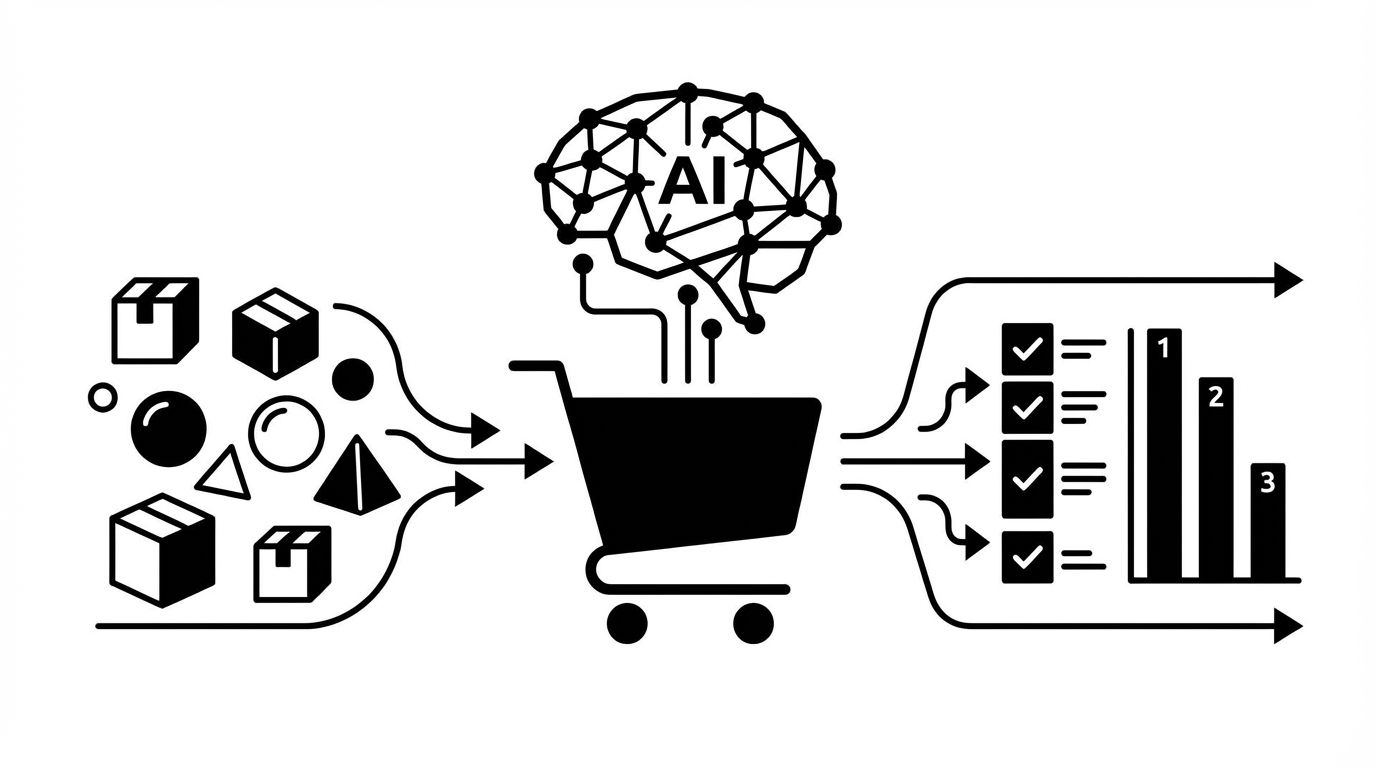
When a consumer asks ChatGPT "what's the best noise-cancelling headphone under $300," the AI does not return a list of ten blue links. It names two or three products, and those products capture the entire consideration set. The brands not named do not get a consolation prize. They get nothing.
Understanding how AI shopping assistants select which products to recommend has become a central question for e-commerce and product-led brands. The ranking mechanics are now partially documented: structured product data, review signals, third-party mentions, and merchant feed enrollment all play a role. But there is a structural problem underneath the published advice that most brands have not yet confronted. The ranking logic AI shopping assistants use was designed for consumer products, and it produces systematically distorted results when applied to B2B software and services.
For physical products, the signals are well-defined. ChatGPT's shopping infrastructure relies on a combination of merchant product feeds (submitted through OpenAI's merchant program), structured data markup on product pages, review volume and sentiment from platforms like Amazon, Trustpilot, and Reddit, and behavioral signals like click-through and conversion rates. Perplexity uses similar signals but weights community discussions and comparison content more heavily. Google AI Overviews pulls from Merchant Center feeds and traditional search ranking signals. Across all three platforms, the products that appear most consistently are those with complete structured data, high review density, and mentions across multiple independent sources.
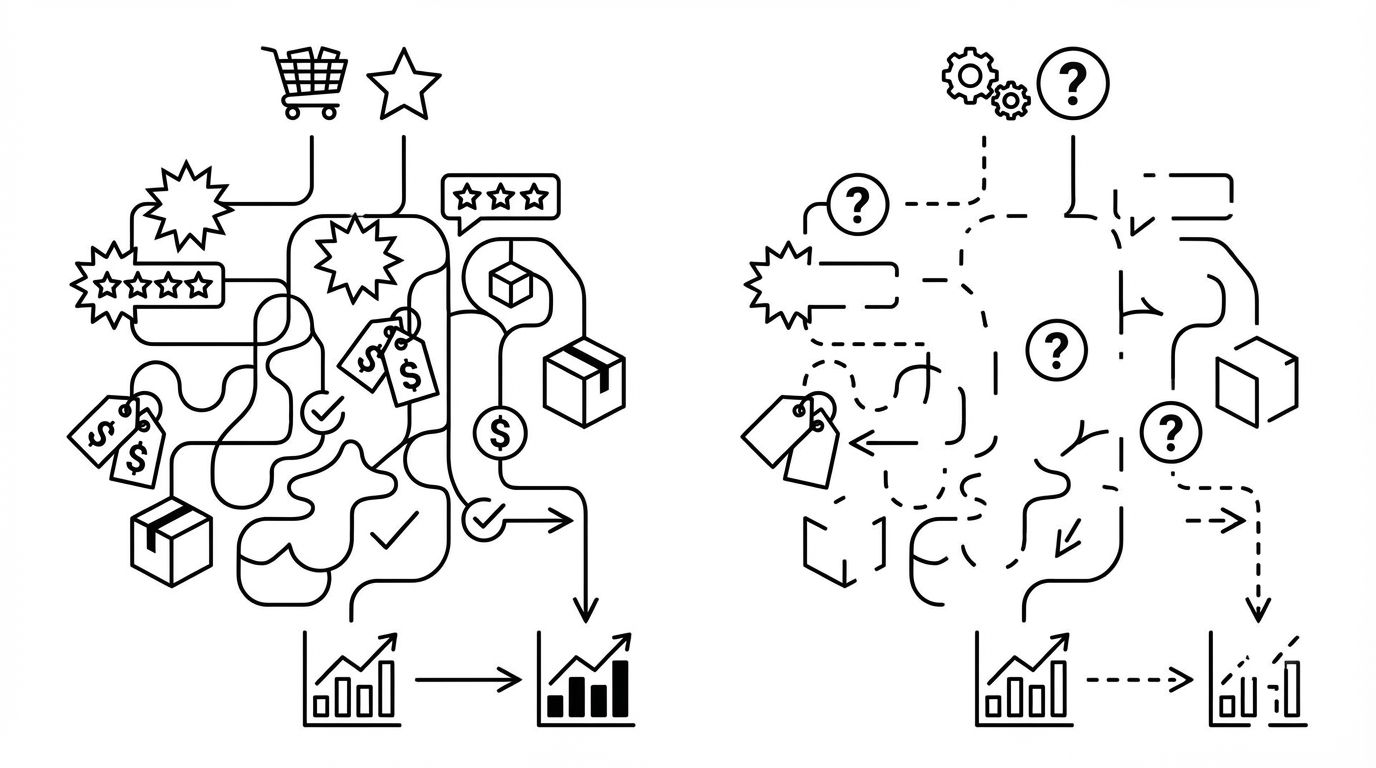
For B2B SaaS and services, these signals break down. There is no equivalent of Amazon's review ecosystem. B2B reviews live on G2, Capterra, and TrustRadius, where a market leader with 10,000 SMB reviews drowns out a purpose-built enterprise tool with 50 reviews, regardless of fit. There is no merchant feed program for software. OpenAI's Agentic Commerce Protocol and Perplexity's Merchant Program are built for physical product catalogs, not software pricing tiers and implementation scopes. And the behavioral conversion signals that e-commerce AI learns from (add-to-cart rates, purchase completions) simply do not exist for B2B, where the "conversion" is a demo request that happens through a sales team weeks later.
The contrast is stark, as the diagram below shows. Consumer products have rich, multi-layered ranking signals. B2B software has structural gaps at nearly every level.
The result is that AI shopping assistants in B2B are effectively frozen at the state of the internet as of their last training or crawl. There is no dynamic feedback loop. The AI formed an impression of which tools are best in a category based on the review volumes, comparison articles, and community mentions that existed when it last ingested data, and that impression persists until the next major update. Brands that were not visible before AI shopping became mainstream are structurally disadvantaged in a way that has no consumer e-commerce parallel.
This creates a first-mover problem. For consumer products, a new entrant can gain visibility relatively quickly by building review volume, enrolling in merchant programs, and optimizing product feeds. For B2B software, the path is slower and more indirect. The AI's recommendation is downstream of a content ecosystem that takes months to build: comparison articles that include your brand, community discussions where users mention your tool by name, analyst coverage that positions you in the category, and review profiles with enough volume and recency to register.
If you sell physical products, focus on the documented playbook: enroll in ChatGPT's merchant program, optimize your product feed with complete structured data (title, description, price, availability, brand, reviews), and build review volume across the platforms AI shopping assistants index. Make sure your product pages answer comparison queries directly. "X vs Y" and "best X for [use case]" are the highest-converting prompt patterns, and pages structured to match those queries earn more citations.
If you sell B2B software or services, the strategy is different. Your product page optimization matters less than your ecosystem presence. Prioritize G2 and Capterra review generation with a focus on enterprise reviewers, not just SMB volume. Invest in independent comparison content that names your tool alongside category leaders. Build community presence on the platforms Perplexity and ChatGPT index: Reddit, Stack Overflow, and relevant industry forums. And publish structured comparison data on your own site that AI can extract: feature matrices, pricing comparisons, and integration compatibility tables.
Regardless of product type, timing matters. AI models anchor on early recommendation patterns. Brands that establish citation density during the initial window when AI shopping expands into a new product category get locked in as "known safe recommendations." Brands that arrive after the pattern solidifies are fighting uphill against the AI's established confidence in the incumbents.
To see which products and categories your brand is currently recommended for across AI shopping platforms, start with a free AI visibility audit.