Brand Reputation and Safety in AI, Controlling Your AI Narrative
What do you do when ChatGPT, Perplexity, or Gemini gets your brand wrong, and how do you stop AI hallucinations from becoming your narrative?

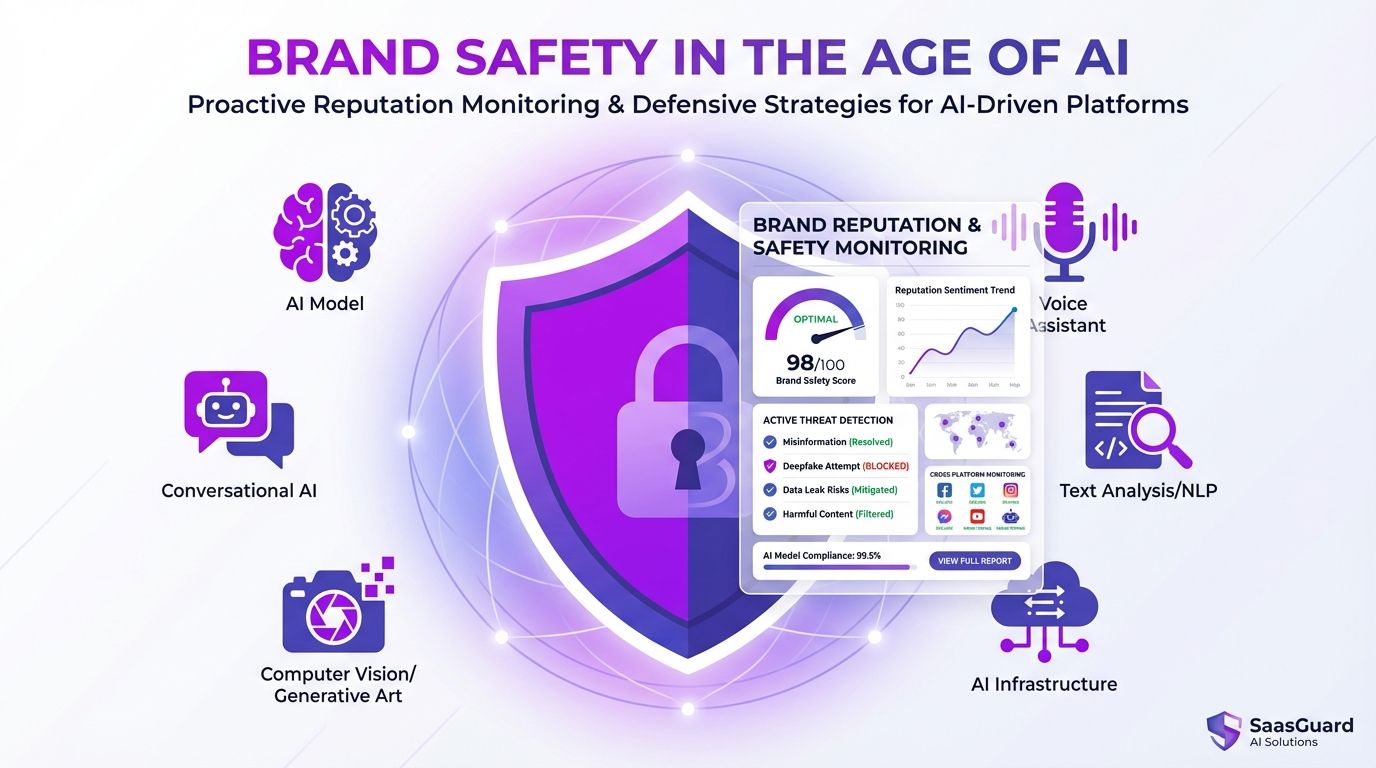
In February 2026, a Fortune 500 pharmaceutical company discovered that ChatGPT was telling users one of their FDA-approved drugs had been "recalled due to safety concerns." It hadn't. The drug was on the market, performing well, and had no regulatory issues. But for six weeks, millions of users received that fabricated answer, and the company's stock dipped 3.2% before they even identified the source.
This is the new reality of brand reputation in AI. You don't control the narrative anymore. AI platforms, ChatGPT, Perplexity, Gemini, Microsoft Copilot, Google AI Overviews, generate answers about your brand whether you're paying attention or not. And when they get it wrong, the damage spreads at machine speed.
Traditional reputation management was built for search engines and social media. It assumed you could monitor results, push down negative links, and respond to reviews. AI-generated answers don't work that way. There's no link to dispute. No review to flag. No SERP to manipulate. The answer just is, and millions of people trust it.
This guide covers how to monitor, protect, and actively shape your brand's representation across AI platforms. If you're in an enterprise or regulated industry, this isn't optional reading.
When AI Gets Your Brand Wrong
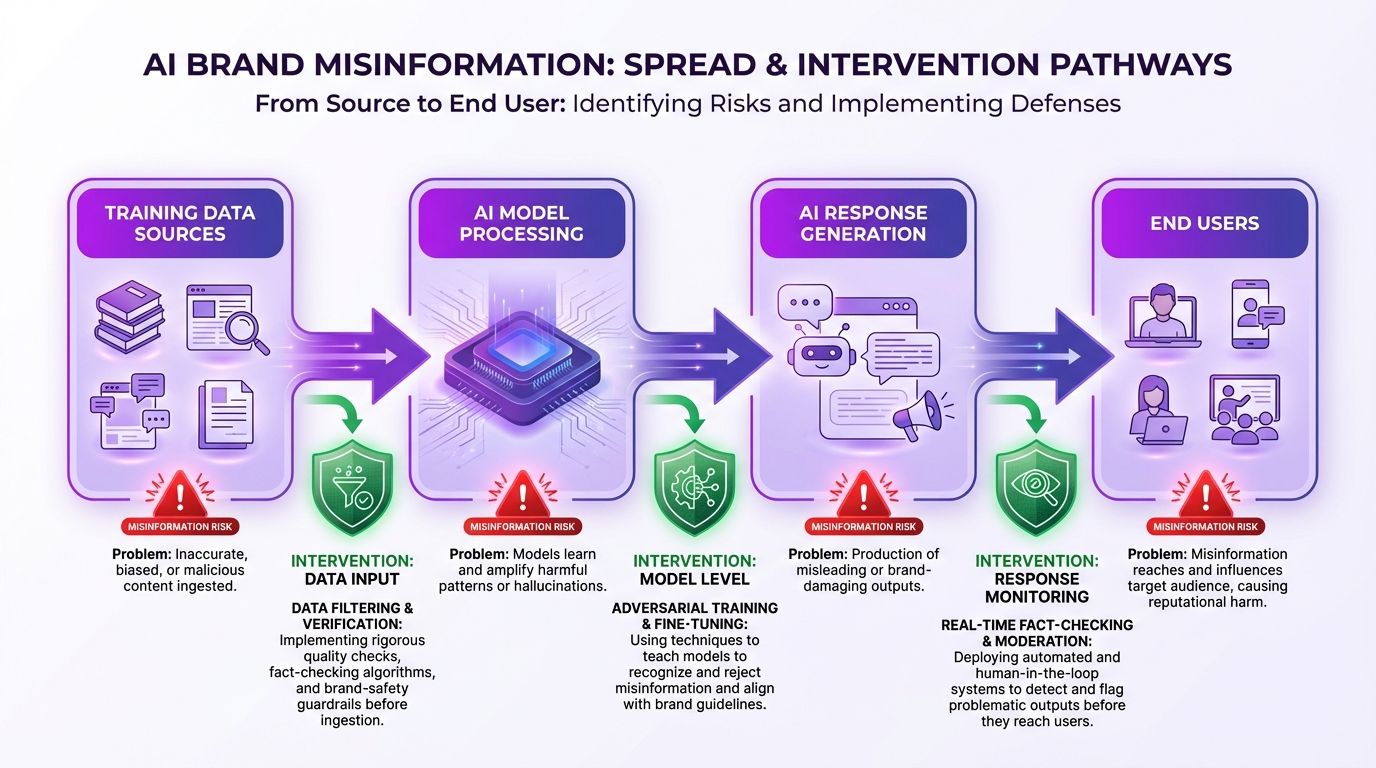
AI hallucinations aren't rare edge cases. They're a structural feature of how large language models work. Models generate text based on statistical patterns, not verified facts. When those patterns produce a plausible-sounding but incorrect statement about your brand, there's no built-in correction mechanism.
Here's what brand-related AI hallucinations look like in practice:
- Fabricated product recalls or lawsuits, An AI states your product was recalled, sued, or flagged by regulators when none of that happened
- Incorrect pricing or feature claims, A chatbot tells a potential customer your software costs $500/month when it's actually $99/month
- Competitor confusion, Your brand gets attributed with a competitor's negative press or product failures, a pattern we cover in depth in why AI confuses your brand with competitors
- Outdated information presented as current, An AI describes your company based on three-year-old data, ignoring a rebrand, pivot, or product overhaul
- Invented executive quotes, Statements attributed to your CEO that were never made
The business impact isn't hypothetical. A 2025 study by Edelman found that 61% of consumers trust AI-generated answers as much as or more than traditional search results. When an AI platform confidently states something incorrect about your brand, the majority of users take it at face value.
Why Corrections Are Hard
In traditional media, you issue a correction. On social media, you respond publicly. With AI platforms, the correction path is unclear at best and nonexistent at worst. OpenAI doesn't have a "dispute this answer" button. Google's AI Overviews pull from multiple sources, and there's no direct way to flag inaccurate brand mentions in generated summaries.
The fix has to happen at the source level, changing the underlying signals that AI models use to generate responses. That's why GEO optimization treats reputation as a core pillar, not an afterthought.
AI Sentiment Monitoring, Your Early Warning System
You can't fix what you can't see. AI sentiment monitoring is the practice of systematically tracking how AI platforms describe your brand across thousands of relevant queries.
This goes beyond traditional brand monitoring. You're not scanning social media mentions or news articles. You're tracking the actual generated text that AI platforms serve to users when they ask about your industry, your product category, or your brand by name.
What to Monitor
A useful AI sentiment monitoring program tracks four dimensions:
- Mention frequency, How often does your brand appear in AI responses to relevant queries? Are you mentioned more or less than competitors?
- Sentiment classification, When mentioned, is the characterization positive, negative, or neutral? Is the AI recommending you or warning users away?
- Factual accuracy, Are the claims about your brand correct? Pricing, features, leadership, company history, regulatory status, every factual claim needs verification.
- Competitive positioning, Where do you appear relative to competitors? Are you listed first or last? Are you the recommended option or the alternative?
Building a Monitoring Cadence
For enterprises, quarterly monitoring isn't enough. AI model updates happen frequently, OpenAI ships updates weekly, Google refreshes AI Overviews continuously, and Perplexity retrieves live web content in real time. A brand misrepresentation can appear overnight.
- Weekly scans of high-priority queries (brand name, top products, key executives)
- Monthly sweeps across category-level queries ("best [your category] tools," "top [your industry] companies")
- Event-triggered monitoring after product launches, PR events, earnings calls, or industry news that could shift AI-generated narratives
Geology's enterprise platform automates this monitoring across all five major AI platforms, tracking thousands of queries and flagging sentiment shifts, factual inaccuracies, and competitive positioning changes in real time.
Compliance and Regulated Industries
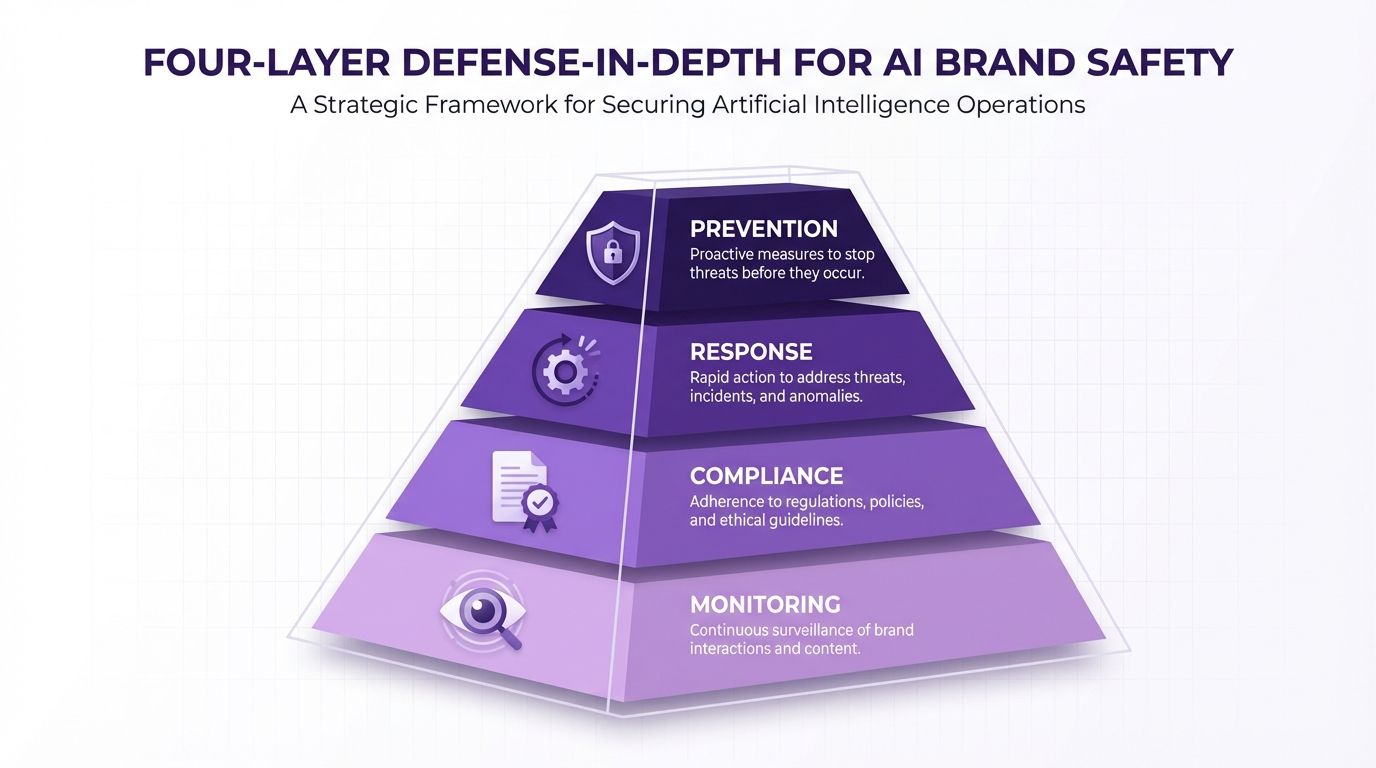
For companies in healthcare, financial services, legal, and insurance, AI brand safety isn't just a marketing concern, it's a regulatory one.
When an AI platform makes a medical claim about your pharmaceutical product, states an incorrect interest rate for your financial product, or misrepresents the terms of your insurance policy, you may be held accountable even though you didn't generate the content. Regulatory bodies are still catching up, but the direction is clear: brands will be expected to actively monitor and correct AI-generated misinformation about their products and services.
Healthcare and Pharma
The FDA has already issued guidance on AI-generated health content that references branded drugs and medical devices. Key risks include:
- AI stating off-label uses as approved indications
- Fabricated adverse event reports or safety warnings
- Incorrect dosage or administration instructions attributed to your product
- AI conflating your drug with a competitor's recalled product
Healthcare companies need to monitor AI responses that reference their branded products and flag inaccuracies immediately. Waiting for a patient or HCP to report an AI-generated error is not a viable strategy.
Financial Services
FINRA and SEC regulations require that marketing materials be accurate and not misleading. If an AI platform tells a potential investor that your fund returned 15% last year when it actually returned 8%, that's a compliance exposure, even though you didn't create the content.
- Monitor AI responses about your financial products, rates, and performance
- Track how AI platforms describe your fee structures and terms
- Document AI-generated inaccuracies as part of your compliance record
- Work with legal counsel to establish notification protocols when AI platforms misrepresent regulated information
Legal and Insurance
Similar principles apply. AI platforms that misrepresent coverage terms, policy exclusions, or legal service capabilities create liability exposure. The key is proactive monitoring rather than reactive cleanup.
Misinformation Response and Crisis Management
When you identify AI-generated misinformation about your brand, you need a response playbook. Waiting for it to self-correct is not a strategy, AI models can persist incorrect information for months.
The AI Misinformation Response Framework
Follow this four-step process:
- Document, Capture the exact AI-generated response, the query that triggered it, the platform, and the date. Screenshot everything. This creates the evidentiary record you'll need for platform disputes and legal teams.
- Trace the source, Identify where the AI is likely pulling the misinformation from. Is it a negative press article? An outdated blog post? A forum thread? A competitor's comparison page? The source determines your correction strategy.
- Correct at the source, Update, counter, or replace the content that's feeding the AI incorrect information. Publish authoritative corrections. Update your structured data. Ensure your owned properties have accurate, current information.
- Monitor for resolution, After correcting source material, track whether the AI-generated response changes. For RAG-based systems (Perplexity, Google AI Overviews), corrections can take days to weeks. For models that rely on training data (ChatGPT, Gemini), it may take until the next model update.
Our step-by-step guide to correcting brand misinformation in AI platforms expands this framework into platform-specific correction paths for ChatGPT, Gemini, AI Overviews, Perplexity, Claude, and Copilot, with realistic timelines for each.
When AI Amplifies a Real Crisis
AI doesn't just fabricate problems, it amplifies real ones. If your brand faces a real PR crisis (a data breach, a product issue, a leadership scandal), AI platforms will incorporate that information into responses, often without the nuance or context of the original reporting.
The compounding effect is severe. A single news cycle about a product issue can persist in AI responses for months or years. AI models don't forget, and they don't distinguish between a resolved issue and an ongoing one.
Crisis management for AI requires:
- Pre-written response content optimized for AI retrieval, ready to publish the moment a crisis breaks
- An aggressive content publishing schedule during and after a crisis to flood the information ecosystem with accurate, current information
- Direct outreach to AI platforms (where channels exist) to flag materially inaccurate or outdated crisis-related responses
- Ongoing monitoring to verify that AI responses eventually reflect the resolution, not just the crisis itself
For a deeper look at how AI platforms select and weight information sources, see our complete guide to GEO.
IP, Attribution, and the Question of Consent
Intellectual property in AI is one of the fastest-moving legal areas in technology. For brands, the core issue is simple: AI platforms use your content to train models and generate responses, often without explicit permission, proper attribution, or compensation.
The Attribution Problem
When Perplexity cites your blog post as a source, you at least get a link. When ChatGPT synthesizes information from your website into a response without any attribution, your content drives value for the platform while you receive nothing in return.
This creates a strategic tension. You want AI platforms to know about your brand and recommend it. But you also want control over how your content is used and credited.
Practical Steps for IP Protection
- Review your robots.txt and AI crawler policies, Decide which AI crawlers you allow and block. Know the difference between GPTBot, Google-Extended, PerplexityBot, and others.
- Publish clear AI usage policies, State on your website how your content may and may not be used by AI systems. While enforcement is still evolving, having a documented policy creates a legal foundation.
- Monitor for unauthorized content reproduction, Track whether AI platforms are reproducing your proprietary content (pricing tables, technical specifications, unique research) without attribution.
- Track citation patterns, Platforms that do attribute sources (Perplexity, Google AI Overviews) create measurable referral traffic. Monitor this as a distinct channel in your analytics.
Regulatory Direction: The EU AI Act and Beyond
The EU AI Act, which began phased enforcement in 2025, introduces transparency requirements for AI systems. High-risk AI applications must disclose training data sources, and general-purpose AI models face copyright compliance obligations.
For brands, this means:
- AI platforms will face increasing pressure to disclose what content they've used and how
- Brands in EU markets should prepare for a regulatory environment where AI-generated content about your products may be subject to accuracy and transparency requirements
- The U.S. is behind the EU on AI regulation, but state-level legislation (California, New York, Illinois) is moving in the same direction
- Global enterprises should build AI brand safety programs that meet the highest regulatory standard, not the lowest
Building Brand Guidelines for AI Platforms
Most companies have brand guidelines for their website, social media, and advertising. Almost none have brand guidelines built for AI platforms. That's a gap that enterprise brands need to close.
What AI Brand Guidelines Should Include
Your AI brand guidelines document should cover:
- Approved brand descriptions, The exact language you want AI platforms to use when describing your company, products, and services. Publish these prominently on your website.
- Factual reference points, Current pricing, product features, leadership team, company history, and key milestones. Keep these updated in structured data and dedicated pages that AI crawlers can easily access.
- Competitive positioning statements, How your brand relates to competitors. If you don't define this, AI will, based on whatever content it finds.
- Restricted claims, Statements that should never be attributed to your brand (regulatory claims, performance guarantees, medical/financial advice). Documenting these helps identify violations when monitoring AI responses.
- Crisis response templates, Pre-approved messaging for common crisis scenarios, formatted for quick publication and AI retrieval.
Making Your Guidelines AI-Accessible
It's not enough to have guidelines in an internal PDF. AI platforms can't read your brand book. To influence how AI describes you:
- Create a dedicated "About" or "Company" page with structured data (Organization schema, FAQPage schema) that contains your approved descriptions
- Publish a machine-readable brand fact sheet, a clean, structured page with current stats, products, and positioning that AI crawlers can easily parse
- Update Wikipedia and knowledge bases, AI models weight these sources heavily. Ensure your entries are accurate, sourced, and current
- Maintain authoritative third-party profiles, G2, Capterra, Trustpilot, industry directories. These independent sources reinforce your brand signals across AI training data
What to Do Next
AI platforms are already shaping how your customers, partners, investors, and regulators perceive your brand. Every day you're not monitoring those representations is a day you're flying blind.
The brands that treat AI brand safety as a core function, not a side project, will maintain control of their narrative. The ones that ignore it will spend the next three years cleaning up misinformation they could have prevented.
Start with visibility. You can't protect what you can't see.
Run a free AI visibility audit to see exactly how AI platforms are describing your brand today. It takes two minutes, covers all five major AI platforms, and gives you the baseline you need to build a protection strategy.
If you're an enterprise team evaluating AI brand safety at scale, explore Geology's enterprise solution, purpose-built for multi-brand, multi-market monitoring with compliance-grade reporting.