Multi-Language GEO: International AI Visibility Strategy
Why does your brand disappear when buyers ask AI in their own language, and how do you earn recommendations in every market?


A SaaS company ranking first for "best project management tool" in English may not exist at all when a German buyer asks the same question in German to ChatGPT. Multilingual GEO, optimizing your brand's visibility across AI platforms in multiple languages, is one of the largest untapped opportunities in Generative Engine Optimization. Most brands treat international AI visibility as a translation problem. The harder issue is structural, and that distinction decides whether your brand gets recommended to the large share of AI users who prompt in a language other than English.
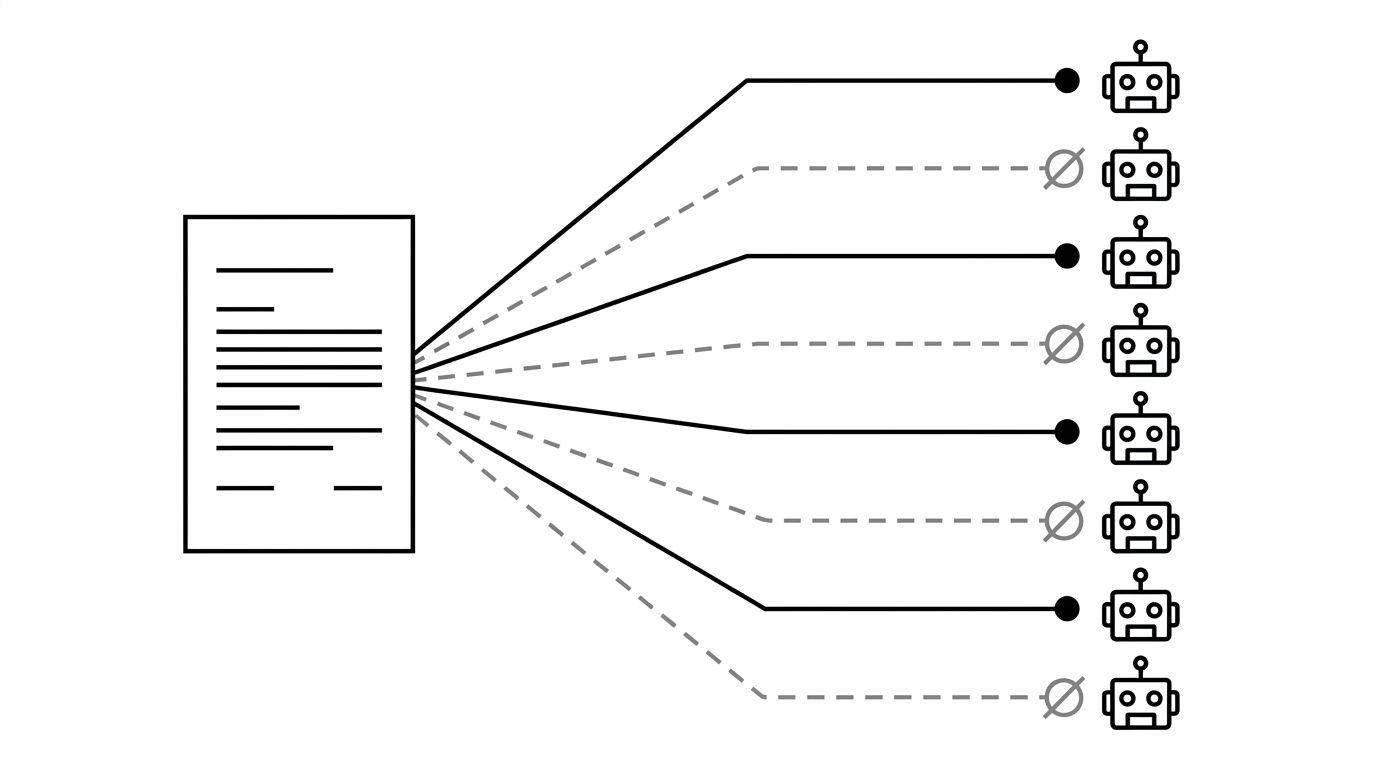
AI models do not translate your English authority into other languages automatically. Each language operates as a partially independent knowledge space inside the model. A brand with dominant English-language coverage and zero German-language presence will lose to a German-language competitor that has weaker overall authority but stronger local signals. Your brand's AI visibility resets to near-zero in every language you have not explicitly optimized for.
How AI Models Handle Language
Understanding the technical architecture helps explain why multilingual GEO needs a different approach than multilingual SEO.
Training Data Segmentation
Large language models are trained on multilingual corpora, but the data is not evenly distributed. English dominates most training datasets, while languages like German, French, Spanish, and Japanese hold substantial but smaller shares. Smaller languages such as Thai, Czech, and Finnish have far less training-data representation.
That creates a practical hierarchy. In high-resource languages (English, Chinese, Spanish, French, German, Japanese), models have deep knowledge and strong brand associations. In medium-resource languages (Portuguese, Korean, Italian, Dutch, Polish), they have functional knowledge but weaker brand-specific associations. In low-resource languages, including many smaller European, African, and Southeast Asian languages, models often fall back on English knowledge or produce generic responses with fewer brand recommendations.
The implication is direct. In high-resource languages, competition for AI recommendations is intense and growing. In medium and low-resource languages, the first brands to build structured, authoritative local-language content capture disproportionate AI visibility.
Cross-Lingual Transfer (and Its Limits)
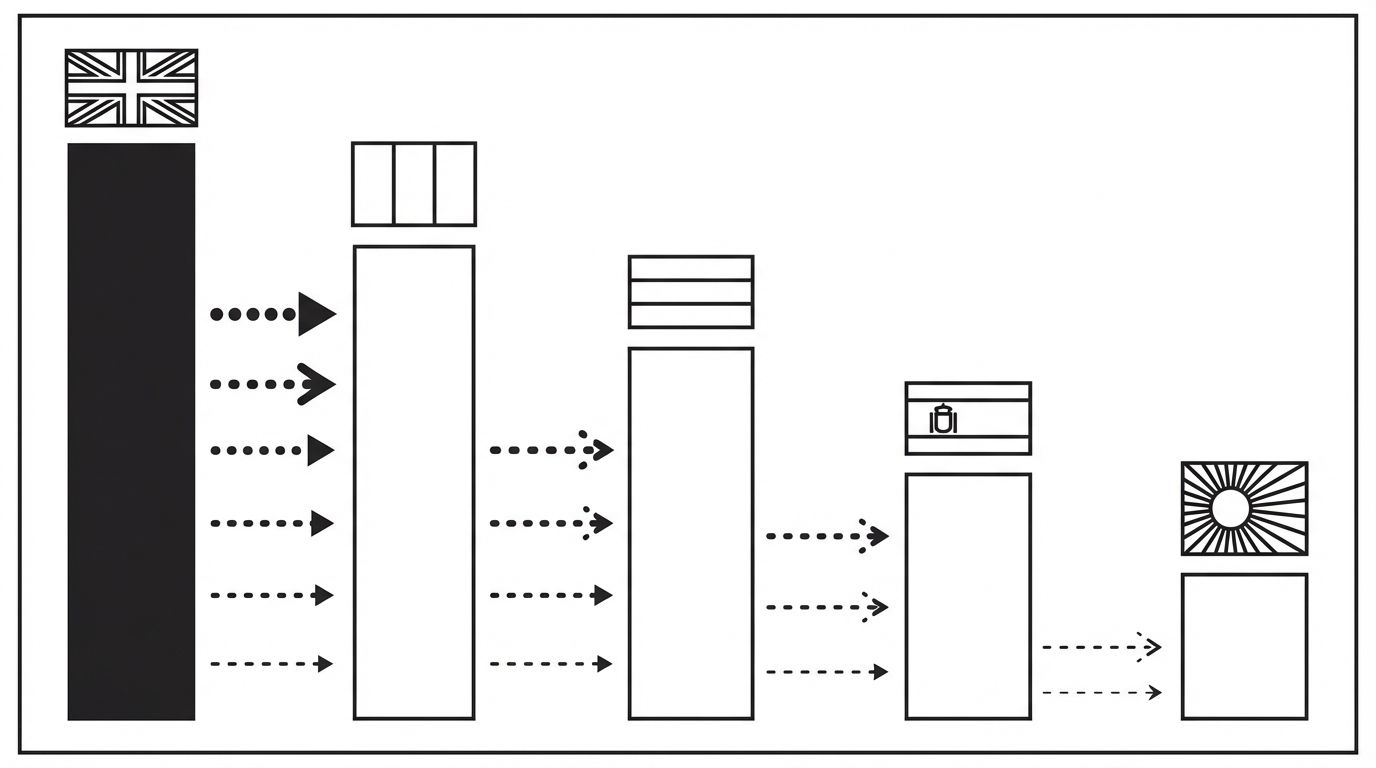
AI models do transfer some knowledge across languages. If ChatGPT has strong associations between your brand and "project management" in English, some of that signal carries over when a user asks in French. But the transfer is partial and unreliable.
Cross-lingual transfer works reasonably well for:
- Recognizing your brand name when it appears in another language
- Basic category associations ("Brand X is a CRM")
- Facts and data points that show up in multilingual sources like Wikipedia
It breaks down for:
- Nuanced competitive positioning ("best for small teams" vs. "best for enterprise")
- Local market credibility and trust signals
- Specific use-case recommendations that depend on regional context
- Sentiment and reputation, since a brand loved in the US may have no sentiment signal in Japan
The diagram below shows how brand authority in English only partially transfers to other languages, with the largest gaps in competitive positioning and local credibility.
The Multilingual GEO Framework
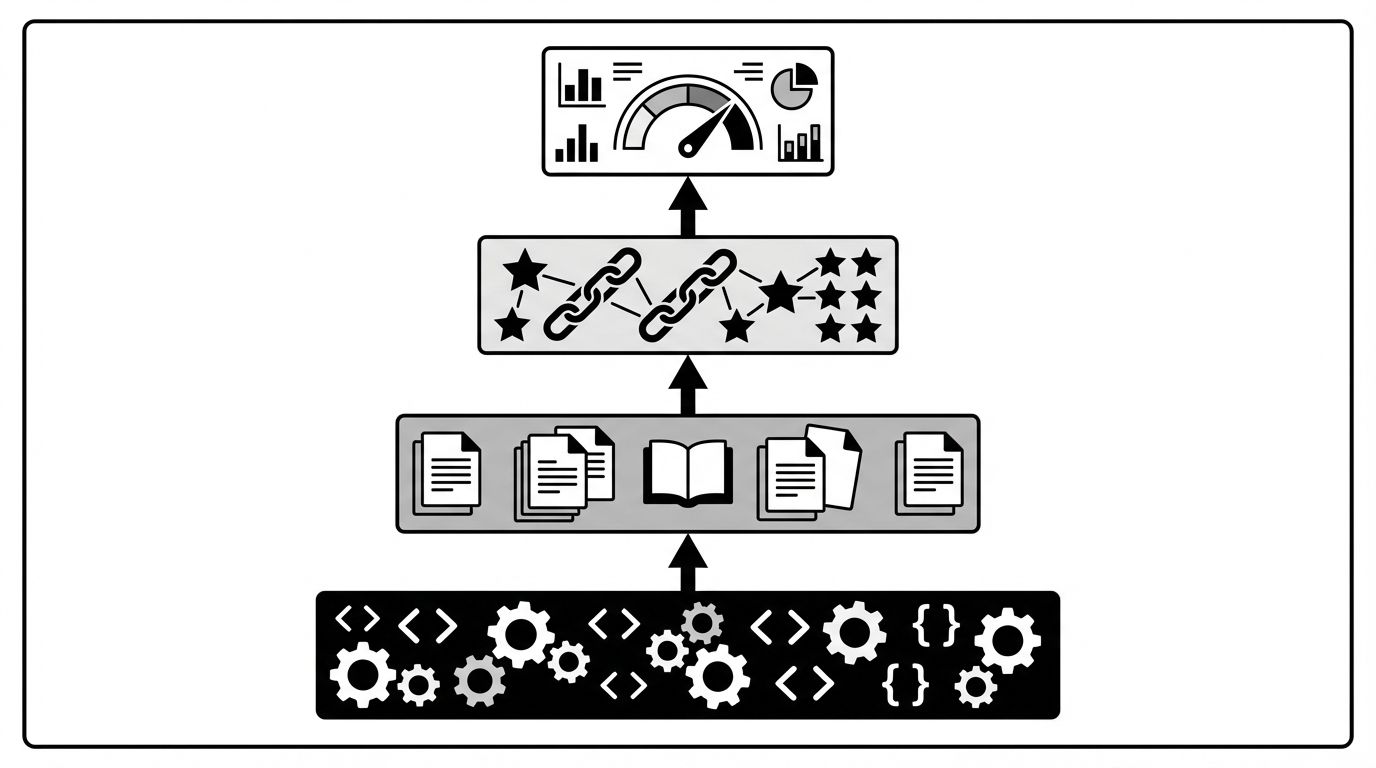
Effective international AI visibility needs a structured approach across four dimensions: content, citations, technical infrastructure, and monitoring.
Dimension 1: Local-Language Content
Translation is the starting point, not the strategy. AI models distinguish between translated content, which often reads as awkward or generic, and content created for a specific language audience. The brands that win multilingual AI recommendations produce content that sounds native.
In practice, that means writing original content in your target languages rather than translating English posts. A German article about "Buchhaltungssoftware für Freiberufler" should address German tax rules, local competitors, and German-market buyer behavior, not just restate a US-focused piece. It also means using local terminology. Every market has its preferred terms: French buyers search for "logiciel en mode SaaS" and German buyers for "Cloud-Software," and models trained on local data recognize those patterns.
Where you publish matters too. Content on a locally recognized domain or subdomain (de.yourbrand.com or yourbrand.de) signals local relevance to both search engines and AI retrieval systems, while a German article buried on a .com/de/ path carries less authority. And depth has to keep pace with your English baseline. If your English blog has 30 articles on project management and your German blog has three translated summaries, models will tie your brand to project management in English but not in German.
Dimension 2: Local Citations and Social Proof
Third-party citations drive AI recommendations, and citation ecosystems are language-specific. English-language press coverage does not make your brand authoritative in the French AI knowledge space.
Building a local citation ecosystem starts with coverage in local-language publications. German tech outlets like t3n and Computerwoche, French business media like Les Echos and Journal du Net, and Japanese tech sites like ITmedia and TechCrunch Japan feed directly into the local-language training data and retrieval indexes models use. Local review platforms carry similar weight. G2 operates globally, but each market also has its own preferred platforms: Trustpilot is strong in Europe, Capterra runs localized versions, and Japan has its own review ecosystems, so your review and social proof strategy has to extend to each target market. Community discussion rounds it out. Reddit may dominate English-language social proof, but German markets use specialized forums, French professionals lean on LinkedIn, and Japanese users gather on different platforms entirely.
Dimension 3: Structured Data and Technical Infrastructure
The technical layer decides whether AI models can identify, categorize, and attribute your brand across languages.
Start with hreflang. Correct hreflang tags tell both search engines and AI crawlers which language version of a page to serve, and missing or wrong tags mean retrieval systems may pull the wrong one. Your structured data also needs to be localized: Organization schema with local addresses and phone numbers, Product schema with local currencies and availability, and Review schema that aggregates local-language reviews. Entity consistency is easy to miss but important, because a model that sees "Geology" on your English site and "Geologie" on your German site may not connect them as the same brand. Pick one international URL structure, whether subdomain, subdirectory, or country-code domain, and apply it consistently. Mixed approaches confuse crawlers and dilute your authority across versions.
The framework below shows how the four dimensions work together, with technical infrastructure at the base, local content and citations built on top, and monitoring sitting above both.
Dimension 4: Cross-Language Monitoring
You cannot optimize what you do not measure, and AI visibility metrics have to be tracked per language, not just globally.
Track brand mention frequency by language, meaning how often your brand surfaces in ChatGPT, Perplexity, Gemini, and Copilot when users prompt in each target language. Watch competitive positioning per market, since you can be the top recommendation in English and absent in Spanish, and that only shows up when you measure against local competitors. Monitor sentiment by language too, because a product loved in the US can score poorly in Germany if your local support is weak. Then analyze which local sources models cite when they recommend brands in your category, because those publications and platforms become the targets for your outreach.
Prioritizing Markets for Multilingual GEO
Most brands cannot invest equally across every language at once, so prioritize on three factors. Revenue opportunity comes first: start with the non-English markets that represent your largest current or potential revenue. Next is the competitive gap, which means asking where competitors already have a strong AI presence and where there is an opening no one has filled. Markets where no one has invested in local-language GEO offer the fastest path to dominance. Last is your existing content infrastructure, since local-language content, local teams, or local partnerships make a market faster to win than starting from zero.
A practical starting sequence for most B2B brands expanding from English:
- Phase 1: German, French, and Spanish, high-resource languages with strong B2B markets and heavy AI adoption
- Phase 2: Japanese, Portuguese, and Italian, sizable markets with growing AI usage
- Phase 3: Korean, Dutch, Polish, and other medium-resource languages, based on specific business priorities
Common Mistakes in Multilingual GEO
Several approaches that seem reasonable will actively hurt your international AI visibility:
- Machine-translating your English blog and publishing it. Models can detect low-quality translations, and translated content rarely carries the local context that builds authority. Use translation as a first draft, then have local experts rewrite for native fluency and relevance.
- Using a single global domain with auto-translation. Dynamic translation tools do not create indexable, crawlable content that enters AI training data. Each language version needs static, crawlable pages.
- Ignoring local competitors. Your English-language rivals may be irrelevant in the German market, where local brands dominate AI recommendations. Research the competitive field in each language before you build a strategy.
- Treating all languages as equally important. Spreading resources thinly across 15 languages produces worse results than concentrating on three or four with deep, authoritative content.
- Assuming English authority transfers. This is the biggest one. Your English-language GEO success creates almost no advantage elsewhere unless you explicitly build local signals.
What to Do Next
International AI visibility is a compounding advantage. The brands that lay multilingual GEO foundations now will be much harder to displace as AI-driven discovery grows globally. Every month you wait is a month your local-language competitors spend building the authority signals models will use to make recommendations in their markets.
Start with an audit of your current international AI presence. Pick the two or three non-English markets with the best mix of revenue opportunity and competitive gap. Then build a local-language content and citation strategy for those markets using the four-dimension framework above.
Run a free AI visibility audit to set your baseline across AI platforms, then work with Geology's GEO optimization services to build a multilingual strategy that captures the international AI visibility your competitors have not yet claimed.