GEO Software vs Agency: Which Do You Actually Need?
Should you buy a GEO monitoring tool, hire an agency, or both, and why does the usual build-versus-buy answer miss the point?

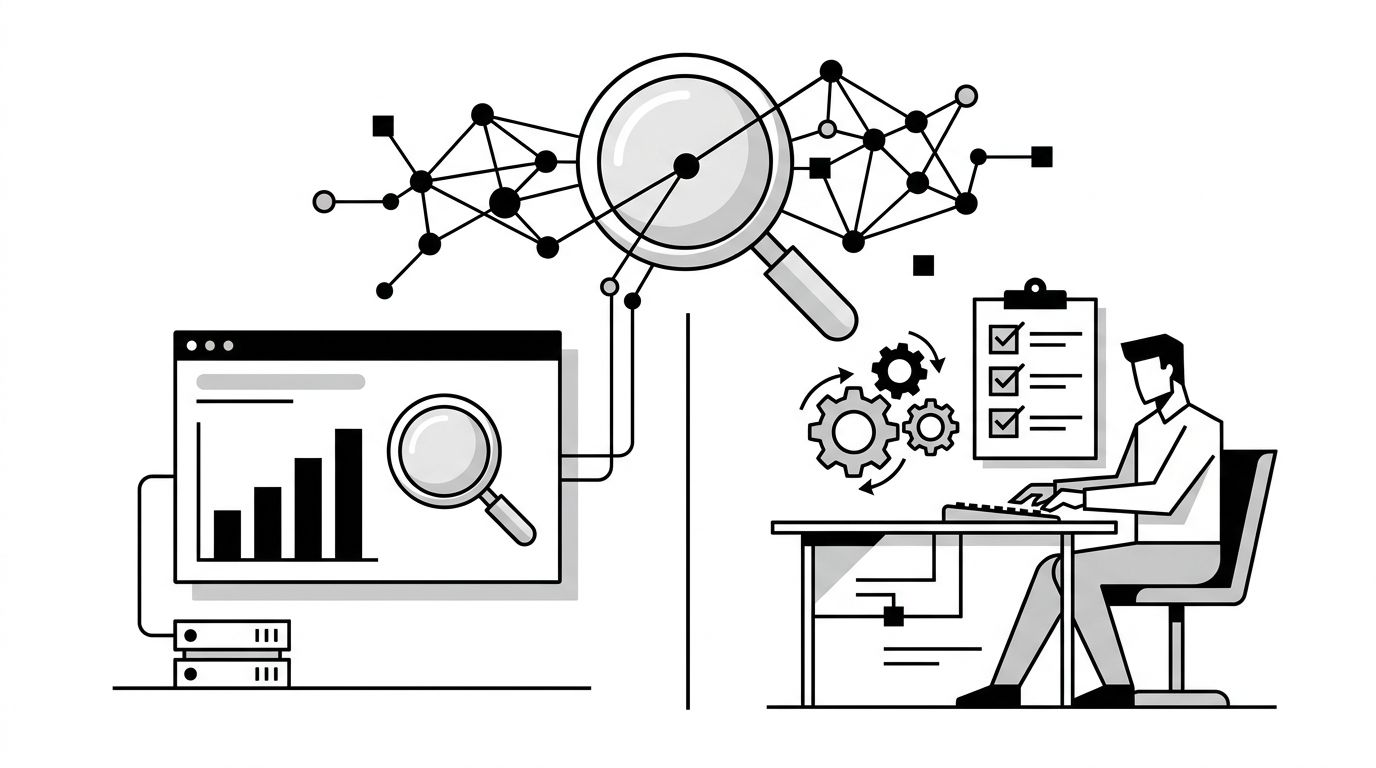
The build-versus-buy question for generative engine optimization is the wrong question. A GEO dashboard tells you that ChatGPT recommends three competitors instead of you. It will not fix it. A typical agency will fix something, but most run the same checklist on every client and never touch what is specific to your category. Neither one, on its own, reliably moves citation share. What moves it is research-first execution: a custom deep-dive into the prompts your buyers actually ask and the citation graph behind the answers, then done-for-you work informed by that research. The real choice is not software versus agency. It is whether whoever you hire runs a custom investigation or a generic playbook.
Here is how the three options actually compare, and how to decide.
What GEO software does well, and where it stops
A GEO platform measures. It tracks how often your brand is named across ChatGPT, Perplexity, Gemini, Copilot, and Google AI Overviews, which sources those engines cite instead of you, and how that share moves week to week. That visibility is genuinely useful. You cannot improve what you cannot see, and before tools like this, most brands were flying blind in AI answers.
The limit is that measurement is not execution. A dashboard can show that a competitor's G2 page and three Reddit threads are getting cited for your top buyer prompt. It cannot write the comparison page, earn the Reddit citations, fix your schema, or run the digital PR that changes the inputs. Software hands you a diagnosis. Someone still has to do the surgery.
So software alone fits a specific profile: you have an in-house SEO or content team with the bandwidth and the GEO knowledge to act on what the tool surfaces. If you have that team, a platform may be all you need. Most companies do not.
What a GEO agency does, and the playbook trap
A GEO agency executes. It fixes the source pages and schema engines lift from, builds the comparison and category content that ranks and gets cited, and earns the third-party citations AI trusts. That is the half software cannot do.
The trap is that a lot of agencies sell a playbook. They run the same fifteen-step checklist regardless of whether you sell observability software to platform engineers or compliance tooling to general counsel. The checklist is not wrong, exactly. It is just generic, and generic loses in AI answers, because the engines assemble category-specific shortlists from category-specific sources. The subreddits, review sites, and editorial that decide a DevOps shortlist are nothing like the ones that decide a fintech one. A playbook that ignores that difference is optimizing in the dark.
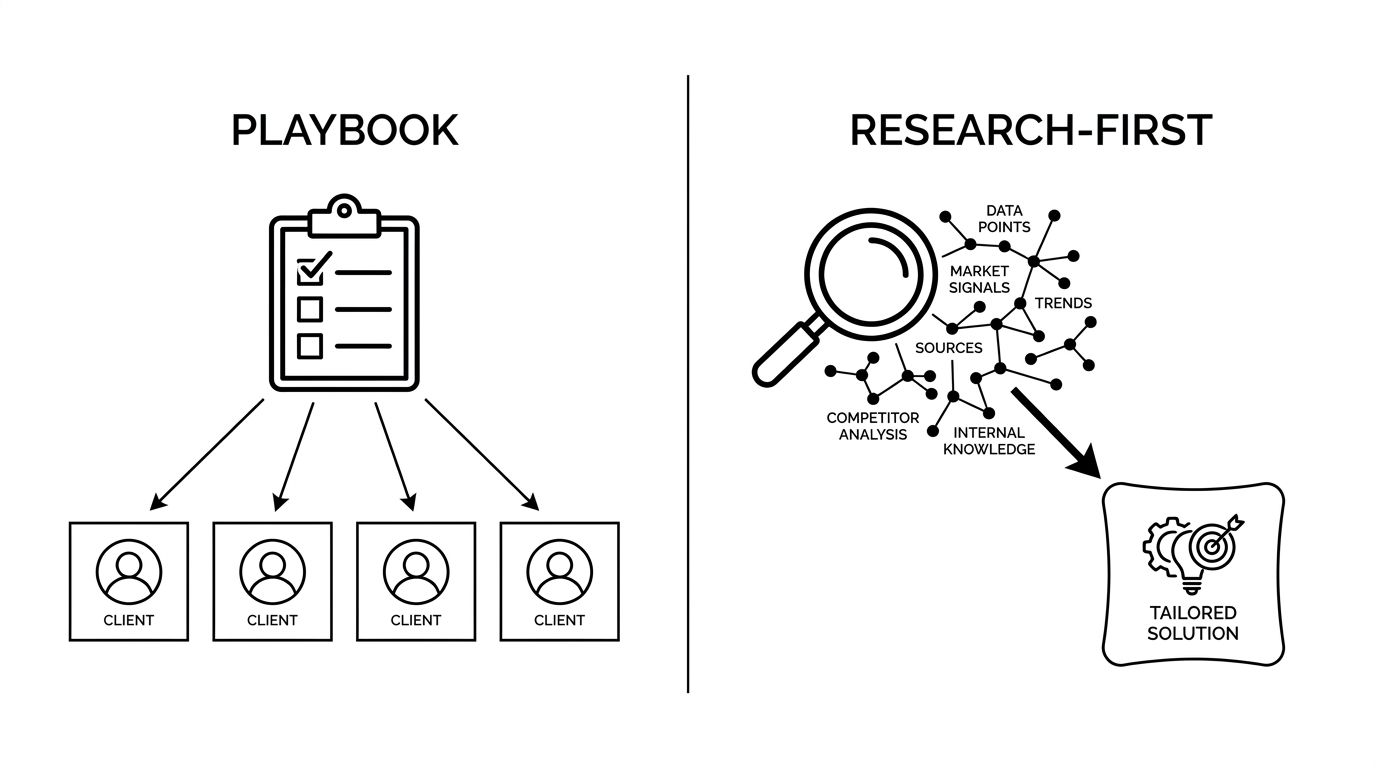
The diagram above is the whole distinction. A playbook points the same actions at every account. Research-first work starts from what is true about your category and aims the actions there.
The third option: research-first execution
The version that actually works combines the measurement of software with execution that is briefed from research, not a template. It looks like this. Before any content ships, you map the eighty to two hundred prompts your buyers type into AI engines, segmented by who asks them. You reverse-engineer the citation graph around your competitors: the specific pages, threads, and review profiles the engines quote today. You mine your own sales calls and won-and-lost deals for the questions a keyword tool never surfaces. Only then do you build, against that evidence, and you keep measuring so every fix is checked against whether the answer actually changed.
This is the model we built Geology around: the software and the done-for-you execution are one program, and the execution is research-first by default. We covered the SaaS-specific version of this in GEO for SaaS companies, and the full service is the GEO and AEO program. The point is not that you need us specifically. It is that you need the diagnosis and the surgery connected, and the surgery driven by your category's evidence rather than a checklist.
How to decide for your stage
Use a simple test. Map your situation to the option that fits:
- Software only: you have a senior in-house team that already understands GEO and just needs visibility to act on. Buy the platform, skip the agency.
- Agency, but vet hard: you have no one to own the work. Hire execution, but screen out the playbook shops. Ask any agency to show you, live, how it would research your specific category before it touches a page. If the answer is a standard onboarding checklist, keep looking. Our guide to choosing a GEO agency is the full screening checklist.
- Both, integrated: you want measurement and execution connected, with the work tuned to your category. This is where research-first software-plus-services earns its keep, especially in competitive B2B and regulated markets where the citation graph is dense.
The deeper version of this trade-off, including when to build your own monitoring instead of buying, is in build versus buy for an AI visibility dashboard.
What to do next
Before you choose a tool or a vendor, get the diagnosis. A free audit shows you where you stand across all five AI engines and which sources are cited instead of you, in about fifteen minutes. That single view tells you whether you have a measurement gap, an execution gap, or both, which is the only honest way to decide what to buy.