GEO for B2B vs B2C: Key Differences and Strategies
How does GEO differ between B2B and B2C brands, and which ranking signals and content formats does each buyer journey actually need to win?

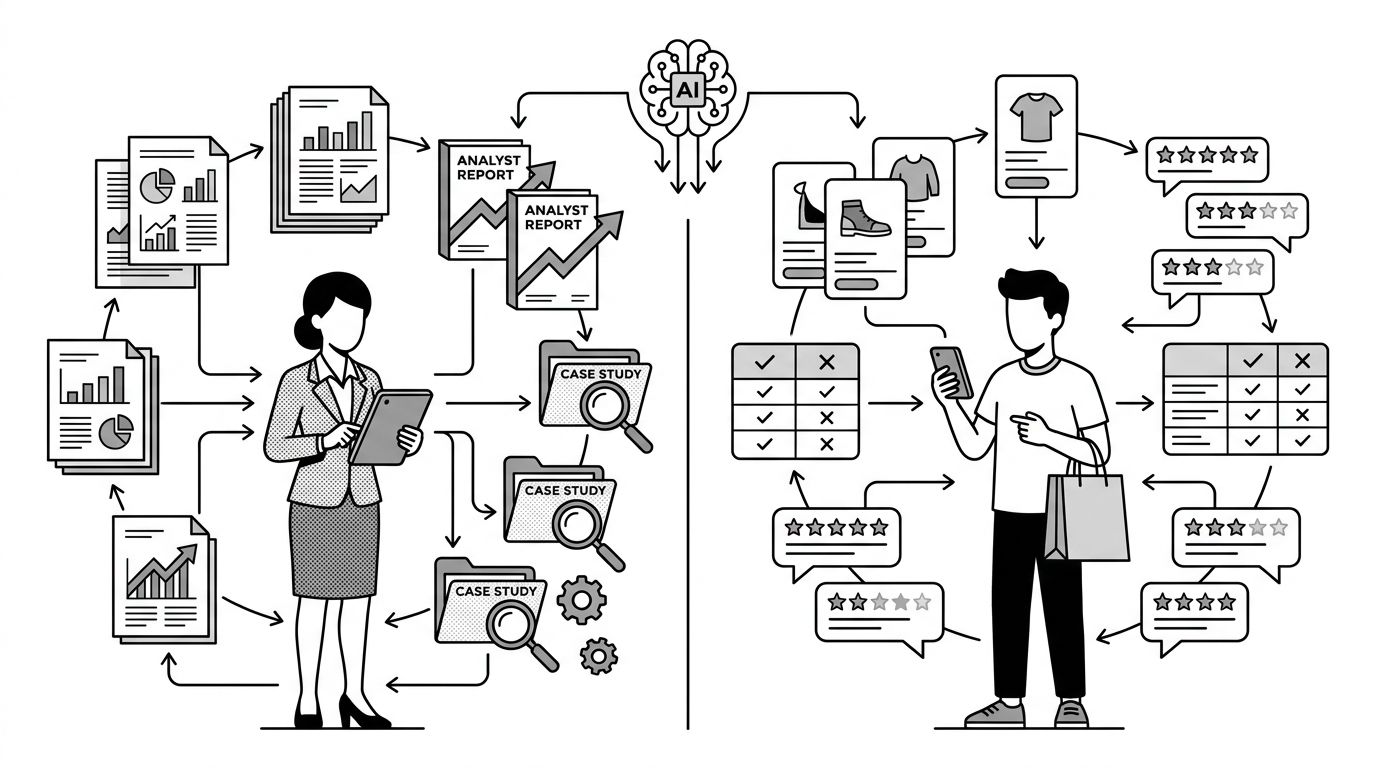
The playbook for B2B GEO is not a cheaper version of B2C GEO. It is a different game entirely. B2B buyers ask AI models fewer queries with higher specificity and longer research windows. B2C shoppers ask many short queries, compare rapidly, and expect near-instant recommendation. The sources AI pulls for each side rank differently, the content formats it surfaces differ, and the success metric differs. If you run a B2B SaaS company and copy a B2C apparel brand's GEO playbook, you will spend on review aggregation signals the buying committee never checks. If you run a B2C brand and copy a B2B playbook, you will over-invest in whitepapers while your competitors own the product comparison answer. Match the playbook to the buyer journey, not to the channel.
Query Volume vs Query Depth
B2C AI queries cluster around immediate decision points. "What is the best running shoe for flat feet," "is brand X worth the price." A shopper runs ten of these in a session and buys within the day.
B2B queries are longer, technical, and less frequent. "Which email deliverability platform supports BIMI and SPF alignment for healthcare compliance." A buyer runs three or four across two months while building a business case. Our piece on how AI shopping assistants rank products covers the B2C query mechanics.
The implication: B2C GEO optimizes for recall and speed. B2B GEO optimizes for specificity and trust.
What AI Pulls for Each Side
The split above maps where AI models find authoritative content for each audience. The sources overlap at the margins, but the weightings are different enough that the strategies diverge.
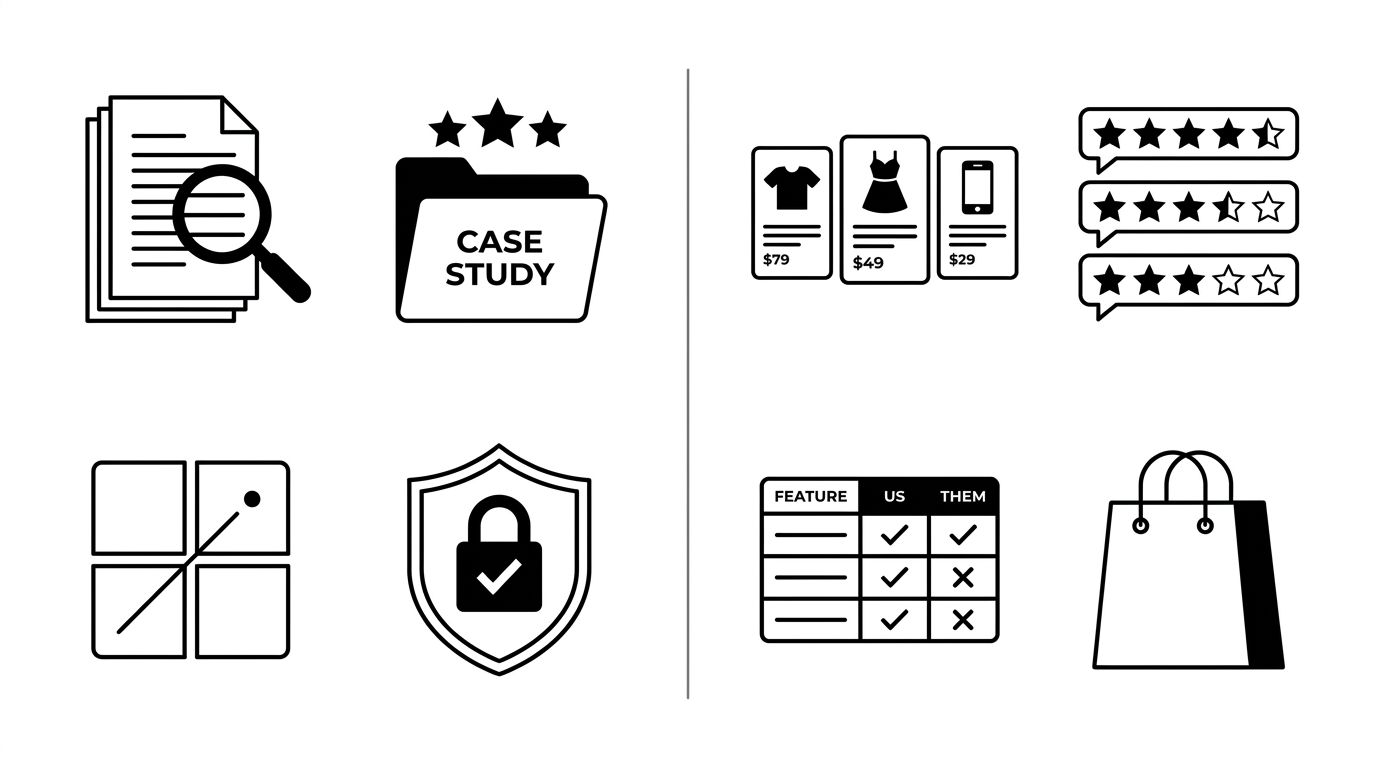
For B2C, retrieval pulls from product pages with structured data, review aggregators, editorial comparison posts, social and UGC when sentiment clusters strongly, and marketplace listings.
For B2B, retrieval pulls from vendor documentation and knowledge bases, analyst coverage (Gartner, Forrester, G2, Capterra), detailed case studies with named customers, technical blog posts, and partner directories.
Skip the B2B list for enterprise software and you are invisible to buying committees. Skip the B2C list for consumer products and your reviews drown out your own product page.
Content Formats That Get Cited
The winning format differs by side. Our piece on content formats that perform best in AI responses covers the mechanics. The short version:
B2C formats that get cited: product pages leading with spec, price, and use case; "best X for Y" listicles with clear criteria; question-style product review pages; FAQ sections answering purchase-intent questions.
B2B formats that get cited: long-form documentation with code examples; detailed case studies with metrics and named customers; comparison pages with feature tables; webinar transcripts with expert attribution; security, compliance, and integration pages.
A B2B brand that only publishes blog posts is under-weighted. A B2C brand with no reviews or optimized product pages is invisible at the decision point.
The Trust Stack Is Different
B2C trust signals are fast and aggregate. A product with 4.7 stars across 3,000 reviews beats a 4.9 product with 40 reviews because the volume carries the signal. AI models mirror this.
B2B trust signals are slow and specific. A single named case study from a recognizable enterprise customer often outweighs hundreds of generic reviews. Security documentation, compliance certifications, and analyst quadrant placement shift AI recommendations in ways that review counts do not. Our enterprise solution is built around this specific trust pattern.
Conversion Paths Diverge
B2C AI discovery often closes in the same session. The citation links to a product page, the shopper lands there, they buy. Measurement is clean.
B2B AI discovery produces pipeline, not purchases. The buyer reads the answer, clicks through, downloads a resource, talks to sales weeks later. This is why our SaaS solution ties AI visibility metrics to deal sourcing rather than immediate conversion.
The Shared Ground
Some GEO fundamentals apply regardless of side:
- Structured data on every key page
- Named authors with expertise credentials
- Fresh publish and updated dates
- Fast load times so retrieval agents can crawl
- Clear, answer-shaped headings
Start there. Then pick the side-specific moves that match your buyer.
What to Prioritize This Quarter
If you are B2B, audit your documentation and case studies first. That is where most of your GEO upside sits and where most of your content budget is under-indexed.
If you are B2C, audit your product pages, review presence, and comparison articles. If those three are not optimized, blog content will not save you.
If you run a hybrid motion with both self-serve B2C plans and enterprise B2B plans, run two tracks. Do not average them.