Google May 2026 Core Update: What SEO and GEO Teams Do Now
What did Google's May 2026 core update and the AI Mode default rollout actually change, and how should SEO and GEO teams respond?

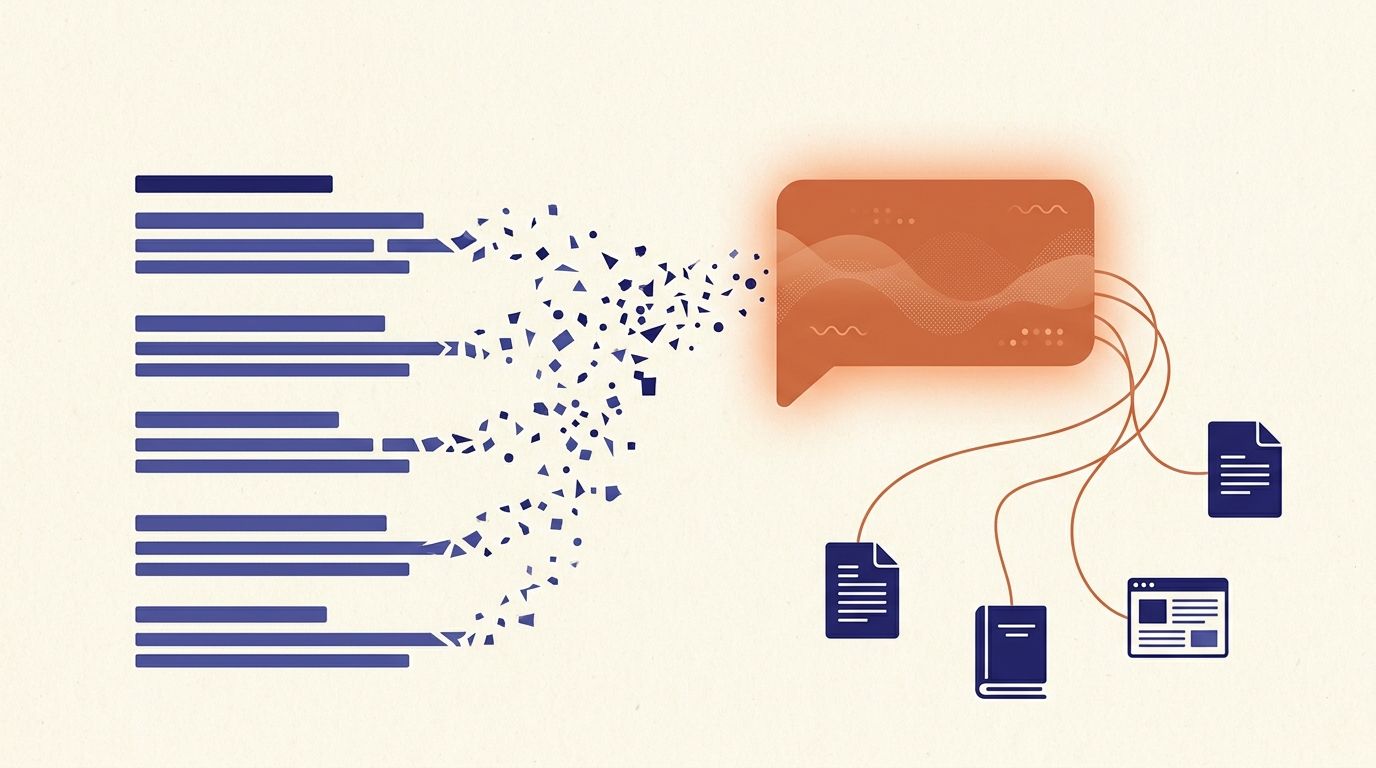
Treat the two Google announcements of May 2026 as one event, not two. On May 19 at I/O, Google made AI Mode the default search experience worldwide. Two days later it started rolling out the May 2026 core update, which finished on June 2. The first change rebuilt distribution: answers now come first, links come later. The second re-scored supply for that new distribution: primary sources gained, and sites that repackage other people's information lost, hard. If your strategy still optimizes for being the best result on a results page, you are optimizing for a surface that no longer exists by default. The work now is to be the best source: the page an AI engine can extract, verify, and name. This guide covers what changed, the history that led here, what "Google Zero" actually means in the data, and what to change in your SEO and GEO program, segment by segment.
TL;DR
Short on time? Here is the whole guide in one section.
- Google made AI Mode the default search experience globally on May 19, 2026 at I/O, powered by Gemini 3.5 Flash. AI Mode passed one billion monthly users in its first year, and Google called the new search box its biggest upgrade in 25 years.
- The May 2026 core update ran from May 21 to June 2. seoClarity's analysis of 672,503 keywords found a clear pattern: direct brands gained (streaming +26.3%, sports brands +19.3%, finance brands +9.5%) while intermediaries lost (tourism boards -33.2%, travel OTAs -11%, finance comparison sites -9.1%). They call it disintermediation. So do we.
- Google Zero is no longer a thought experiment. Chartbeat data shows organic Google traffic to publishers fell 33% in the year to November 2025. Similarweb session data puts AI Mode's zero-click rate around 93%, against roughly 43% for AI Overviews.
- Traffic will not recover to old levels. It re-routes: fewer clicks, arriving later in the buying journey, with higher intent. Plan for that mix shift instead of fighting it.
- The strategy change in one line: stop competing to rank, start competing to be cited. That means primary data and first-hand experience on-site, brand presence in the places AI engines pull from off-site, and metrics that track share of answer rather than sessions.
- Your measurement stack needs to change this quarter: track AI citations and AI referral traffic, reframe rising-impressions-falling-clicks as exposure, and report qualified sessions instead of raw sessions.
What Google actually announced in May 2026
Two separate things happened within 48 hours, and the order matters.
At I/O on May 19, Google announced that AI Mode is now the default search experience across desktop and mobile, globally. Not a tab, not an opt-in experiment. The default. A few specifics from Google's own announcement worth knowing:
- AI Mode passed one billion monthly users within a year of launch, with queries more than doubling every quarter.
- The new search box accepts text, images, files, videos, and Chrome tabs as inputs. Google called it the biggest upgrade to the search box in over 25 years.
- Information agents arrive this summer for AI Pro and Ultra subscribers: persistent agents that monitor sources around the clock and deliver synthesized updates without the user searching at all.
- Agentic features now extend to local services, including Google calling businesses on a user's behalf.
- Personal Intelligence expanded to nearly 200 countries across 98 languages, connecting Gmail and Google Photos to search results, with Calendar coming.
Then on May 21 at 8:40 AM Pacific, Google began rolling out the May 2026 core update. It completed on June 2 after 11 days and 21 hours, per Search Engine Journal's tracking. This was the second core update of 2026, following a quiet one in March. The May edition was not quiet. Glenn Gabe described it as "much more like a typical core update. March was meh, but May is big." Lily Ray reported sites seeing large surges over the rollout's first weekend. Volatility spiked several times during the rollout rather than settling after the first wave, and Google advised waiting until around June 9 before drawing conclusions from Search Console data.
Read the sequence as intent. Google shipped the new front end first, then immediately re-weighted the index that feeds it. A core update two days after the largest interface change in the company's history is not a coincidence of calendars. It is the supply side being tuned for the new demand side.
How we got here: a short history of Google removing the click
Google Zero did not arrive in May 2026. It arrived in increments over fifteen years, and each increment looked reasonable on its own.
2011 to 2013: quality and meaning. Panda (2011) went after thin content farms. Penguin (2012) went after manipulative links. Hummingbird (2013) rebuilt the engine around entities and meaning rather than keyword strings. The Knowledge Graph appeared in 2012, and with it the first answers that lived on Google's page instead of yours.
2014 to 2019: the answer box era. Featured snippets lifted your paragraph onto Google's page, and the industry responded by inventing "position zero" optimization: restructuring content specifically so Google could take it. People Also Ask boxes multiplied, each one an accordion of answers that kept users on the results page. RankBrain (2015) and BERT (2019) made the engine progressively better at understanding queries, which made it progressively better at answering them without sending anyone anywhere. By June 2019, Rand Fishkin's clickstream analysis showed that more than half of Google searches ended without a click. That milestone passed with far less alarm than it deserved. Name the pattern of the era, because it repeats: every time Google absorbed a content category, the sites affected optimized harder for inclusion in the absorbing feature, traded brand visibility for traffic, and discovered too late that the feature was the destination.
The same years gave an early preview of disintermediation. Sites built on republishing reference information (lyrics, dictionary definitions, sports scores, weather, currency conversion) watched their categories collapse one by one as Google answered in place. The pattern was treated as a quirk of "fact queries" rather than a trajectory. The May 2026 data says it was a trajectory.
2020 to 2023: the majority becomes the norm. A 2021 Similarweb analysis put zero-click searches near two thirds of all queries. Google's position throughout was that it sent more traffic to the web every year in absolute terms. Both things were true: the pie grew while the slice shrank. In May 2023, Google previewed the Search Generative Experience, the first version of search where a language model wrote the page.
2024 to 2025: AI answers go mainstream. AI Overviews launched at I/O in May 2024 and expanded through the year, glitches and all. AI Mode launched as a Labs experiment in March 2025 and rolled out to all US users at I/O that May. Meanwhile the antitrust case landed: Judge Mehta ruled in August 2024 that Google held an illegal monopoly in search, and the September 2025 remedies decision required data sharing and ended exclusive default deals but left Chrome and the core business intact. The practical effect for marketers: regulation will not slow this transition. Google's competitive pressure is OpenAI and Perplexity, not the DOJ. ChatGPT had normalized asking a model instead of searching an index, Perplexity had proven cited AI answers could be a product, and Google's response to both was to answer more, faster, on its own surface.
May 2026: the default flips. AI Mode becomes the primary surface. The ten blue links still exist, but as a fallback view, not the front door. Fifteen years of moving the answer onto Google's page ended with Google's page becoming the answer.
The lesson from the history is uncomfortable for SEO teams: every stage of this was visible years in advance, and the dominant industry response at every stage was to optimize harder for the shrinking surface. Do not repeat that mistake at the exact moment the surface changed fastest.
Google Zero: what the data actually says
"Google Zero" is the scenario, popularized by The Verge's Nilay Patel and dissected in Digiday's explainer, where Google answers everything and refers nothing. We are not at zero. We are measurably on the path:
- Chartbeat data covering 2,500+ publisher sites showed organic Google traffic down 33% in the year to November 2025, as reported by Digiday.
- Similarweb session data puts AI Mode's zero-click rate around 93%, versus roughly 43% for searches with AI Overviews. With AI Mode now the default, the 93% behavior becomes the baseline behavior.
- Pew Research Center found users clicked a traditional result on just 8% of visits where an AI summary appeared, against 15% without one, and clicked a source link inside the AI summary on about 1% of visits.
- Ahrefs measured a 34.5% drop in clickthrough rate for the top organic position when an AI Overview is present.
- Individual companies put faces on the aggregate numbers: HubSpot's organic traffic loss has been estimated at 70 to 80%, Chegg reported a 49% decline, and DMG Media documented drops as steep as 89% on some queries, per The Next Web's roundup. NPR called the shift an extinction-level event for online news.
Two details in the publisher data deserve more attention than the headline declines.
First, the survivors are not the ones who fought the change. Time magazine built an internal dashboard that toggles Google referral traffic off entirely to stress-test the business without it. Google fell from 60% to 51% of Time's traffic over three years while direct traffic grew from 22% to 30%, and ad revenue still grew 22% year over year in 2025. One lifestyle publisher Digiday spoke to models AI Mode reaching 80% of Google searches by the end of 2027 and is planning for another 30 to 40% referral decline. These teams stopped treating Google traffic as an entitlement and started treating it as one channel among several.
Second, Google's official answer to all of this is about click quality, not click volume. Google's AI features documentation states that clicks from pages with AI Overviews are "higher quality," meaning users who do click stay longer. Volume is not coming back. Quality per click is the variable Google is willing to defend, and it is the variable your business should care about anyway. Nobody books revenue in sessions.
What the May core update rewarded: disintermediation
The best public dataset on the update so far is seoClarity's analysis of 672,503 US keywords, comparing top-20 rankings before and during the rollout window. The pattern is unusually clean for a core update.
Sites that own their information gained:
- Video and streaming platforms: +26.3%
- Sports brand sites: +19.3%
- Finance brands such as banks and brokerages: +9.5%
- Airlines and hotel brand sites: +8.2%
- Retail brand sites: +4.7%
Sites that sit between users and someone else's information lost:
- App store and corporate listing pages: -33.4%
- Tourism boards: -33.2%
- Online travel aggregators: -11.0%
- Finance comparison sites: -9.1%
- Social and UGC platforms: -6.3%
seoClarity's term for this is disintermediation: Google cutting out the middleman and routing what clicks remain toward primary sources. It makes mechanical sense once you see search through AI Mode's eyes. A language model answering a question needs sources it can trust and quote. The aggregator's summary of an airline's baggage policy is a lossy copy of the airline's own page. When a model does the aggregation itself, the aggregator's reason to exist in the results evaporates. The model is the comparison site now.
This is the single most strategic fact about the May update, because most SEO content programs of the last decade are, functionally, aggregation: roundups assembled from other roundups, "best X for Y" lists built from vendor pages, guides that synthesize the top ten results into an eleventh. That entire content model just took its second hit in two years, and this one came with the distribution change that makes it permanent.
The corollary: whatever your company is the primary source for is now your most defensible search asset. Your data, your prices, your documentation, your test results, your customer evidence. The May update paid out for exactly that, and AI Mode's citation behavior compounds it.
What the industry is saying
The most-followed voices in search marketing landed on the same conclusion, some of them before Google made it official.
Neil Patel updated his "Is SEO Dead in 2026?" analysis on May 6, two weeks before I/O, and it reads like a preview of what May confirmed. His framing: "In 2026, it's less about search engine optimization and more about search everywhere optimization." His verdict on the headline question was "a resounding no," with a caveat that carries more weight after May 21: "SEO isn't dead, but traditional tactics alone won't cut it. To stay visible, your strategy must account for AI Overviews, zero-click searches, and shifting user behavior across platforms." And his warning matches the citation argument this guide makes: "If your content isn't cited or structured for AI, you risk being invisible."
The same post includes the kind of client numbers that make the blended SEO-plus-GEO case concrete. NP Digital reports that its client RefiJet grew LLM-referred traffic 2,012% year over year, with site-wide page views from LLMs up 7,144%, and funded loans from organic search and LLMs combined up 178%. Fewer clicks, more revenue is not a hypothetical; it is already showing up in client P&Ls.
On the update itself, the analyst consensus from Search Engine Journal's coverage runs the same direction: Glenn Gabe's "May is big" assessment and Lily Ray's weekend-surge reports point at a meaningful re-scoring, and Marie Haynes connected the back-to-back timing of the core update and the I/O announcements rather than treating them as separate stories. Nobody credible is reading May 2026 as routine.
How AI Mode picks its sources (and why ranking no longer guarantees anything)
The machine you are now optimizing for selects sources differently than the results page selected results. Understand the selection process before committing budget against it.
When a user asks AI Mode a question, Google's documentation describes a query fan-out process: the system decomposes the question into multiple related searches, runs them in parallel, and retrieves passages from across the results to ground its answer. A question like "best CRM for a five-person agency that bills hourly" might fan out into separate retrievals about CRM pricing models, agency workflows, time-tracking integrations, and named product comparisons. The answer is assembled from passages that won those sub-retrievals, and the citations point at the passages, not at whoever ranked first for the original phrase.
Three consequences follow, and they rearrange a decade of SEO instinct:
- Ranking and citation are now different competitions. A page ranking fourth can supply the answer's core claim because one paragraph nailed a fan-out query, while the page ranking first contributes nothing. You can win visibility without winning rank, and you can hold rank while becoming invisible. Tracking only rank means measuring the competition you are no longer in.
- The passage is the unit of optimization. Models retrieve and quote at passage level. A 3,000-word page is, to the retrieval layer, thirty candidate passages of varying quality. Sections that open with their conclusion, carry one clean claim, and attach a number or named source are disproportionately retrievable. This is why the answer-first structure in the on-site section below matters more than any tag.
- Entity confidence gates citation. Before a model names your brand, it has to be confident about who you are: that the entity on your site, your reviews, your LinkedIn, and your Wikipedia-adjacent footprint are the same thing. Inconsistent naming, thin entity signals, or contradictory facts across the web lower the model's confidence and quietly remove you from answers. This is the layer where classic brand hygiene became a search ranking factor in all but name.
There is also a verification layer to respect. Users who do click from AI answers are checking something: the price, the spec, the claim the answer attributed to you. If the cited page does not visibly support what the model said, you lose the one click the system still grants. Treat every likely-cited page as a landing page for a visitor who arrives mid-sentence.
The strategy guide: what to change, segment by segment
Everything above is diagnosis. This section is the treatment plan, split the way work actually gets assigned: on-site, content, off-site and citations, traffic expectations, and measurement. For the wider context on running SEO and GEO as one program, our guide to building a GEO strategy pairs well with this section.
On-site: build for extraction, not just ranking
Google's official guidance says there are no special requirements to appear in AI Overviews or AI Mode beyond standard indexing and snippet eligibility, and no AI-specific markup. Take that as table stakes, not as "nothing to do." The pages that get quoted share structural traits the documentation does not spell out:
- Answer-first sections. Every H2 should be followed within a sentence or two by the actual answer, then the elaboration. Models extract passages, and a passage that opens with the conclusion is a quotable passage. Burying the answer four paragraphs deep was always bad writing; now it is invisible writing.
- One claim, one place, one number. AI Mode uses query fan-out, issuing multiple related searches behind a single user question. Pages that answer one question completely beat pages that answer five questions partially, because each fan-out query is matched against passages, not domains.
- Schema as verification, not decoration. No new schema is required, but structured data is how an engine confirms that the entity on your page is the entity it thinks it is. Organization, Product, FAQPage, and Article markup with consistent NAP and entity references reduce the model's uncertainty about quoting you. Run your key pages through our free schema validator and content structure analyzer to see what an engine actually parses.
- Keep AI crawlers in. Verify that Googlebot, Google-Extended, GPTBot, PerplexityBot, and ClaudeBot can reach the pages you want cited. Blocking Google-Extended does not remove you from AI Overviews or AI Mode (those run on Search indexing), but a surprising number of sites block AI crawlers wholesale and then wonder why ChatGPT recommends competitors. If crawl access, rendering, or index hygiene is the bottleneck, that is technical SEO work before it is anything else.
- First-hand signals on the page. Author entities with real credentials, dates, methodology notes on any data you publish, and original imagery. The May update's winners are sites whose pages could only have been written by the company that owns the subject.
Content types: what to stop, what to scale
The traffic math by content type is now brutally uneven. Informational head terms are where AI Mode answers most completely, and where clicks are dying fastest. Commercial-intent and verification-intent queries still produce clicks, because users about to spend money still want a primary source before committing.
Stop or shrink: generic informational explainers that any model can synthesize ("what is X" content for established concepts), aggregation roundups of third-party information, and high-volume low-intent listicles. These now cost more to rank than they return, and the May update actively suppressed the genre. Reallocating that budget well is a content strategy exercise, not a production-volume one.
Scale up four types instead:
- Primary data and research. Surveys, benchmarks, teardown studies, anything with numbers that did not exist before you published them. Models need sources to cite for claims, and the source of a statistic gets named. This is the highest-ROI content type in the AI era, full stop.
- Opinionated comparison content from your own point of view. The model aggregates neutrally; your edge is a stated, defensible position. Comparison pages built on your own testing or criteria earn both the residual high-intent click and the citation.
- Customer evidence. Case studies with concrete numbers are simultaneously bottom-funnel sales assets and the proof points AI engines quote when asked "does X actually work."
- Tools and calculators. A free tool answers a query in a way a generated paragraph cannot, which makes it one of the few formats AI answers link out to by necessity.
Off-site and citations: the new link building
In AI search, the unit of authority is the citation, and citations are earned in a wider set of places than links ever were. When we trace where AI engines source brand recommendations from in our client audits, the same surfaces recur: Reddit threads, industry listicles, review platforms, news coverage, YouTube, and a handful of niche community sites per category.
That re-prioritizes off-site work in specific ways, and it changes what link building is for: placements are now retrieval surfaces first and link equity second. Reddit presence moved from optional to structural, since Reddit's licensing deals put its threads inside both Google and OpenAI training and retrieval pipelines; our Reddit GEO service page covers how we run that without getting clients banned. Getting your brand into the listicles and comparison roundups that models retrieve matters more than the link equity of those pages, because the model reads the page even when users never visit it. Review velocity and recency on G2, Capterra, Trustpilot, or category equivalents feed sentiment as well as inclusion. And digital PR's goal shifts: the prize is no longer the followed link, it is your data or your executive being the named source in coverage that models retrieve.
Note the asymmetry with the disintermediation finding. Aggregators lost rankings, but aggregator content still feeds model retrieval. You want to be named inside those pages even as you stop building your own strategy on producing them.
Traffic patterns: what to expect through 2026
Model the next 18 months with three assumptions, not one.
First, informational organic traffic continues to fall, and the May changes accelerate the slope. If AI Mode behavior holds near Similarweb's 93% zero-click rate as it becomes the default surface, informational pages lose most remaining clickthrough even where rankings hold. Watch your mix: a site that is 80% informational traffic has 80% exposure to this decline.
Second, the residual clicks get better. Pew's 8% versus 15% clickthrough difference looks grim until you see what converts. Users who click through an AI answer arrive having already absorbed the summary; they show up at the verification or purchase stage. Expect lower sessions, flat-to-rising conversions from organic, and a conversion rate that climbs because the top of your old funnel moved inside Google.
Third, new traffic classes appear in your logs. Referrals from chatgpt.com, perplexity.ai, and Gemini are small but convert at startlingly high rates (in our own analytics, AI referrals engage at roughly double the rate of average sessions). And agent traffic, Google's information agents and shopping agents acting for users, will hit your site without rendering your ads or your newsletter popup. Make sure your pages serve their core facts in clean HTML, because an agent that cannot parse your pricing page tells its user nothing about you.
Metrics: what to report from this quarter on
If your dashboard still leads with sessions and average position, it now measures the wrong system. Re-anchor reporting on six numbers:
- Share of answer. Of the buying-intent prompts in your category, what percentage of AI responses name your brand? This is the AI-era equivalent of rank tracking, measured across ChatGPT, Perplexity, Gemini, and AI Mode. Our AI visibility KPIs guide covers how to wire this into OKRs.
- Citation count and citation share. How often your domain appears as a cited source in AI answers, and what share of all citations in your category you hold.
- Impressions reframed as exposure. In Search Console, an impression increasingly means "your content informed or appeared beside an answer." Rising impressions with falling clicks is the signature of AI-era visibility, not a bug to fix.
- Qualified session rate. Engaged sessions and conversion events per session, segmented by landing page intent. This is the metric Google's own "higher quality clicks" claim invites you to hold it to.
- AI referral traffic. Segment chatgpt.com, perplexity.ai, gemini.google.com, and copilot referrers explicitly. Small numbers, high signal.
- Branded search and direct traffic. The publishers surviving the transition (Time's 22% to 30% direct-traffic shift) treat brand demand as the output metric of all visibility work. If AI engines recommend you to a thousand people, a measurable fraction searches your name next.
For the ROI conversation with your CFO, the math changes too: fewer sessions at higher intent with answer-level brand exposure is a different value model than traffic times conversion rate. We walk through that model in how to calculate GEO ROI.
How the May changes land by industry
The averages hide a wide spread. The same update reads very differently depending on what your site is for.
B2B SaaS sits in the strange middle: informational traffic to the blog falls fastest, but software selection is exactly the kind of multi-constraint question users now delegate to AI Mode and ChatGPT. The brands named in those answers inherit the category's demand. Review platforms and comparison content are the dominant retrieval sources for software queries, which makes G2 and Capterra presence, customer proof, and opinionated comparison pages the highest-impact work. The economics of this shift for SaaS specifically are covered in our SaaS solution.
Ecommerce and D2C got the gentlest version of the AI Overview era (product queries triggered AI answers a small fraction of the time), but May 2026 changes the threat model: agentic shopping. Google's agents can now research products, compare options, and act for users. An agent reads your product data, your availability, and your reviews; it does not read your hero banner. Merchant Center hygiene, Product schema, and review signals become the storefront. The retail-brands +4.7% gain in the seoClarity data suggests primary product sources are being favored over affiliate intermediaries, which is the first good ranking news D2C brands have had in years.
Local businesses face the most direct agent disruption: Google now calls businesses on users' behalf for select service categories. The shortlist AI Mode produces for "best electrician near me who works weekends" is assembled from Business Profile data, review velocity, and local citations. Three names get surfaced; everyone else is invisible. The map-pack playbook and the GEO playbook have effectively merged, which is the premise of our local business solution.
Publishers and affiliate sites carry the structural risk this post has already documented, and the advice that holds up is the Time magazine version: model the business at 30 to 40% less Google referral traffic, grow direct and owned channels, and move the value proposition from traffic arbitrage to brand, data, and audience. The May update's -33% on tourism boards and -11% on OTAs shows Google applying the publisher treatment to every intermediary category, not just news.
A 90-day plan for SEO and GEO teams
For in-house teams, sequence the response rather than attempting everything at once.
Days 1 to 30: measure and stabilize. Hold off on structural site changes until Search Console data settles (Google itself pointed to June 9 as the earliest reliable read). Baseline your share of answer across the major AI engines for your top 50 buying-intent prompts; our walkthrough of a first AI visibility audit covers exactly that exercise. Audit which of your top-traffic pages are aggregation versus primary-source content, and classify your traffic mix by intent so you know your actual Google Zero exposure. Run the technical pass (crawler access, schema validity, answer-first structure on your money pages); a structured SEO audit compresses this into one deliverable.
Days 31 to 60: reallocate. Shift content budget from informational explainers toward primary data, comparisons with a point of view, customer evidence, and tools. Start the off-site citation work in the two or three surfaces that models actually retrieve for your category. Fix the pages where you are the primary source but structure hides it: your pricing, your documentation, your data. This is the core of an ongoing GEO optimization program rather than a one-time project.
Days 61 to 90: rewire reporting. Ship the new dashboard (share of answer, citations, exposure, qualified sessions, AI referrals, brand demand) and present the traffic mix-shift narrative to leadership before the quarterly numbers force the conversation defensively. Set the 2027 targets in the new metrics.
For agencies, the May changes are an existential repositioning question, and the honest answer is that retainers built on rankings reports and informational content production are now structurally mispriced. The agencies that come through this resemble what we describe across our agency solution: measurement across AI engines as the core deliverable, citation and brand-presence work as the new off-site, and reporting that ties answer-share to pipeline. Clients are already asking "where are we in ChatGPT," and an agency that cannot answer with data is one renewal cycle from churn.
The bottom line
Google spent fifteen years moving the answer onto its own page and May 2026 finished the job. The core update told you exactly what survives on the supply side: sources, not summarizers. The playbook that follows is concrete. Be the primary source for something. Structure it so a model can extract and attribute it. Build presence in the places models retrieve from. Measure share of answer the way you used to measure rank, and report click quality the way you used to report click volume.
Search did not die in May. The results page did. What replaced it still has winners, and it is choosing them right now, in your category, with or without you.
If you want the baseline before you commit the quarter, our AI SEO service runs SEO and GEO as one program, and a free audit shows where your brand stands across ChatGPT, Perplexity, Gemini, Copilot, and Google AI Overviews in about 15 minutes.