
Building Thought Leadership That AI Models Recognize
How do you build thought leadership AI can actually measure, so ChatGPT, Perplexity, and Gemini cite your expertise instead of a competitor's?


Ask any marketing leader what thought leadership means and you will hear about keynote speeches, industry recognition, and professional reputation. None of that registers with AI models. ChatGPT cannot attend your conference talk. Perplexity does not feel the weight of your twenty years in the industry. When an AI model decides which brands and experts to cite in its responses, it relies on a fundamentally different set of signals, and understanding those signals is the difference between thought leadership AI recommendations reward and thought leadership AI ignores.
What AI models can measure is specific and observable: whether your content is cited by other authoritative sources, whether you introduce concepts that later appear across the web, and whether your content answers questions no one else has addressed. Real thought leadership for AI is not about being well-known. It is about being the primary source.
What AI Models Actually Measure
Human thought leadership is built on credibility signals that require context to interpret: speaking invitations, peer recognition, career trajectory, personal networks. AI models have none of that context. They work with text patterns, citation graphs, and content structure.
The signals that drive AI thought leadership recognition break into three categories:
- Citation density: How often other authoritative domains reference, quote, or link to your content. A Moz analysis of AI-cited sources found that pages referenced by 10+ unique domains were 4x more likely to appear in AI responses than pages with comparable content but fewer external citations.
- Concept origination: Whether your content introduces frameworks, terminology, or ideas that subsequently appear on other sites. AI models trained on web data can identify when a concept traces back to a single source.
- Question coverage: Whether your content addresses questions that other sources have not answered. AI models surface content that fills gaps in their training data, and unique answers to underserved queries are a strong signal.
This means a relatively unknown brand that publishes original research cited by industry analysts will outperform a household name that only publishes derivative commentary.
The Primary Source Advantage
Most content strategies focus on covering topics thoroughly. Thought leadership for AI requires a harder goal: being the first or best source on specific questions.
The diagram below shows how primary source content generates citation chains that compound AI visibility over time.
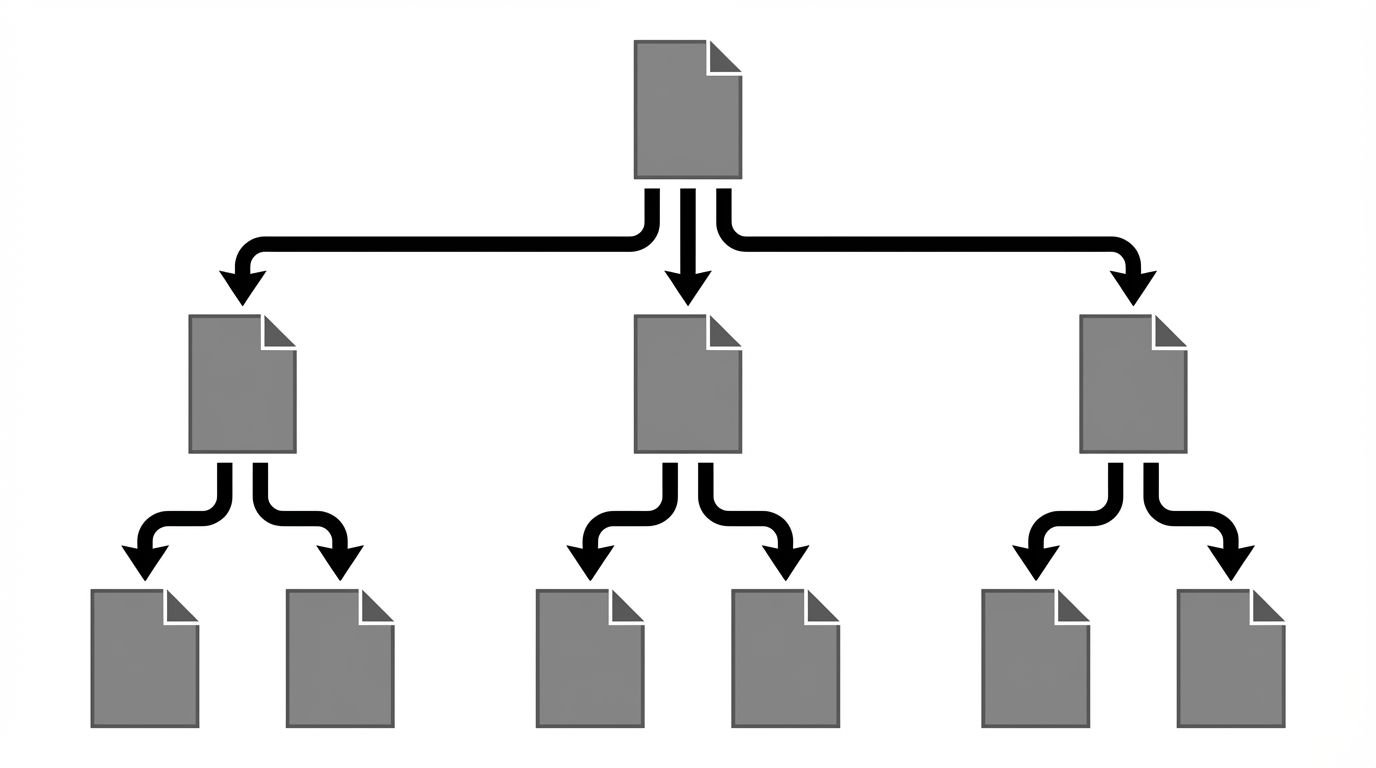
When you publish original data, a novel framework, or an answer to a question no one else has addressed, you create a piece of content that others must reference. Each reference strengthens the association between your brand and that topic in AI training data. Over time, this creates a compounding advantage that is extremely difficult for competitors to displace.
Publish Original Data
Brands that commission and publish original research earn outsized AI visibility. The data does not need to come from a massive study. Even small-scale surveys, proprietary benchmarks, or analyses of your own platform data can become primary sources if they answer questions the market is asking.
Practical approaches:
- Analyze your own data. If your platform generates usage metrics, conversion rates, or behavioral patterns, publish anonymized findings that reveal industry trends.
- Run focused surveys. A 200-person survey of your target audience on a specific topic produces citable data that larger outlets will reference.
- Benchmark competitors. Systematic comparisons using transparent methodology become reference material for AI and human analysts alike.
Introduce Named Frameworks
AI models associate concepts with their origin points. When you name a framework, a methodology, or a category, and that name gains traction, you become the canonical source.
Geology's own framing of how AI models choose brands is an example. By defining the specific criteria AI models use for brand selection, the content becomes the reference point for anyone discussing the topic.
Guidelines for framework creation:
- Solve a real problem. Frameworks that organize existing confusion earn adoption. Frameworks invented for marketing purposes do not.
- Name it clearly. A distinctive, descriptive name makes the framework findable and citable.
- Document it thoroughly. Provide enough detail that others can use and reference the framework without simplifying it beyond recognition.
Building Citation Density Deliberately
Thought leadership content does not earn citations passively. You need a deliberate strategy to get your original work referenced by authoritative sources.
The most effective approaches:
- Publish before the conversation peaks. If you can identify emerging topics in your space and publish substantive content early, you become the source that later coverage cites. Monitor industry forums, conference agendas, and regulatory announcements for early signals.
- Make your content easy to cite. Include specific data points, named frameworks, and clear conclusions that other writers can reference in a single sentence. Content that requires paragraph-length explanation to cite gets skipped.
- Distribute to the people who write about your topics. Identify journalists, analysts, and bloggers who cover your space. Share your original research directly with them. Not as a pitch, but as a resource they can use in their own work.
- Build on topic authority. Concentrated expertise in a specific area earns more citations than broad coverage of many topics. AI models give higher weight to sources that demonstrate sustained depth.
What Does Not Work
Several common thought leadership tactics have minimal impact on AI visibility:
- Rephrasing industry news. Commentary on what happened this week does not create primary source material. AI models already have the original news; they do not need your summary.
- Generic best practices. Content that covers the same advice available on fifty other sites will not be selected by AI models seeking authoritative answers. If your content could have been written by anyone in your industry, it will not be cited by AI.
- Executive bylines without substance. A CEO's name on a post does not carry weight with AI models. The content itself must contain original insight, data, or frameworks regardless of who authored it.
- High-volume publishing without depth. Publishing daily without adding original value dilutes your topical signal rather than strengthening it. AI models reward depth per topic, not total page count.
Measuring AI Thought Leadership
You cannot manage what you do not measure. Track these indicators to assess whether your thought leadership strategy is working:
- AI mention frequency: How often your brand appears in AI responses to questions in your domain. Use tools like Geology to track mentions across ChatGPT, Perplexity, Gemini, and Google AI Overviews.
- Citation backlinks: The number of unique domains referencing your original content. Growth in this metric leads AI visibility improvements by weeks or months.
- Concept attribution: Whether AI models attribute your named frameworks and ideas to your brand when asked. Test this by prompting AI platforms with questions about concepts you have introduced.
- Content gap wins: Whether your content appears in AI responses for questions where competitors are absent. These are the highest-value positions.
Track these metrics monthly. Changes in citation density and concept attribution are leading indicators. Changes in AI mention frequency are lagging indicators that follow weeks later.
What to Do Next
Building thought leadership that AI models recognize requires a shift from visibility-first thinking to source-first thinking. Stop asking "How do we get mentioned?" and start asking "What can we publish that others will need to cite?"
Audit your existing content for primary source material: original data, named frameworks, and unique answers to underserved questions. If you find gaps, prioritize creating one piece of citable original research per month over publishing four derivative blog posts per week. Then use Geology's content strategy services to build a systematic approach to earning citations and strengthening your topical authority.
Start with a free AI visibility audit to see where your brand currently stands in AI recommendations, and identify the topics where primary source content will have the biggest impact.