API and Data Feed Optimization for AI Platforms
Why do product feeds and OpenAPI specs drive more AI citations than HTML pages, and which feed lanes should your brand ship first?

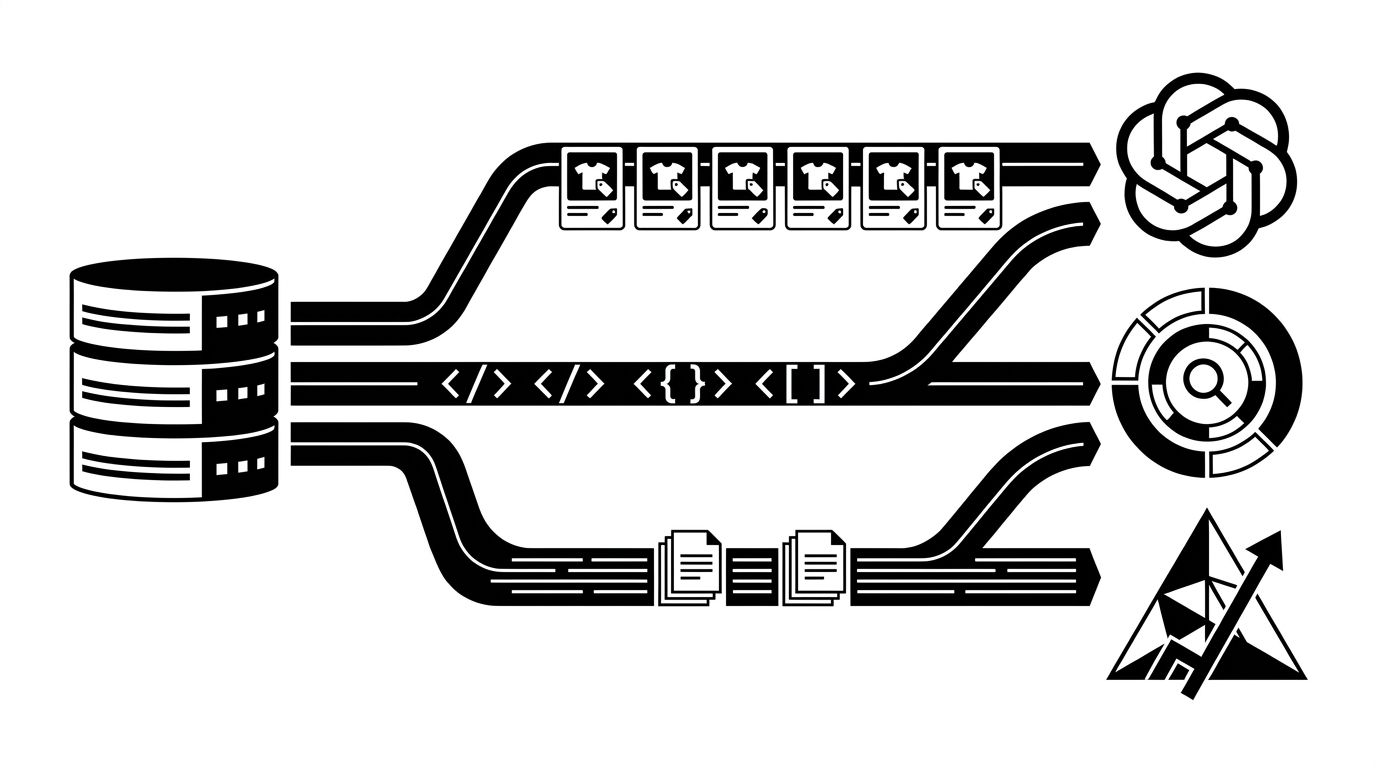
Your website is not the only surface AI models read. For e-commerce, SaaS, and data-heavy brands, the fastest path to AI visibility is shipping clean structured data through feeds and APIs AI platforms already ingest: product feeds, OpenAPI specs, and JSON or RSS content feeds. Brands retrofitting HTML to chase citations miss that the same data, published once through a feed, gets absorbed cleanly by Perplexity, ChatGPT, and Gemini without crawler guesswork. A 50 MB well formed product feed is worth more to your AI visibility than another 20 blog posts.
Why Feeds Beat Crawling for Structured Data
AI retrieval systems extract entities (products, prices, specs, organizations, people) from two places: crawled HTML and data feeds. Crawled HTML is lossy. Markup gets parsed inconsistently, schema is ignored when it conflicts with page text, and dynamic content disappears.
Feeds bypass that. A well-formed product feed gives AI platforms the exact fields they need: name, SKU, GTIN, price, availability, category, description, image. There is no extraction error because there is no extraction. Our piece on how AI models crawl web content covers the HTML side.
The Three Feed Formats That Move AI Visibility
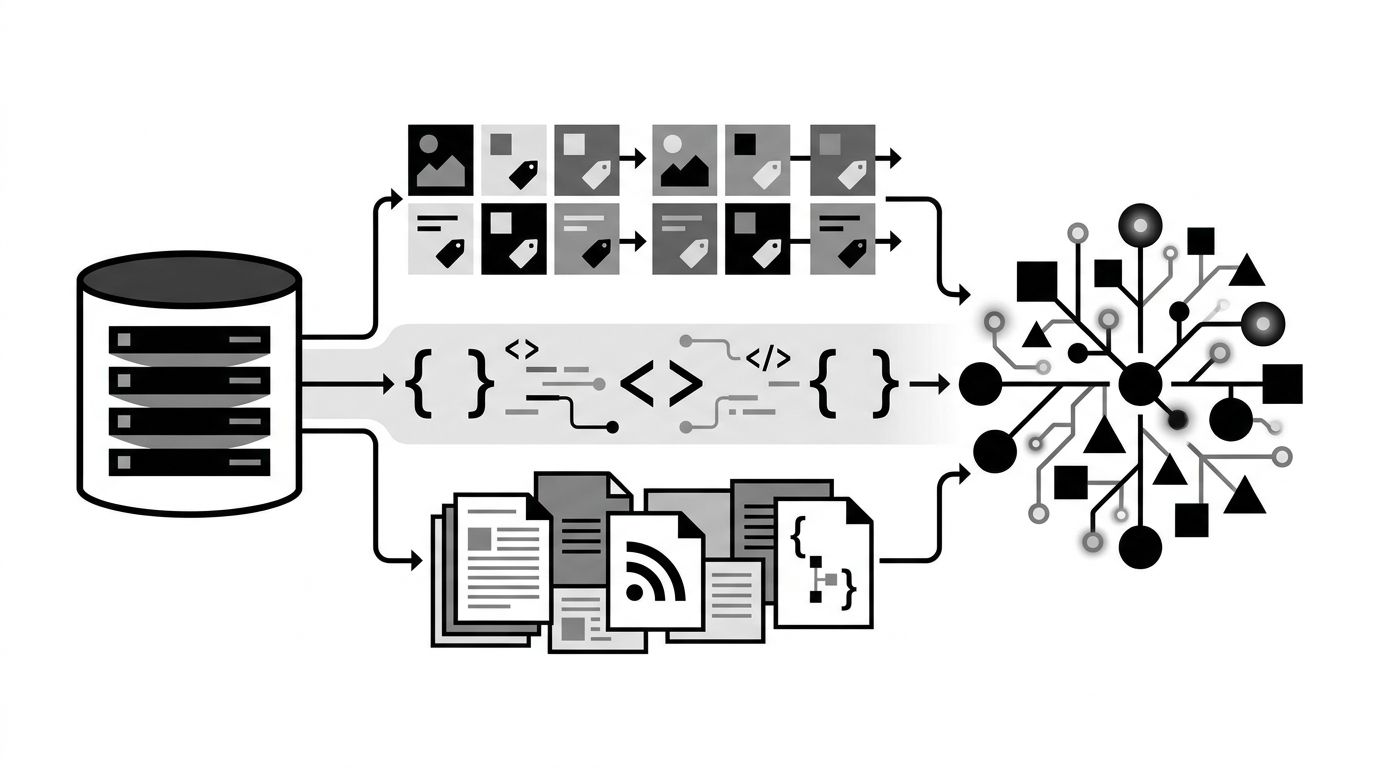
The diagram shows the three lanes most brands should ship. Together they cover 80% of the structured signals AI platforms want from a brand.
Lane one: product feeds. Google Merchant Center, Shopify's Shop Channel, and emerging specs like OpenGSF feed AI shopping assistants directly. A properly tagged feed gets your SKUs into ChatGPT shopping responses, Gemini product panels, and Perplexity's commerce layer. Our product page optimization guide covers the on-page complement.
Lane two: OpenAPI and developer documentation. If you run a SaaS with a public API, a clean OpenAPI 3.1 spec is how you show up when developers ask ChatGPT "what is the best API for X." Endpoints, auth flows, and examples land in model context.
Lane three: content and news feeds. RSS and JSON Feed carry your blog, press, and case studies into news-grounded retrieval. Perplexity and Google's News layer ingest these heavily.
What a Good Feed Actually Looks Like
The difference between a feed that drives AI citations and one that gets ignored is specificity. A product feed with populated `brand`, `gtin`, `mpn`, `additionalimagelink`, and `product_highlight` fields outperforms one with just name, price, and image by a wide margin.
Key fields AI platforms actually use:
- Canonical identifiers (GTIN, MPN, ISBN, SKU). Without these, entity resolution fails.
- Structured attributes (size, material, compatibility, use case). Match nuanced queries.
- Rich descriptions with bullet details. Models weight feature bullets over marketing blurbs.
- Current pricing and availability. Stale feeds get deprioritized hard.
- High-resolution images with alt text in the feed. Multimodal models use these for grounding.
A feed at 95% field completeness is several multiples more useful than one at 60%.
OpenAPI for SaaS Visibility
If you run a SaaS, your OpenAPI spec is marketing surface. When a user asks Claude "how do I send a transactional email with Resend," the models pull from indexed OpenAPI documents. Most SaaS companies either do not publish a machine-readable spec or publish one out of date with the actual API.
- Publish OpenAPI 3.1 at a stable URL and link it from your docs
- Keep `description` fields rich with examples and use cases
- Tag endpoints with `summary` lines that read like search queries
- Include at least one `example` per request and response schema
- Refresh the spec on every release
Our technical SEO service audits SaaS feeds alongside HTML-level work.
Update Frequency Is a Ranking Factor
The most common failure mode is stale feeds. A product feed updated weekly loses to one updated hourly in AI shopping responses. Tie publication to your source of truth (PIM, CMS, database), not a manual process. If you cannot hit hourly, hit daily with a `last_updated` timestamp on every entry.
Where to Start
- Audit what feeds you publish and where they are linked
- Grade field completeness on your product feed and fix the lowest-populated required fields first
- If you are a SaaS, publish or refresh your OpenAPI 3.1 spec at a stable URL
- Add `lastmod` or `last_updated` timestamps everywhere they are missing
- Measure AI citation rate before and after the feed work
If your brand ships structured data to partners but not to AI platforms directly, you are leaving the fastest GEO win on the table. Read our insurance case study for how a regulated vertical used structured signals to move AI citations.