GEO for E-Commerce Brands: Beyond Amazon
Amazon and Google Shopping capture buyers at checkout, but how do you make sure AI assistants name your brand during the earlier research phase?

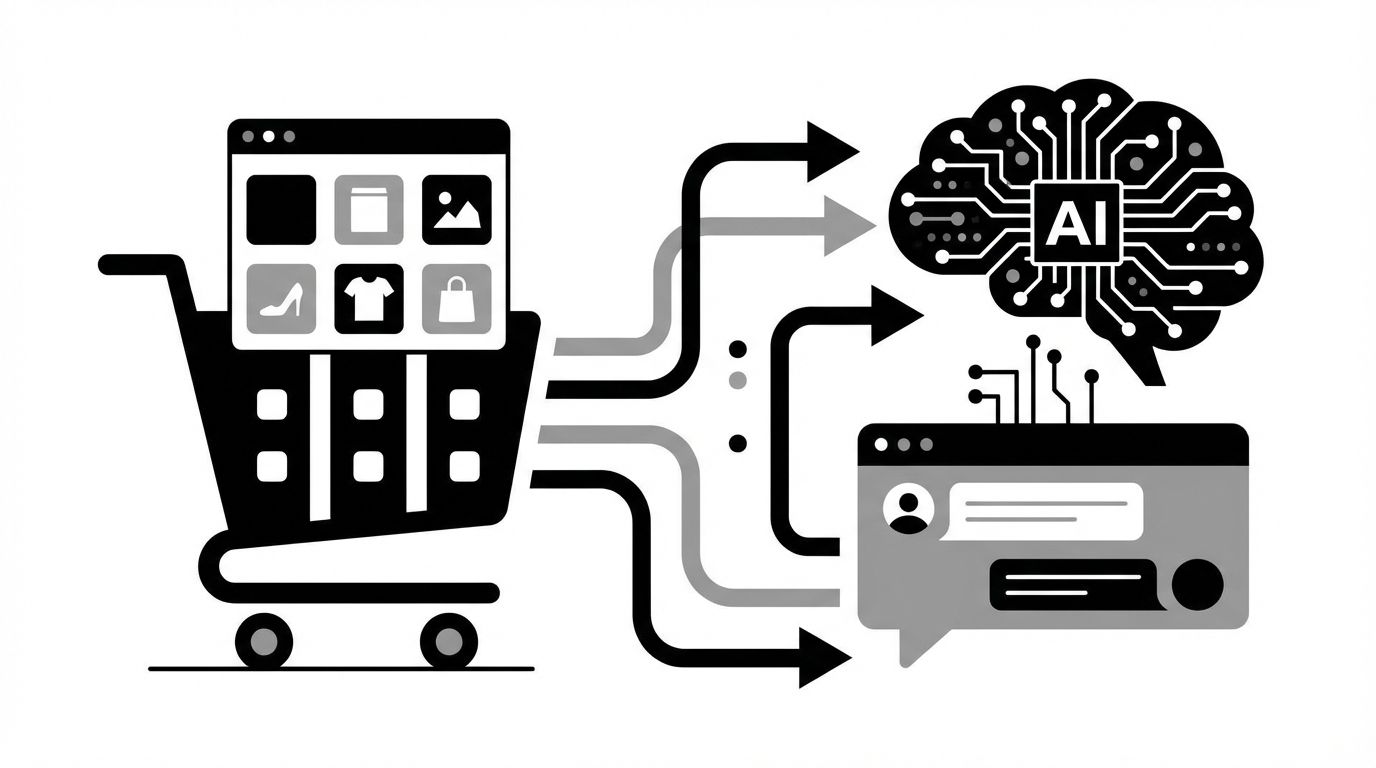
Most e-commerce brands pour their optimization budgets into Amazon and Google Shopping, ignoring the channel that's quietly reshaping purchase decisions: AI-powered product recommendations. When a shopper asks ChatGPT "what's the best organic skincare brand under $50," the answer doesn't come from your Amazon listing or your Google Ads. It comes from how well your brand's web presence maps to the way language models retrieve and rank information. Mid-market e-commerce brands that optimize for generative engine optimization (GEO) now, while competitors fixate on marketplace algorithms, will lock in visibility that compounds over time.
Why Marketplace Optimization Isn't Enough
Amazon SEO and Google Shopping campaigns target shoppers who have already decided where to buy. But AI assistants intercept the purchase journey earlier, during the research and comparison phase.
- A shopper asking Perplexity "best running shoes for flat feet" gets a curated brand list before ever visiting a marketplace
- ChatGPT's shopping features compare products across brands, pulling from web content, reviews, and structured data rather than sponsored placements
- Google AI Overviews surface product comparisons directly in search results, bypassing traditional product listing ads
If your brand only exists inside Amazon's walled garden, you're invisible to these AI-driven discovery moments. The brands that appear in AI responses are the ones with standalone web content that answers product questions directly.
The E-Commerce GEO Playbook
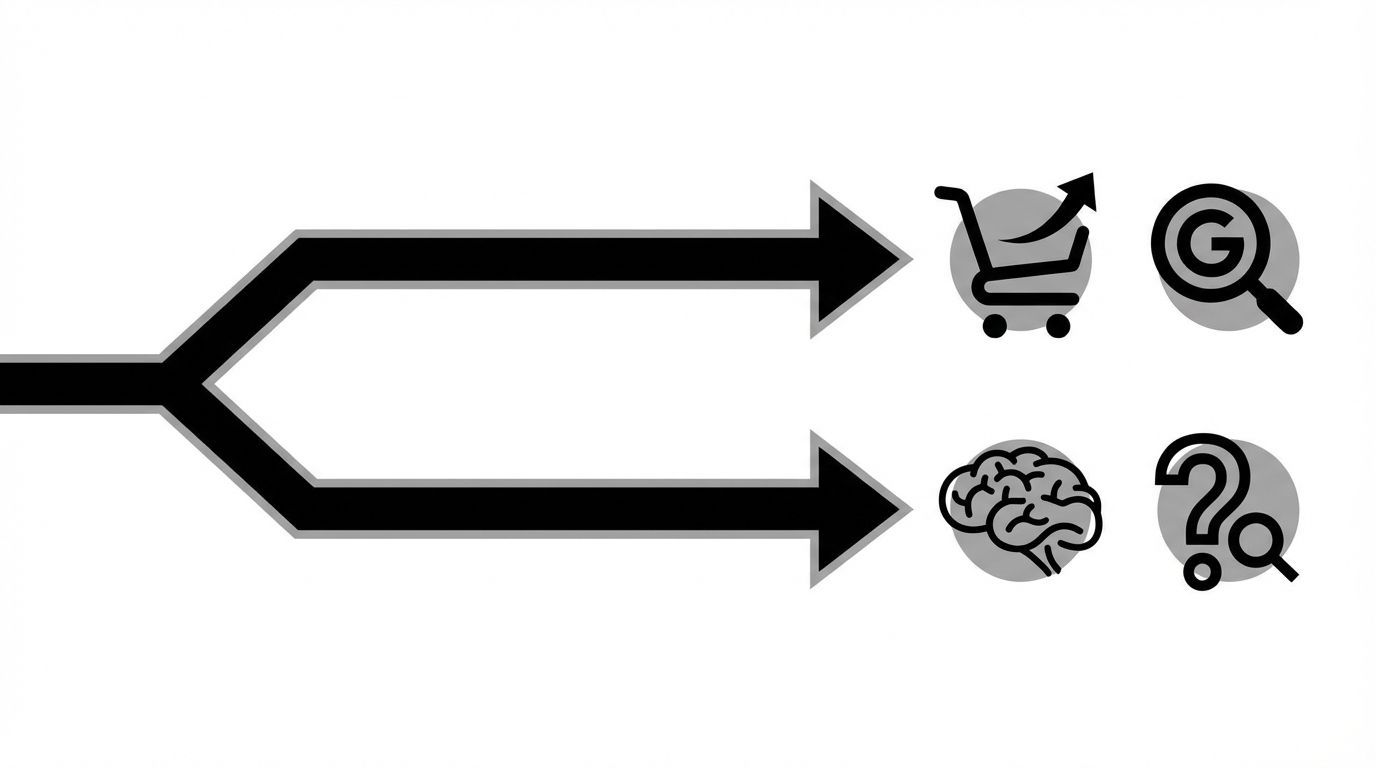
The diagram below shows how traditional marketplace optimization and GEO work as parallel tracks for e-commerce visibility.
Build Product Content Outside Your Store
Your product pages on Shopify or WooCommerce are transactional. AI models need informational content to cite your brand. Create comparison guides, ingredient breakdowns, use-case articles, and category explainers on your own domain.
- Write "best [category] for [use case]" guides that feature your products alongside honest competitor mentions
- Publish detailed material, sourcing, or ingredient pages that AI models can reference for factual claims
- Add structured FAQ sections to product category pages answering the exact questions shoppers type into AI
Structure Data for AI Extraction
AI crawlers parse structured data more reliably than free-form copy. Implement these schemas across your product pages:
- Product schema with price, availability, brand, and aggregate ratings
- FAQ schema on category pages targeting comparison and "which is better" queries
- Review schema pulling verified customer reviews with structured ratings
- HowTo schema for products that require assembly, application, or setup guidance
Earn Citations Through Editorial Content
AI models weight third-party mentions heavily when recommending products. Brands cited across review sites, niche publications, and expert roundups earn stronger AI visibility than brands with only first-party content.
- Target product review sites in your niche with samples and media kits
- Contribute expert commentary to industry publications
- Build relationships with niche bloggers who write the comparison content AI models train on
Measuring E-Commerce GEO Performance
Track these metrics to know whether your GEO efforts are converting:
- Brand mention rate: how often AI platforms name your brand in product category queries
- Recommendation position: where your brand appears in AI-generated product lists (first mentioned vs. last)
- AI referral traffic: visits from chatgpt.com, perplexity.ai, and other AI referral sources in your analytics
- Share of voice vs. competitors: your mention frequency compared to category competitors across AI platforms
Geology's e-commerce analytics dashboard tracks all four metrics across ChatGPT, Perplexity, Gemini, and Copilot, so you can see which product categories you're winning and where competitors are taking share.
Common Mistakes E-Commerce Brands Make
Avoid these pitfalls that undercut GEO for online retailers:
- Gating all content behind login walls. AI crawlers can't access content that requires an account. Keep informational content public.
- Relying solely on product page copy. Short product descriptions don't give AI models enough context to recommend your brand confidently.
- Ignoring negative AI sentiment. If an AI model associates your brand with quality complaints or shipping issues, it will deprioritize you. Monitor AI sentiment actively.
- Blocking AI crawlers in robots.txt. Some e-commerce platforms default to blocking bots like GPTBot. Check your settings.
What to Do Next
If you sell products online and haven't checked how AI platforms describe your brand, you're operating blind. Start by auditing your top product categories. Search ChatGPT and Perplexity for the queries your customers would ask, and see who gets recommended.
For a structured breakdown of where your brand stands across every major AI platform, explore Geology's e-commerce case study to see how mid-market brands have improved their AI recommendation rates.