Local Business AI Visibility: Getting Recommended in Your Market
When someone asks AI for the best restaurant, plumber, or dentist nearby, how do you become one of the few local businesses the AI actually names?

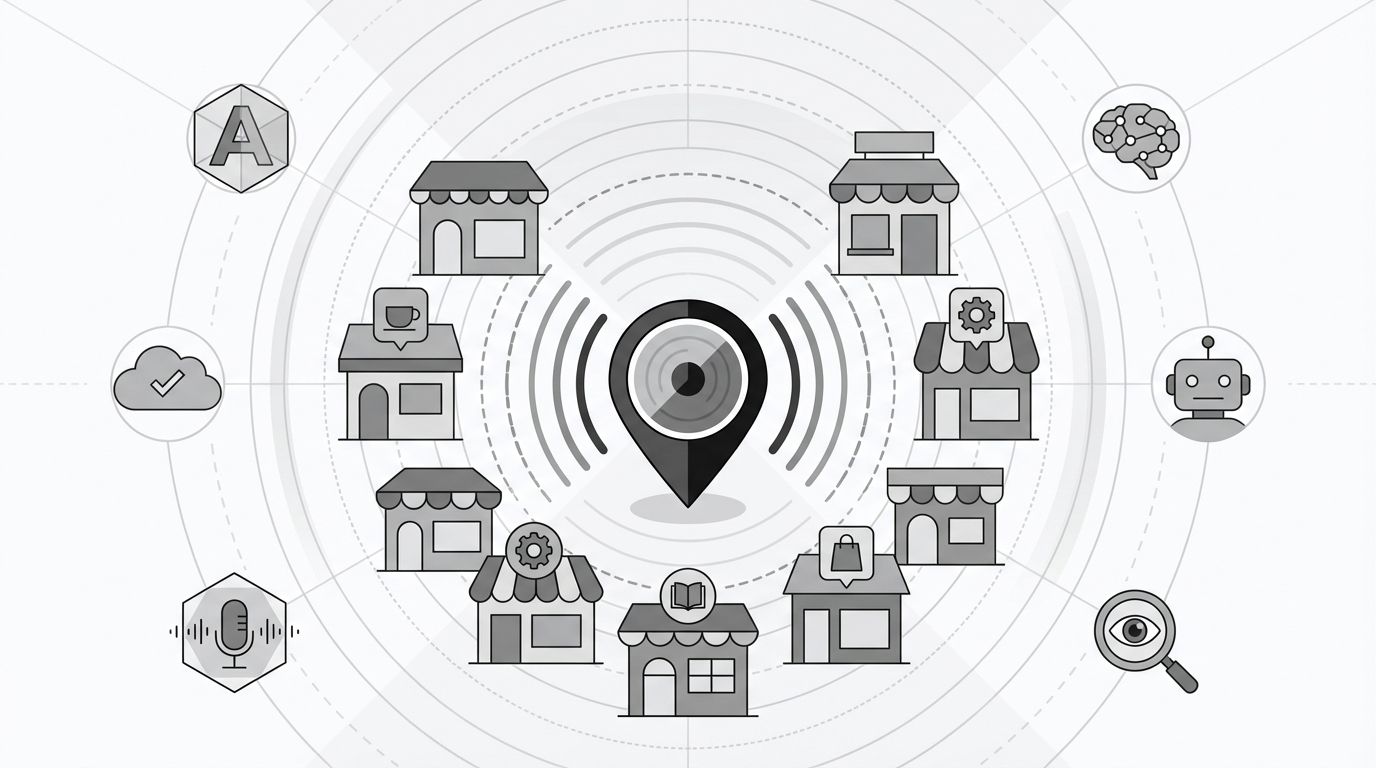
When someone asks ChatGPT "best Italian restaurant in Denver" or tells Perplexity "find me a reliable plumber near downtown Austin," the AI does not return ten blue links. It returns a short list of specific recommendations, usually three to five businesses, with brief explanations of why each one deserves consideration. If your local business AI visibility is weak, you are not on that list. And unlike traditional search, there is no page two to scroll to.
Here is what most local business guides miss: local businesses actually have a structural advantage in AI responses that national chains cannot easily replicate. When users ask AI platforms for recommendations in a specific city or neighborhood, the models heavily weight local review signals and geographic specificity in content. A local business with a strong review profile on Google, Yelp, and industry-specific platforms, combined with content that speaks directly to its market, can consistently beat national competitors in AI recommendations for local queries. The advantage is real, and most local businesses are not capitalizing on it.
How AI Platforms Handle Local Queries
AI models approach location-specific queries differently than general product or service queries. When a user asks for "best [service] in [city]," the AI draws from a combination of sources:
- Review platforms -- Google Business Profile reviews, Yelp ratings, and industry-specific review sites (Angi for home services, Zocdoc for healthcare, Avvo for legal)
- Local content signals -- blog posts, service pages, and landing pages that mention specific neighborhoods, cities, and regional context
- Third-party citations -- local press coverage, chamber of commerce listings, local business directories, and community publications
- Structured data -- schema markup on your website that explicitly declares your service area, business type, and location
BrightLocal's 2025 Local Consumer Review Survey found that 87% of consumers used AI assistants to search for local businesses at least once per month, up from 58% the previous year. The shift from traditional local search to AI-mediated local discovery is accelerating, and the businesses that AI recommends first are capturing a disproportionate share of new customers.
The Local Advantage Over National Chains
National chains have brand recognition and massive content libraries. But those assets can work against them in local AI queries. When someone asks for the "best coffee shop in Portland's Pearl District," a national chain's generic website does not mention the Pearl District at all. Its Google reviews are aggregated across thousands of locations, diluting the local signal. Its content is written for a national audience, not a Portland audience.
The diagram below shows how a local business with strong review signals and location-specific content can outrank a national chain in AI recommendations for geographically specific queries.

A local coffee shop, by contrast, has dozens of reviews that specifically mention the Pearl District location, a website that talks about its Portland roasting partners, and local press coverage from Portland food blogs. For that hyper-local query, the independent shop's signal density is higher than the national chain's. AI models recognize that specificity and reward it.
This advantage is not automatic. It requires deliberate effort in three areas: reviews, content, and local authority.
Building Your Local AI Visibility
Reviews: The Strongest Local Signal
For local queries, review volume, recency, and specificity are the single most influential factor in how AI models choose which brands to mention. AI platforms pull from Google reviews more than any other source for local recommendations, but they also index Yelp, Facebook, and industry-specific platforms.
To strengthen your review signal:
- Ask for reviews consistently -- not in bursts, but as an ongoing part of your customer experience. A steady stream of recent reviews signals active, ongoing quality.
- Respond to every review -- AI models can access review responses. Engaged businesses that respond thoughtfully signal credibility and customer care.
- Encourage specificity -- reviews that mention specific services, experiences, or outcomes ("replaced our roof in two days during the heatwave" vs. "great service") carry more weight because they give the AI concrete details to cite.
- Cover multiple platforms -- Google is primary, but Yelp, Facebook, and industry platforms provide corroborating signal that reinforces your local authority.
Content: Speak to Your Market
Generic service pages that could apply to any city do not help with local AI visibility. Your content needs geographic specificity that matches how people actually ask AI for local recommendations.
Practical steps:
- Create location-specific service pages -- instead of one "Plumbing Services" page, create pages for "Plumbing Services in East Austin" and "Emergency Plumber in Round Rock." Each page should address location-specific concerns (local building codes, common issues in that area's housing stock, seasonal considerations).
- Publish local content -- blog posts about local events you sponsor, community partnerships, local industry trends, or area-specific advice. This builds a body of content that AI can draw from when answering local queries.
- Use local structured data -- implement LocalBusiness schema markup with your exact service area, address, and business categories. This gives AI models explicit signals about where you operate.
Local Authority: Third-Party Validation
AI models trust third-party mentions more than self-reported claims. For local businesses, the most valuable third-party signals come from:
- Local press and media -- a mention in the local newspaper or a regional business publication carries significant weight
- Local business directories -- chamber of commerce listings, Better Business Bureau profiles, and industry association memberships
- Community involvement -- sponsorships, partnerships, and event participation that generate mentions on other local organizations' websites
Each of these creates an independent signal that corroborates your local presence and expertise. The more third-party sources that mention your business in a local context, the more confident AI models become when recommending you.
Measuring Your Local AI Visibility
Running your first AI visibility audit for local queries is straightforward. Query each major AI platform with the exact phrases your customers would use:
- "Best [your service] in [your city]"
- "Recommended [your service] near [your neighborhood]"
- "[Your service] [your city] reviews"
- "Compare [your business name] vs [local competitor]"
Document whether you appear, how you are described, and which competitors are recommended instead. Repeat monthly to track changes.
For a comprehensive view of how AI platforms currently represent your business across local queries, run a free AI visibility audit. The results will show you exactly where you stand and where the highest-impact opportunities are to get recommended in your market.