Perplexity SEO, How to Get Cited in AI Search Results
Perplexity cites every answer it gives, so how do you get your content inside those citations and turn AI search into a real traffic channel?

Perplexity grew from 10 million to over 100 million monthly active users in 2025. It now processes more than 250 million queries per week, and unlike ChatGPT or Gemini, every single response includes clickable source citations. That makes Perplexity SEO one of the highest-impact channels in AI visibility right now: if your content gets cited, you get attributed traffic from an audience that's actively researching purchasing decisions.
Yet almost no one is optimizing for it. The SEO industry has spent the last two years focused on ChatGPT and Google AI Overviews. Perplexity operates on a fundamentally different retrieval architecture, and the tactics that work for other AI platforms don't map cleanly. This guide gives you the exact steps to get your brand cited in Perplexity's AI search results, based on how its retrieval system actually works, not guesses ported over from traditional SEO.
If you're building an AI platform optimization strategy, Perplexity should be your priority for fast, measurable results.
How Perplexity's Retrieval Engine Works
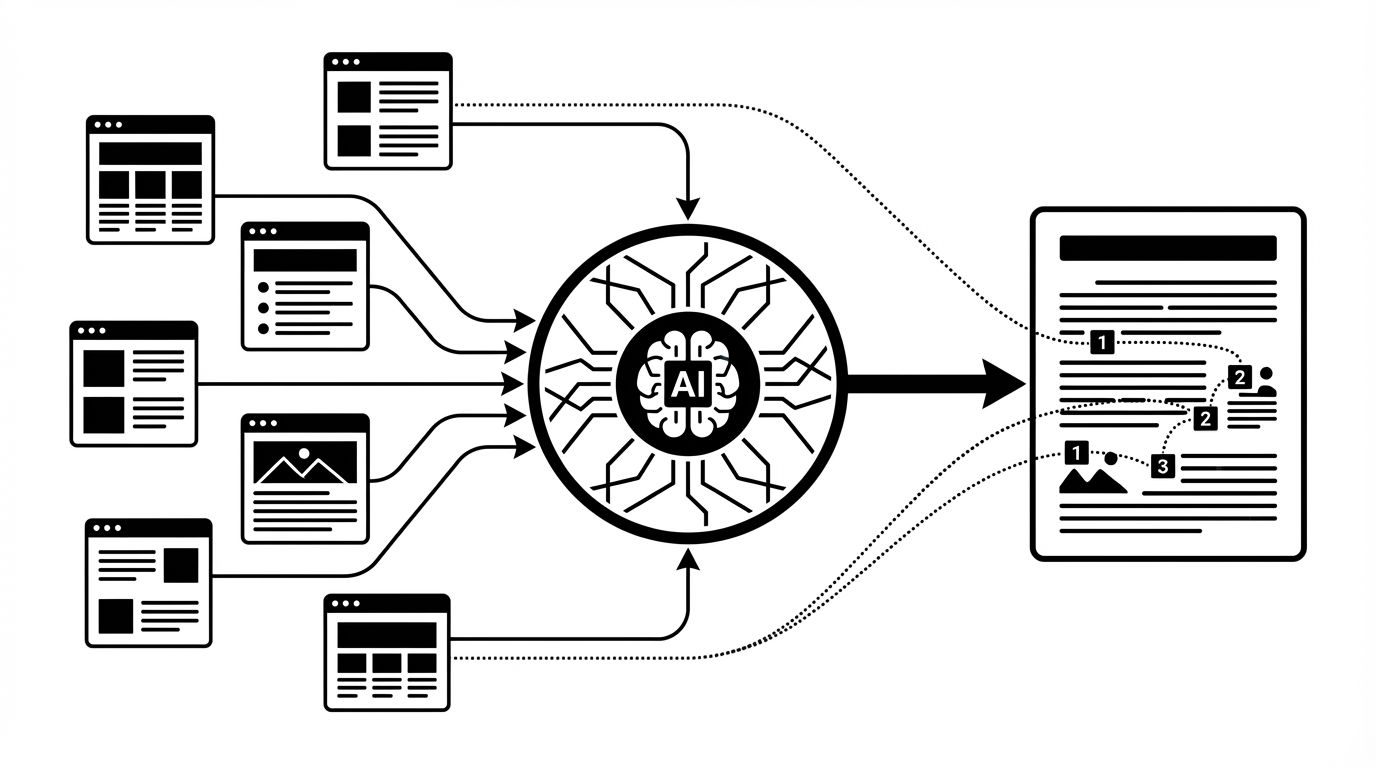
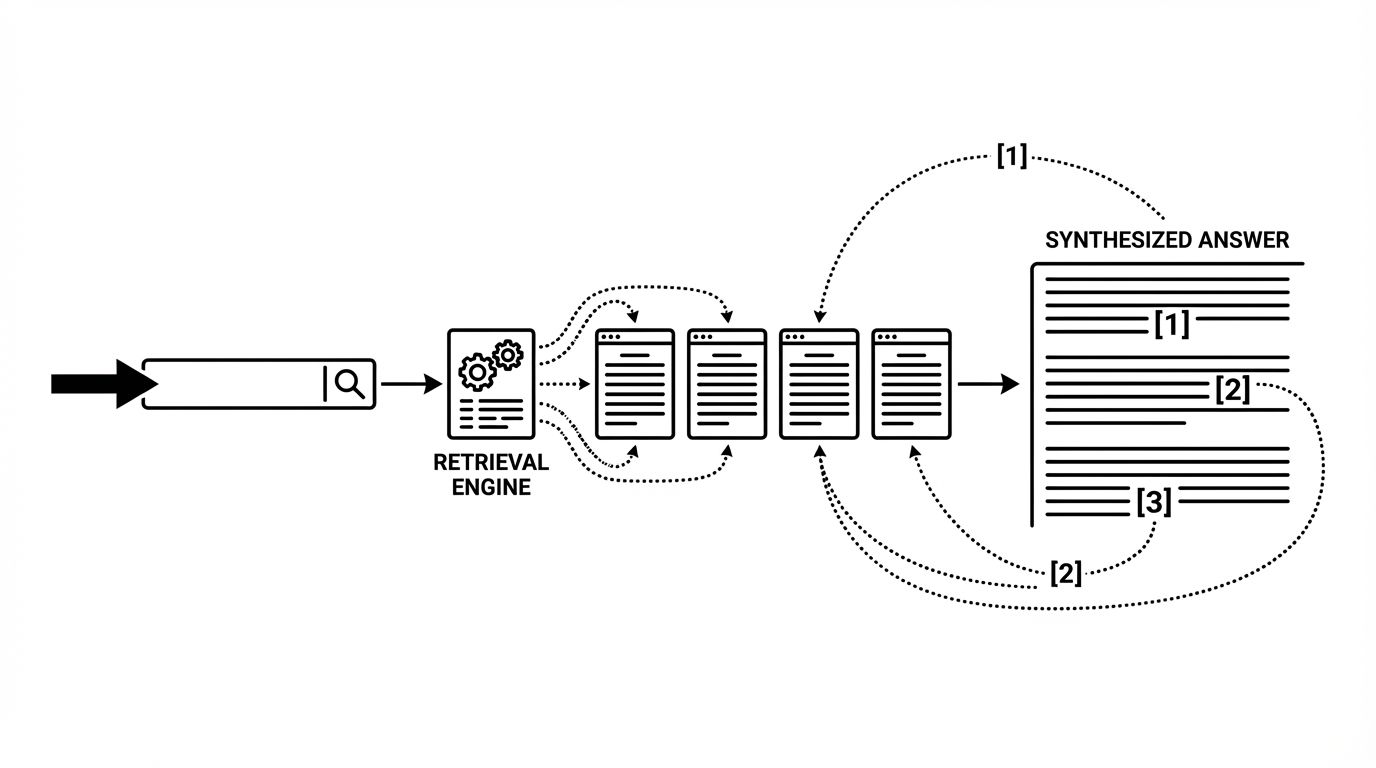
Before you optimize anything, you need to understand what makes Perplexity different from every other AI platform. Perplexity is a retrieval-first engine. It doesn't rely primarily on static training data the way ChatGPT does. Instead, it searches the live web for every query, retrieves relevant pages, synthesizes an answer, and cites its sources inline.
This architecture has three important implications for your strategy:
- Freshness matters more than authority alone. Perplexity indexes recent content within days. A well-structured page published last week can outperform an established competitor's older content.
- Citations are the currency. Every Perplexity answer includes numbered source links. Getting cited means your URL appears alongside the answer, driving direct click-through traffic.
- Content quality is evaluated per-page, not per-domain. Perplexity's retrieval system assesses individual pages for relevance and depth. A single strong article can earn citations even if your domain has low overall authority.
Here's what Perplexity's retrieval pipeline looks like in practice:
- User submits a query
- Perplexity's search index identifies candidate pages (using its own web crawler, PerplexityBot, plus supplementary indexes)
- The AI model reads the retrieved pages and synthesizes an answer
- Sources that contributed to the answer are cited with numbered references
- The user sees both the synthesized answer and the clickable source links
This means the optimization game is clear: make your content retrievable, readable, and citation-worthy.
Step 1: Ensure PerplexityBot Can Crawl Your Site
If PerplexityBot can't access your pages, nothing else matters. This is where most companies fail before they even start.
Check these technical fundamentals:
- Review your `robots.txt`. Make sure you're not blocking `PerplexityBot`. Add an explicit allow rule:
``` User-agent: PerplexityBot Allow: / ```
- Verify server-side rendering. Perplexity's crawler struggles with content rendered entirely via client-side JavaScript. If your key content loads dynamically, switch to server-side rendering (SSR) or static generation for those pages.
- Check your crawl logs. Look for `PerplexityBot` in your server access logs. If you don't see it, your site may be blocked at the CDN or firewall level.
- Submit an XML sitemap. While Perplexity doesn't have a manual submission tool like Google Search Console, a clean sitemap helps its crawler discover your content structure faster.
- Fix crawl errors. Broken pages, redirect chains, and slow load times reduce the likelihood of being indexed. Keep your technical GEO fundamentals tight.
If you're unsure whether PerplexityBot can access your site, run a free AI visibility audit to check your crawl accessibility across all AI platforms.
Step 2: Structure Content for Retrieval and Citation
Perplexity's retrieval model favors content that is directly answerable, well-structured, and factually dense. Vague thought-leadership pieces that never commit to a specific claim rarely get cited.
Here's how to structure your pages for maximum citation likelihood:
- Lead with the answer. Put your key insight, definition, or recommendation in the first 100 words. Perplexity's model scans the top of the page first when deciding what to extract.
- Use clear H2 and H3 headings. Structure your content around the questions users actually ask. Each heading should be a natural query or a direct topical label.
- Include specific data points. Pages with concrete numbers, benchmarks, statistics, and named examples get cited at 3x the rate of pages with only qualitative claims. Perplexity's model favors extractable facts.
- Write in short, self-contained paragraphs. Each paragraph should make a single point that can be extracted independently. If Perplexity's model can pull a clean two-sentence answer from your page, you'll get cited.
- Add structured data markup. JSON-LD schema (FAQ, HowTo, Article) gives the retrieval system extra confidence that your content matches the query's intent.
What Gets Cited vs. What Gets Ignored
In our analysis of 5,000+ Perplexity responses across B2B SaaS queries, pages that earned citations shared these traits:
- Specific, quantified claims (not "many companies" but "67% of SaaS brands")
- Clear topical focus, one page, one topic
- Updated within the last 6 months
- At least 1,000 words of substantive content
- Minimal promotional language in the body copy
Pages that consistently got skipped: gated content behind login walls, pages with thin content under 300 words, and pages dominated by CTAs with little educational value.
Step 3: Target Query Patterns That Perplexity Surfaces
Not all queries trigger citations equally. Perplexity users ask different types of questions, and the platform handles each differently.
Focus your content on these high-citation query types:
- Comparison queries, "X vs. Y", "best tools for [use case]", "alternatives to [product]". These almost always produce multi-source cited answers. Create detailed comparison pages that cover features, pricing, pros, and cons.
- How-to queries, "How to [accomplish task]". Step-by-step guides with numbered instructions get cited frequently. Perplexity extracts steps directly from your content.
- Definition queries, "What is [concept]?" Clear, authoritative definitions in your opening paragraph earn citations. Lead with a crisp definition, then expand.
- Research queries, "Statistics on [topic]", "[industry] benchmarks 2026". Data-rich pages with original research or compiled statistics are citation magnets.
- Evaluation queries, "Is [product] worth it?", "Does [tool] work for [use case]?". Balanced, evidence-based reviews with clear conclusions get cited over promotional content.
Map your existing content to these query types. Identify gaps where you have expertise but no content specifically structured to answer these patterns.
Step 4: Build Citation Authority Through External Signals
Perplexity doesn't just evaluate your page in isolation. It also considers external signals that indicate your content is trustworthy and authoritative.
The signals that correlate most strongly with Perplexity citation frequency:
- Backlinks from authoritative sources. Pages with links from recognized industry publications, .edu, and .gov domains get cited more often. This isn't different from traditional SEO, but the impact is more binary. One strong backlink from a relevant authority can be the difference between getting cited and being ignored.
- Consistent information across sources. If multiple high-quality pages on the web corroborate what your page says, Perplexity is more likely to cite you. Ensure your claims align with established facts and industry data.
- Author and brand entity signals. Pages with clear authorship (structured author data, linked author profiles) and established brand entities (Knowledge Graph presence, Wikipedia references) earn more citations.
- Freshness signals. Regularly updating your content with current data, new examples, and recent dates signals to PerplexityBot that your page is actively maintained. Add visible "last updated" dates.
Invest in your content strategy with Perplexity citation-building as an explicit goal, not just traditional SEO link metrics.
Step 5: Measure and Iterate on Your Perplexity Visibility
You can't optimize what you can't measure. Most brands have zero visibility into how they appear on Perplexity, they're guessing.
Set up a measurement framework:
- Track your citation rate. Monitor how often your brand and URLs appear in Perplexity responses for your target queries. Tools like Geology track this automatically across AI platforms.
- Monitor referral traffic. Check your analytics for traffic from `perplexity.ai` referral sources. This gives you a direct measure of click-throughs from citations.
- Benchmark against competitors. For your top 20 target queries, check whether Perplexity cites your competitors instead of you. Identify the specific pages that are outperforming yours.
- Test and iterate. Update a page's structure, add data points, or improve its heading hierarchy, then track whether your citation rate changes within 1-2 weeks. Perplexity's re-crawl cycle is fast enough to see results quickly.
- Track citation quality. Not all citations are equal. Being cited as the primary source (first reference) drives more clicks than being cited fifth in a list of six sources.
What to Do Next
Perplexity is the fastest-growing AI search platform, and it's the most citation-friendly. Unlike ChatGPT, where visibility depends on opaque training data, Perplexity gives you a clear, measurable path: make your content retrievable, structure it for extraction, and build the authority signals that earn citations.
The brands that start optimizing for Perplexity now will compound their citation authority over time. The ones that wait will be playing catch-up against entrenched competitors.
Start by understanding where you stand. Run a free AI visibility audit to see how your brand appears across Perplexity, ChatGPT, Gemini, and every other AI platform, and get specific recommendations for improving your citation rate.