How to Optimize Your Brand for Google Gemini
Gemini sits on top of Google's full search index, so which SEO and content signals decide whether your brand shows up in its AI answers?

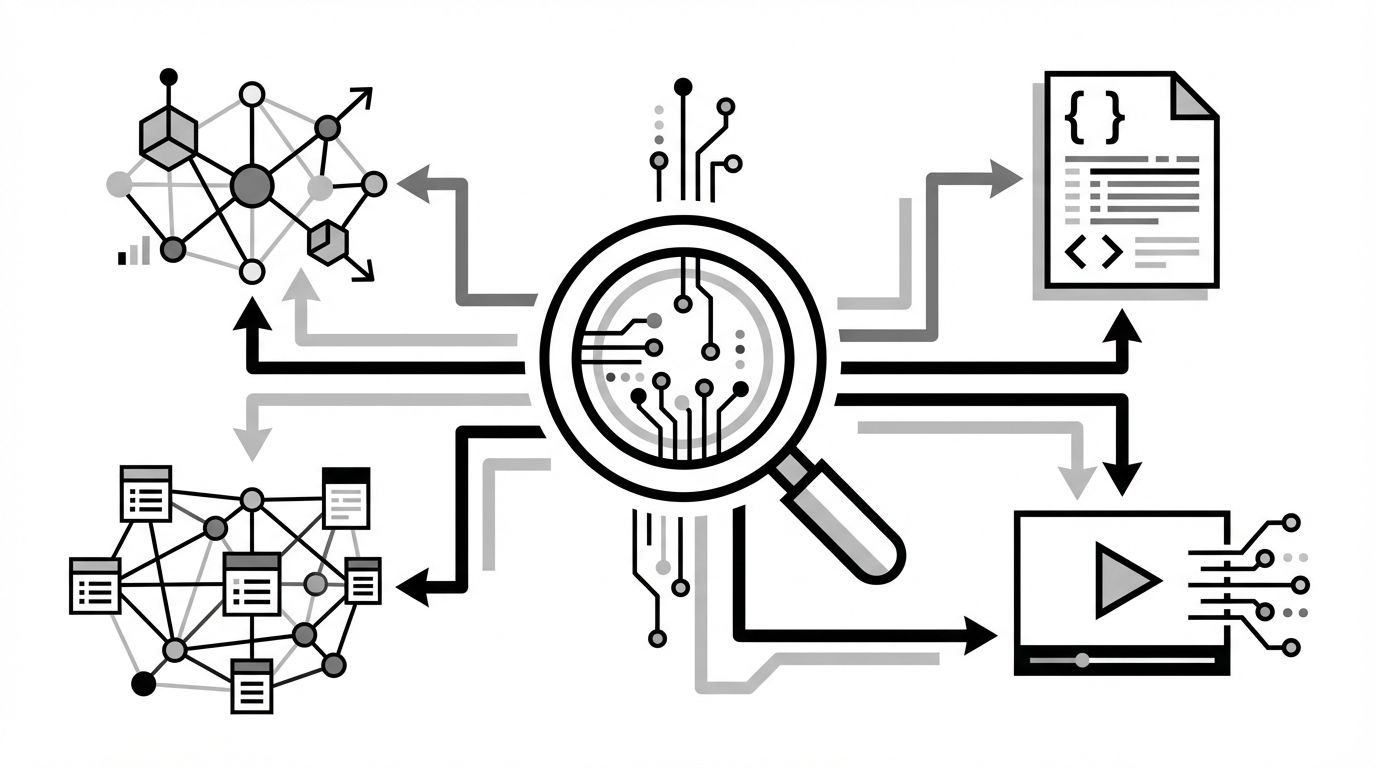
Google Gemini is the only major AI platform with direct access to Google's search index. That single fact changes the entire optimization playbook. If you want to optimize your brand for Gemini, you need to understand that traditional SEO authority signals, backlinks, domain authority, E-E-A-T, carry more weight in Gemini responses than in any other AI platform. Brands that already rank well in Google Search have a structural advantage, but only if their content is formatted for AI extraction, not just ranking.
Gemini processed over 2 billion queries in Q1 2026, according to StatCounter's AI platform tracking data. Unlike ChatGPT, which builds brand knowledge primarily from training data, or Perplexity, which searches the open web, Gemini leverages Google's proprietary index, the same index that powers Search, Shopping, Maps, and YouTube. That means your existing Google SEO work isn't wasted. It's a foundation to build on.
This guide focuses specifically on Gemini. For a broader view across all AI engines, see our AI platform optimization guide.
How Gemini Selects Brands to Recommend
Gemini's brand selection process inherits signals from Google Search, but applies them differently. Understanding these mechanics is essential before you start optimizing.
Here's what the data shows about Gemini's recommendation patterns:
- Search ranking correlation: Brands that rank in Google's top 5 for category queries appear in Gemini responses at 3-4x the rate of brands ranking 6-10. Top-ranked content is Gemini's first retrieval target.
- E-E-A-T amplification: Google's Experience, Expertise, Authoritativeness, and Trustworthiness framework has outsized influence on Gemini. Content with author bylines, cited credentials, and verifiable expertise gets prioritized over anonymous or generic pages.
- Knowledge Graph integration: Gemini pulls directly from Google's Knowledge Graph. Brands with strong Knowledge Graph entities, complete with descriptions, categories, and relationships, appear more frequently and more accurately.
- Multi-format indexing: Gemini can reference YouTube videos, Google Shopping listings, Maps reviews, and web content simultaneously. Your brand's presence across Google's ecosystem compounds its Gemini visibility.
The fundamental difference between GEO and SEO becomes clear with Gemini: ranking on page one gets you into Gemini's retrieval pool, but getting actually cited in a response requires content that is structured for extraction, not just for clicks.
Leverage Your Google SEO Foundation
If you've invested in Google SEO, you already have assets that feed Gemini. The gap is usually in how that content is structured, not whether it exists.
Steps to bridge the gap:
- Audit your top-ranking pages for extractability, Pull your top 20 pages by organic traffic. For each, check whether the core answer appears in the first 150 words. Gemini pulls opening content disproportionately. If your pages bury the answer under a long introduction, restructure them.
- Add structured data to every key page, `Organization`, `Product`, `FAQPage`, and `HowTo` schemas give Gemini machine-readable context about your brand and offerings. Google's Rich Results Test can validate your markup.
- Strengthen author entities, Gemini values authored content more than anonymous content. Add author schema (`Person` with `sameAs` links to LinkedIn, Twitter, and personal sites) to every blog post and thought leadership piece.
- Consolidate thin content, If you have multiple pages targeting similar keywords, Gemini may pull from the weaker one. Consolidate into a single authoritative page per topic to ensure your strongest content gets retrieved.
Brands with strong SEO foundations often assume Gemini will surface them automatically. That assumption is half right, you're in the retrieval pool, but content not optimized for extraction gets passed over in favor of competitors with cleaner formatting.
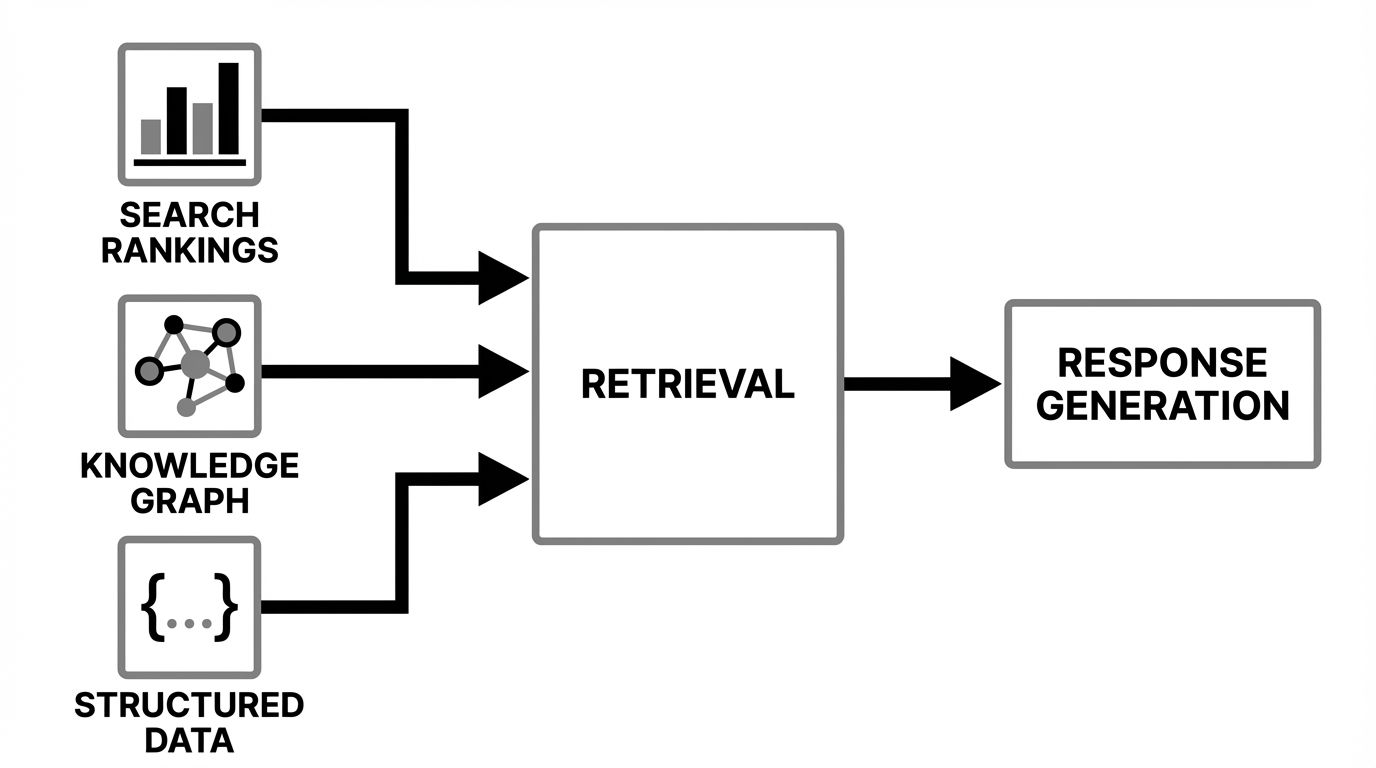
The diagram below shows how Google's search signals flow into Gemini's response generation pipeline.
Optimize Content Formats for Gemini Extraction
Gemini doesn't just read your content, it extracts specific fragments and synthesizes them into responses. The content formats that perform best in AI responses apply broadly, but Gemini has preferences worth targeting specifically.
- Use the inverted pyramid on every page, Lead with the direct answer to the query the page targets. Follow with supporting evidence. Save background context for later. Gemini's extraction model favors pages that front-load the answer.
- Create listicle-structured content for comparison queries, Queries like "best [category] for [use case]" trigger list-format Gemini responses. Pages structured as numbered or bulleted lists of options with brief descriptions align with Gemini's preferred output format.
- Publish data-rich content with specific numbers, Gemini surfaces statistics, benchmarks, and quantified claims more readily than qualitative statements. Replace "significant growth" with "47% year-over-year increase" wherever you can support it.
- Implement FAQ sections with question-format H2s or H3s, Gemini frequently answers follow-up questions by pulling from FAQ content. Each Q&A pair should be self-contained and concise.
One pattern to watch: Gemini often cites YouTube content in its responses, especially for how-to and tutorial queries. If you have a YouTube channel, ensure video titles and descriptions contain your target keywords and brand name.
Build Your Google Knowledge Graph Entity
Your Google Knowledge Graph entity is the single most important asset for Gemini visibility. It defines how Google's AI systems understand your brand, your category, competitors, products, and attributes.
Actions to strengthen your Knowledge Graph presence:
- Claim your Google Business Profile, Even for SaaS companies, a verified Google Business Profile establishes a foundational entity in Google's systems.
- Maintain consistent entity information, Your brand name, description, category, and URL should be identical across your website, Crunchbase, LinkedIn, Wikipedia (if you have a page), and industry directories. Inconsistencies create entity fragmentation.
- Earn Knowledge Panel triggers, Brands with Knowledge Panels have confirmed entities in Google's graph. Publish on established platforms (Forbes, TechCrunch, industry publications) and build a Wikipedia presence to accelerate Knowledge Panel eligibility.
- Link entities with structured data, Use `sameAs` properties in your Organization schema to connect your website to your LinkedIn, Twitter, Crunchbase, and other profiles. This helps Gemini resolve your brand as a single coherent entity.
The relationship between Knowledge Graph strength and Gemini visibility is nearly linear. Brands with complete, well-connected entities appear in Gemini responses at significantly higher rates than brands with fragmented or incomplete entity data.
What to Do Next
Gemini's deep integration with Google's search infrastructure means your SEO investments already work in your favor, but only if you bridge the gap between ranking and extractability. Audit your top pages for structure, strengthen your Knowledge Graph entity, and start tracking how Gemini describes your brand versus competitors. For related guidance on Google's other AI surface, see our Google AI Overviews guide.
Run a free AI visibility audit to see where your brand stands across Gemini and every other major AI platform. The brands that act now will compound their advantage as Gemini's user base continues to grow.