Google AI Overviews, What Brands Need to Know
Google AI Overviews now appear on 30% of searches, so how do you get your brand cited inside them instead of losing clicks to the brands that are?

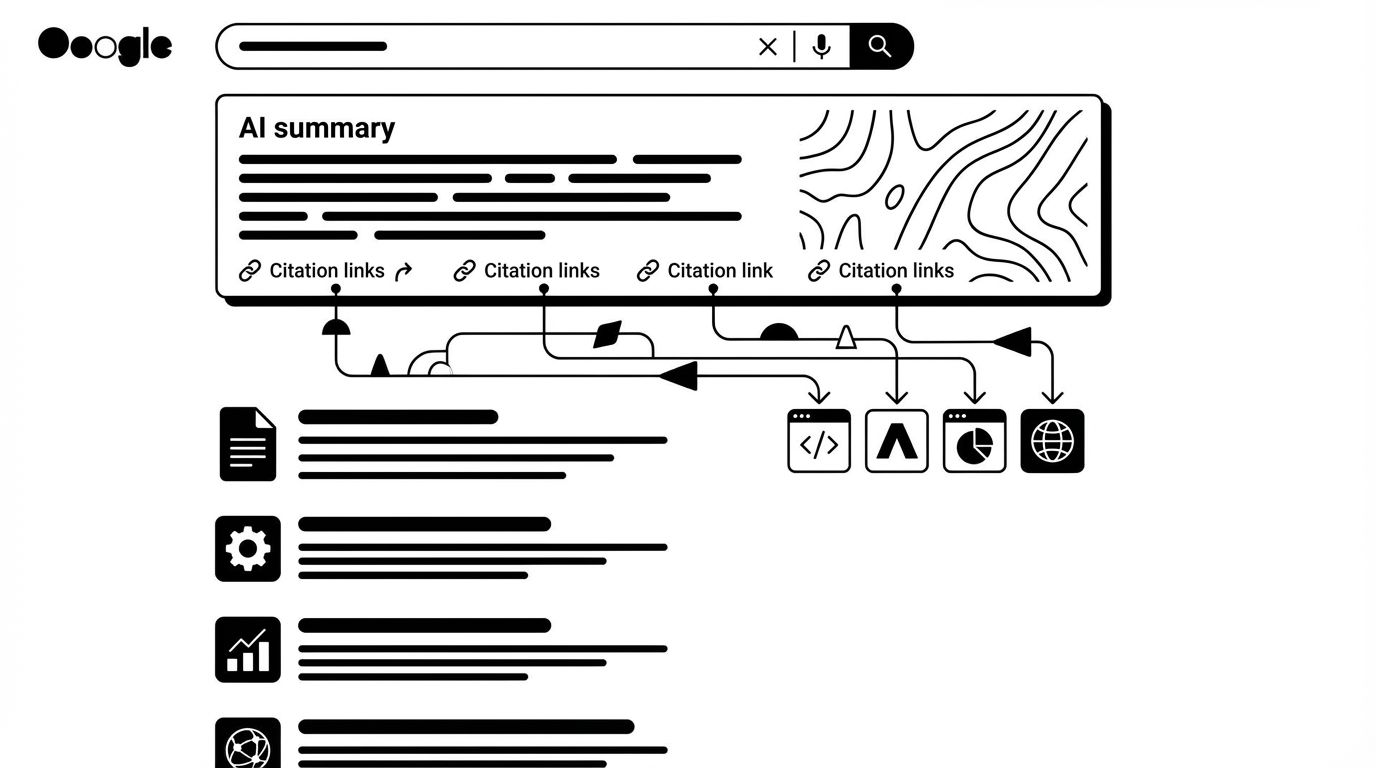
Google AI Overviews now appear on over 30% of U.S. search queries. When they show up, they push organic results below the fold, and the brands cited inside the overview capture a disproportionate share of clicks. If your brand isn't showing up in Google AI Overviews, you're losing visibility on the world's largest search engine even if your traditional SEO rankings are strong.
Most guides about AI Overviews focus on what they mean for SEO traffic. This one is different. We're covering how to actively optimize for inclusion, what triggers citations, and what content patterns Google's AI selects for, based on observable data from thousands of queries across industries.
This is part of our broader guide on AI platform optimization, focused specifically on Google's AI-generated search summaries.
How Google AI Overviews Actually Work
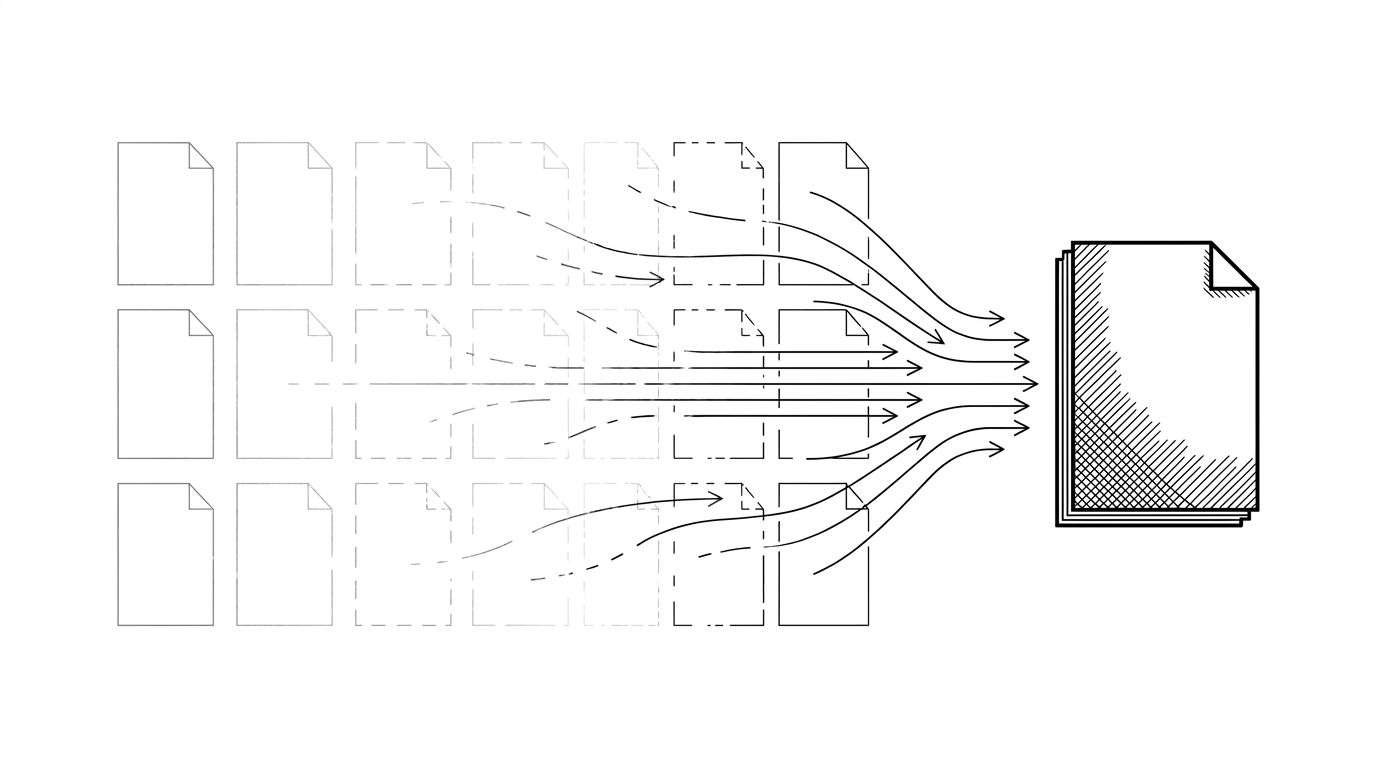
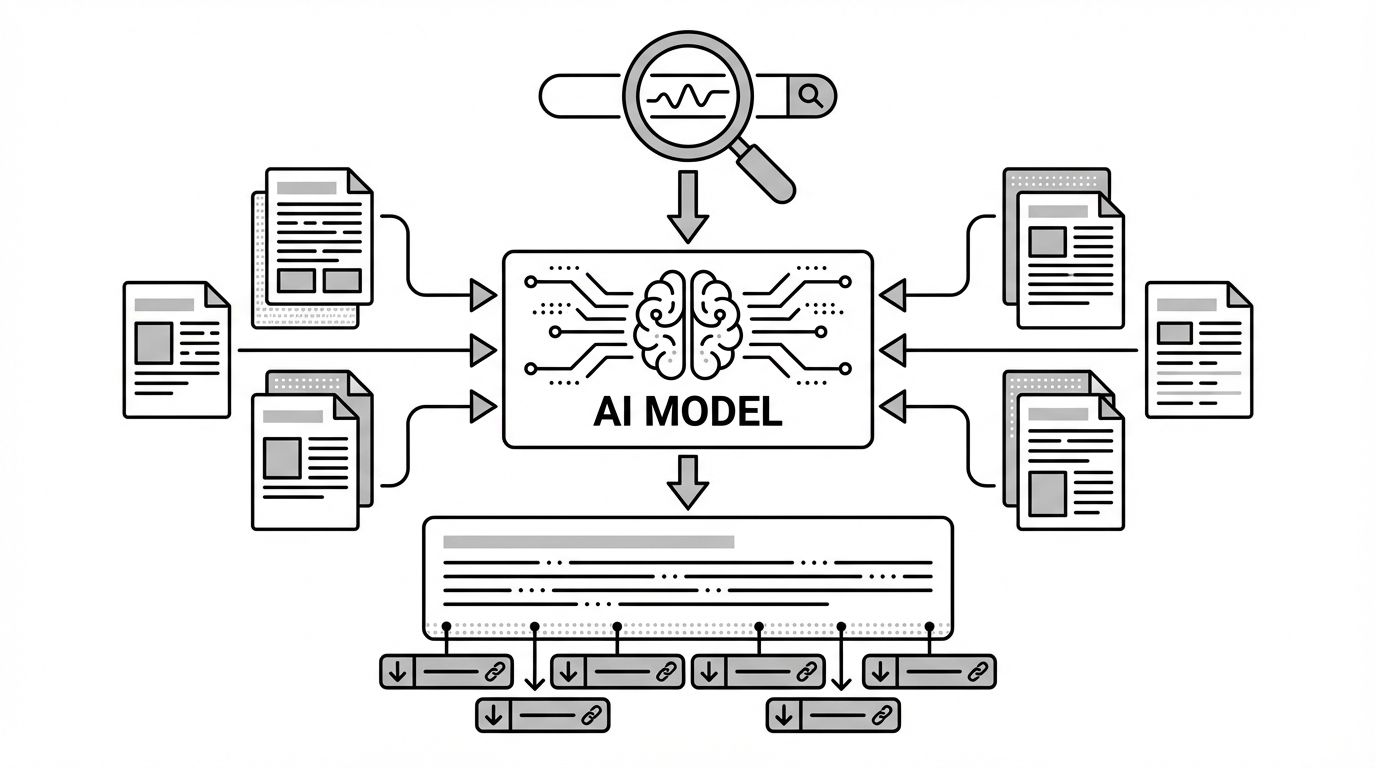
Google AI Overviews are not a chatbot. They are AI-generated summaries embedded directly into Google Search results. When a user types a query, Google's model synthesizes information from multiple indexed pages and presents a concise answer at the top of the results page, with source citations.
Here's what makes them different from other AI platforms:
- Real-time retrieval: AI Overviews pull from Google's live search index, not static training data. If your page ranks, it can be cited. If it doesn't, it won't be.
- Citation-driven: Unlike ChatGPT, which often recommends brands without sourcing, AI Overviews link directly to the pages they draw from. Every citation is a click opportunity.
- Query-dependent: AI Overviews don't appear on every search. They trigger most often on informational and commercial queries, "how to," "what is," "best X for Y" patterns.
- Multi-source synthesis: A single AI Overview typically pulls from 3-8 different sources. Your brand doesn't need to be the only answer, it needs to be one of the answers.
The key insight: AI Overviews reward the same content that earns featured snippets, but with more nuance. Google's model can pull a definition from one page, a comparison from another, and a recommendation from a third.
What Triggers a Citation in AI Overviews
Not every page that ranks on page one gets cited in an AI Overview. Google's model selects sources based on specific content signals. Here's what the data shows:
- Direct question-answer alignment: Pages that clearly answer the query in the first 100-200 words get cited more often. Burying the answer beneath a long intro kills your chances.
- Structured formatting: Content with headers, lists, tables, and clear subheadings is easier for Google's AI to parse and extract. Walls of text get skipped.
- Authoritative sourcing: Pages with author bylines, publication dates, cited statistics, and credentials markers (E-E-A-T signals) are favored over generic content.
- Recency: For queries where freshness matters, recently updated content wins. Google's AI checks publication and modification dates.
- Specificity over generality: A page answering "best CRM for 50-person sales teams" will get cited over a page answering "best CRM software" when the query is specific.
One pattern stands out across verticals: pages structured as concise, factual answers with supporting detail below get cited at roughly 3x the rate of long-form content that buries the answer. Lead with the point. Expand after.
How to Optimize Your Content for AI Overviews
Getting cited requires intentional content architecture. This is not about gaming an algorithm, it's about making your content the most extractable, authoritative answer to queries your audience asks.
Structure Content for Extraction
- Open every page or section with a direct answer to the question it targets (the "inverted pyramid" approach)
- Use H2 and H3 headers that mirror how users phrase queries, "How does X work?" beats "Our Approach to X"
- Include comparison tables, numbered steps, and bulleted lists, these map directly to AI Overview formatting
- Keep paragraphs to 2-3 sentences so the AI can extract discrete claims
Strengthen Authority Signals
- Add structured data (schema.org markup) to every page, FAQ schema, HowTo schema, and Organization schema all improve extractability. Our technical GEO guide covers implementation details.
- Display author credentials, publication dates, and "last updated" timestamps
- Cite primary data sources when making claims, Google's AI favors content that references verifiable facts
- Build topical authority by covering related subtopics comprehensively across your site
Target the Right Queries
- Focus on informational and commercial investigation queries, these trigger AI Overviews most frequently
- Use Google Search Console to identify queries where you rank on page one but aren't cited in the AI Overview
- Create content targeting "People Also Ask" questions, these overlap heavily with AI Overview triggers
- Monitor which competitors appear in AI Overviews for your target keywords and analyze their content structure
Measuring Your AI Overview Visibility
You can't optimize what you can't measure. Traditional rank tracking doesn't capture AI Overview presence. You need to track:
- Citation rate: What percentage of your target queries include your brand in the AI Overview?
- Citation position: Are you the first source cited, or the fourth? Position within the overview affects click-through rates.
- Query coverage: Across all queries relevant to your brand, how many trigger AI Overviews, and how many of those cite you?
- Click impact: How does AI Overview citation correlate with actual traffic from those queries?
Most brands have zero visibility into these metrics. Google Search Console doesn't break out AI Overview performance from regular search. That's where dedicated GEO monitoring tools become essential, they track your presence across AI Overviews alongside ChatGPT, Perplexity, Gemini, and Copilot.
A thorough SEO audit should now include AI Overview analysis as a standard component. If your current audit doesn't cover it, you're looking at an incomplete picture.
AI Overviews vs. Other AI Platforms
Google AI Overviews sit in a unique position compared to other AI engines. Understanding the differences shapes your optimization priorities:
- AI Overviews vs. ChatGPT: ChatGPT relies heavily on training data and brand associations built over time. AI Overviews pull from the live index, so content changes can show up in days, not months. If you need fast results, AI Overviews are more responsive than ChatGPT.
- AI Overviews vs. Perplexity: Both are retrieval-based, but Perplexity searches the open web while AI Overviews use Google's index specifically. Strong Google rankings are a prerequisite for AI Overview citations but don't guarantee Perplexity visibility.
- AI Overviews vs. Copilot: Copilot uses Bing's index. Different search engine, different content discovery. You could be cited in AI Overviews and invisible on Copilot, or vice versa.
The takeaway: AI Overview optimization is not a replacement for broader AI platform strategy. It's one critical component. Brands winning in AI discovery optimize across all five major platforms simultaneously.
What to Do Next
Google AI Overviews are reshaping search visibility. Brands that optimize for citation now are building an advantage that compounds as AI-generated results take over more queries.
Here's your action plan:
- Audit your current AI Overview presence, find out which of your target queries trigger overviews and whether you're cited
- Restructure top pages for extractability, direct answers first, structured formatting, authority signals
- Monitor changes weekly, AI Overviews are evolving fast, and citation patterns shift as Google updates its model
- Expand to all AI platforms, don't stop at Google. ChatGPT, Perplexity, Gemini, and Copilot all matter.
Start with a free AI visibility audit to see where your brand stands across Google AI Overviews and every other major AI platform. It takes two minutes and shows you exactly where you're visible, and where you're not.