Global Fintech Fest 2026: Dates, Themes, What to Expect
What does GFF 2026's agentic AI theme actually mean for a fintech brand that cannot buy its way into an AI agent's shortlist?

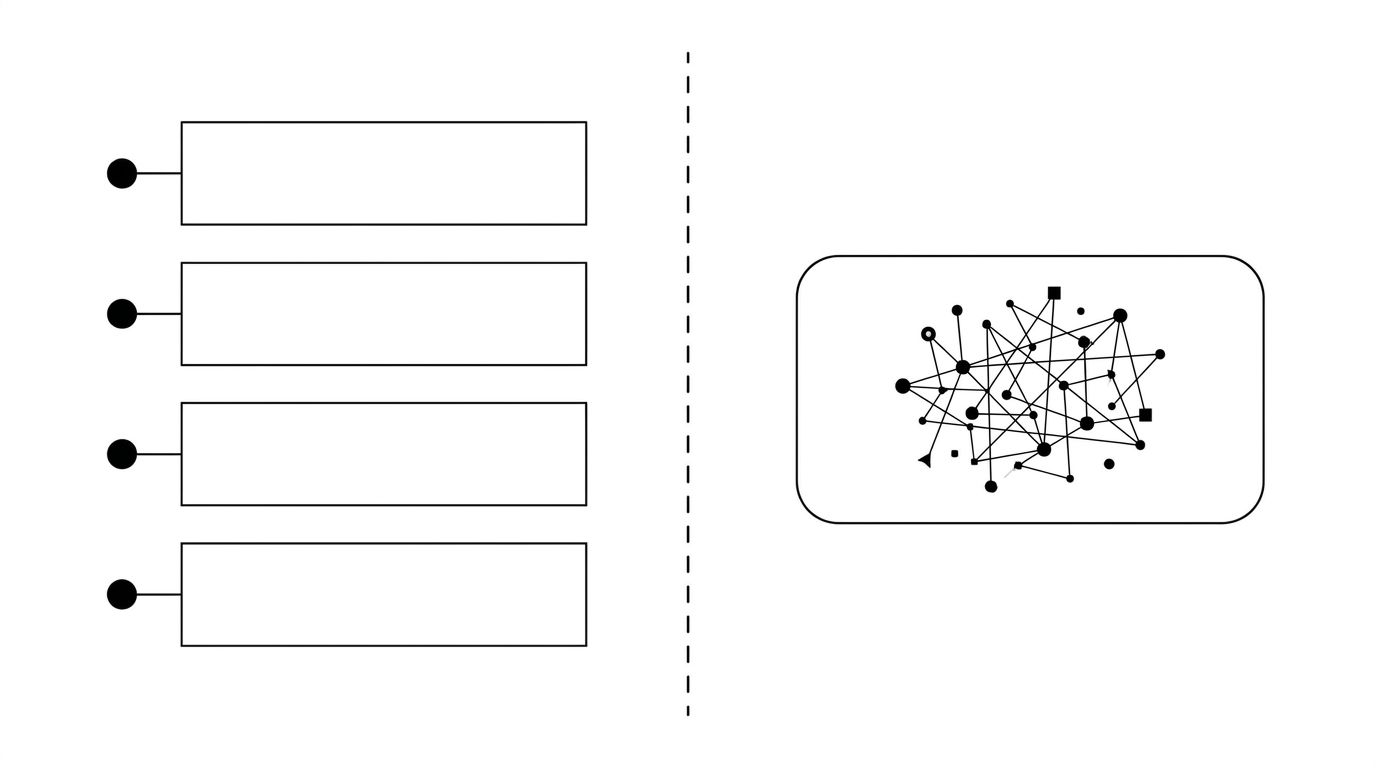
Every distribution channel Indian fintech has ever used could be bought. Performance marketing has an auction. Aggregator placement has a rate card. Bank partnerships have a commercial. App store ranking has a user-acquisition budget. The lead pillar at Global Fintech Fest 2026 is agentic AI, and agent-mediated distribution is the first channel in the sector's history with no purchase mechanism at all. When a model assembles a shortlist of lenders for a customer, there is no slot to bid on. That is the part of the agenda worth preparing for, and it is not the part most attendees will spend their four days on.
The rest of this is what the festival actually is, who runs it, and what to do about the agentic AI track specifically.
The essentials
| Detail | |
|---|---|
| Dates | 8 to 11 September 2026 |
| Venue | Jio World Centre and Trident BKC, Mumbai |
| Edition | 7th |
| Theme | Potential to Impact: Trusted, Connected, Global Systems for Inclusive Finance |
| Pillars | Agentic AI, Tokenisation, Quantum |
| Organisers | Payments Council of India, NPCI, Fintech Convergence Council |
| Regulatory patrons | RBI, SEBI, IFSCA, PFRDA |
The regulatory patronage is the detail people underrate. Four Indian regulators lend their name to this event, and senior officials from all of them attend. GFF is one of the few places where a founder can hear a regulator describe intent before it becomes circular text.
Organiser-reported figures for the 2025 edition: more than 100,000 delegates from over 125 countries, around 1,000 speakers, 7,500 participating organisations, 400 exhibitors, 500 investors, and 70 regulators from Indian and international jurisdictions. The Prime Minister addressed that edition. The 2026 scale numbers have not been published yet, so treat the 2025 set as the planning baseline rather than a forecast.
The three pillars, and which one is nearest
The organisers define the pillars narrowly, which helps:
- Agentic AI: autonomous orchestration of financial workflows, personalised services at scale, and continuous risk monitoring with minimal human intervention.
- Tokenisation: making assets, public or private, physical or digital, programmable, divisible, and instantly transferable.
- Quantum: security, optimisation, and computation rebuilt at a foundational level.
Quantum is a research horizon for almost everyone in the room. Unless you are a bank with a cryptography team, the useful takeaway is a single question for your CTO about post-quantum migration timelines, not a track to sit through.
Tokenisation is real but gated on regulatory clarity that has not fully arrived. The sessions worth attending are the ones with a regulator on stage, because the constraint is permission rather than technology.
Agentic AI is the only one of the three already changing customer behaviour in India this year, which makes it the pillar with a deadline attached.
It is also a visible shift in what the festival thinks is important. The 2025 theme was "Empowering Finance for a Better World, Powered by AI", where AI was the enabler underneath the finance story. In 2026 the framing moved to "Potential to Impact", with agentic AI named as a pillar in its own right. The organisers stopped treating AI as infrastructure and started treating it as a distribution and product layer. That reads as a small wording change and is not one.
The diagram below shows why that distinction matters commercially.
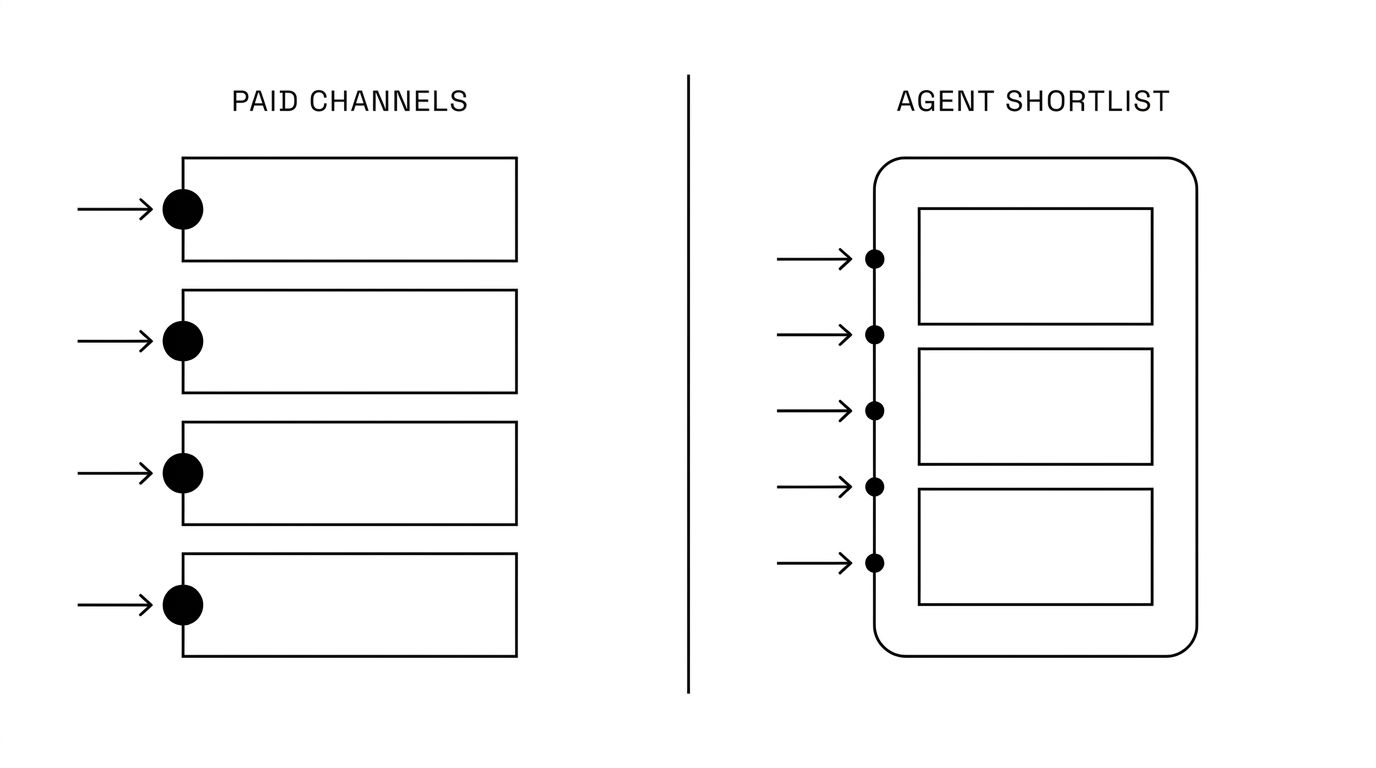
Why agentic distribution cannot be bought
Here is the mechanism, using data we pulled in August 2026 from Indian search results.
Search "best health insurance india" from an Indian IP. HDFC ERGO ranks first organically. Above that result sits a Google AI Overview, and it cites HDFC ERGO exactly zero times. Three of its eight citations go to PolicyBazaar, which ranks fifth. Two more go to StayWell Health and Nyvo, sites with a fraction of the authority of any national carrier.
The company that won the ranking supplied none of the source material for the answer printed above it.
No budget decided that. The AI Overview does not read the results page and summarise the winners. It retrieves passages that answer the question directly, and it prefers pages structured as answers to pages structured as landing pages. A conversion-optimised product page with a premium calculator and trust badges ranks well and extracts badly. A comparison page that states which product suits which buyer and why extracts cleanly, whoever published it.
Now extend that from an AI Overview to an agent acting on a customer's behalf. Same retrieval logic, higher stakes, and no media buy available. The fintechs that end up inside agent shortlists in 2027 will be the ones whose content was structured for extraction in 2026.
That is the practical takeaway from the agentic AI track, and you will not hear it from a stage. Stages will cover what agents can do. The commercial question is whether an agent can find and quote you at all.
Bharat AI Zone and Token Nxt
If you build AI for financial services, the most concrete opportunity at GFF 2026 is Token Nxt, an exhibition space inside the Bharat AI Zone run by NPCI.
Up to 20 selected fintech and banking AI companies get sponsored booths for live demonstrations in front of investors, partners, and buyers. Selection runs across three stages and weighs innovation credibility, live demonstrability, relevance to India's ecosystem, scalability, and responsible AI practice. Categories span fraud detection, payments, credit and lending, compliance, voice and language AI, banking operations, wealth management, quantum, robotics, and financial inclusion.
Both Indian and global companies can apply, provided the solution is live and demonstrable. A slide deck will not clear the bar. If your product is working and you have not applied, that is the highest-return hour you can spend before September.
There are also hackathons mapped to all three pillars, including agentic AI in finance and quantum-safe systems.
Who should go
Founders raising in the next twelve months, given roughly 500 investors attended in 2025. Anyone whose roadmap depends on regulatory direction, because the RBI, SEBI, IFSCA, and PFRDA presence is unusual for a commercial event. Product and engineering leaders building on UPI and NPCI rails, since NPCI co-organises and tends to announce there.
International firms assessing India entry, since 125 countries were represented in 2025 and the regulator access compresses months of relationship-building into four days.
Marketing leaders are the group most likely to attend for the wrong reason. If the plan is brand presence and a booth, the numbers are against you: 400 exhibitors competing for 100,000 delegates is a poor ratio, and a delegate walking a hall that size remembers almost nothing. Go for the agentic AI sessions and the regulator access instead, and treat the booth as secondary.
One practical note on logistics. The venue spans the Jio World Centre and Trident BKC in the Bandra Kurla Complex, so sessions are split across buildings. Sort out where the tracks you care about actually sit before day one, because BKC traffic in September will punish anyone improvising between venues.
Geology will be there, and we work on exactly the retrieval problem described above. If you want to see how AI engines currently describe your brand, get in touch before the event.
What to do before September
Three things, in order, none of which need a budget approval.
- Pick your five highest-intent customer questions. Not keywords, questions, phrased the way a customer would say them to an assistant.
- Run each through ChatGPT, Perplexity, and Gemini, and write down which sources the answer was built from. If you are not among them, note who is. In Indian financial services the answer is usually an aggregator or a comparison site.
- Look at whichever of your pages should have been cited and ask whether a model could lift a clean, self-contained passage from it. If the page opens with a hero, a form, and three trust badges, the answer is no.
That exercise takes an afternoon and will tell you more about your 2027 distribution than most of the sessions will.
Our 2026 insurance AI visibility report shows the same pattern measured across 100 prompts and four engines, and the financial services page covers what changing it involves. If you would rather start with your own numbers, the free audit runs the exercise above automatically.