
GEO for Beginners, Your First 30 Days
New to Generative Engine Optimization? What should you actually measure, publish, and fix in your first 30 days to get your brand into AI answers?


If you have heard the term Generative Engine Optimization but have no idea where to start, here is the core insight: GEO is not a new version of SEO. It is a separate discipline focused on making your brand visible in AI-generated responses, the answers users get from ChatGPT, Gemini, Perplexity, and Google AI Overviews. This 30-day plan gives you a structured onboarding path from zero knowledge to a working GEO foundation, broken into weekly milestones that build on each other.
Week 1: Learn How AI Discovery Works
Before you optimize anything, you need to understand how AI platforms decide which brands to mention. This week is about observation and baseline measurement.
- Run an AI visibility audit. Use a free audit tool to check where your brand appears (or does not appear) across major AI platforms. Document which queries mention you, which mention competitors, and which mention neither.
- Ask AI platforms about your category. Open ChatGPT, Gemini, and Perplexity. Ask them to recommend products or services in your space. Record what they say. This manual check reveals how the models currently perceive your brand.
- Read the fundamentals. Understand the difference between GEO and traditional SEO. The key distinction: SEO optimizes for search engine rankings. GEO optimizes for AI-generated recommendations. Different inputs, different outputs, different strategies.
By the end of week one, you should have a clear picture of your starting position, where you are visible, where you are missing, and who the AI models are recommending instead.
Week 2: Fix Your Foundation
Week two is about fixing the structural issues that prevent AI models from understanding and recommending your brand.
- Standardize your brand information. AI models cross-reference your brand across dozens of sources. If your company description says one thing on your website and something different on LinkedIn, the model loses confidence. Make your name, category, and value proposition identical everywhere.
- Audit your key pages. Your homepage, About page, and top product/service pages are the primary inputs AI models use. Ensure each page clearly states what you do, who you serve, and what makes you different, in the first two paragraphs.
- Add structured data. Implement schema markup on your most important pages. Organization schema, FAQ schema, and Product schema give AI models machine-readable signals about your brand.
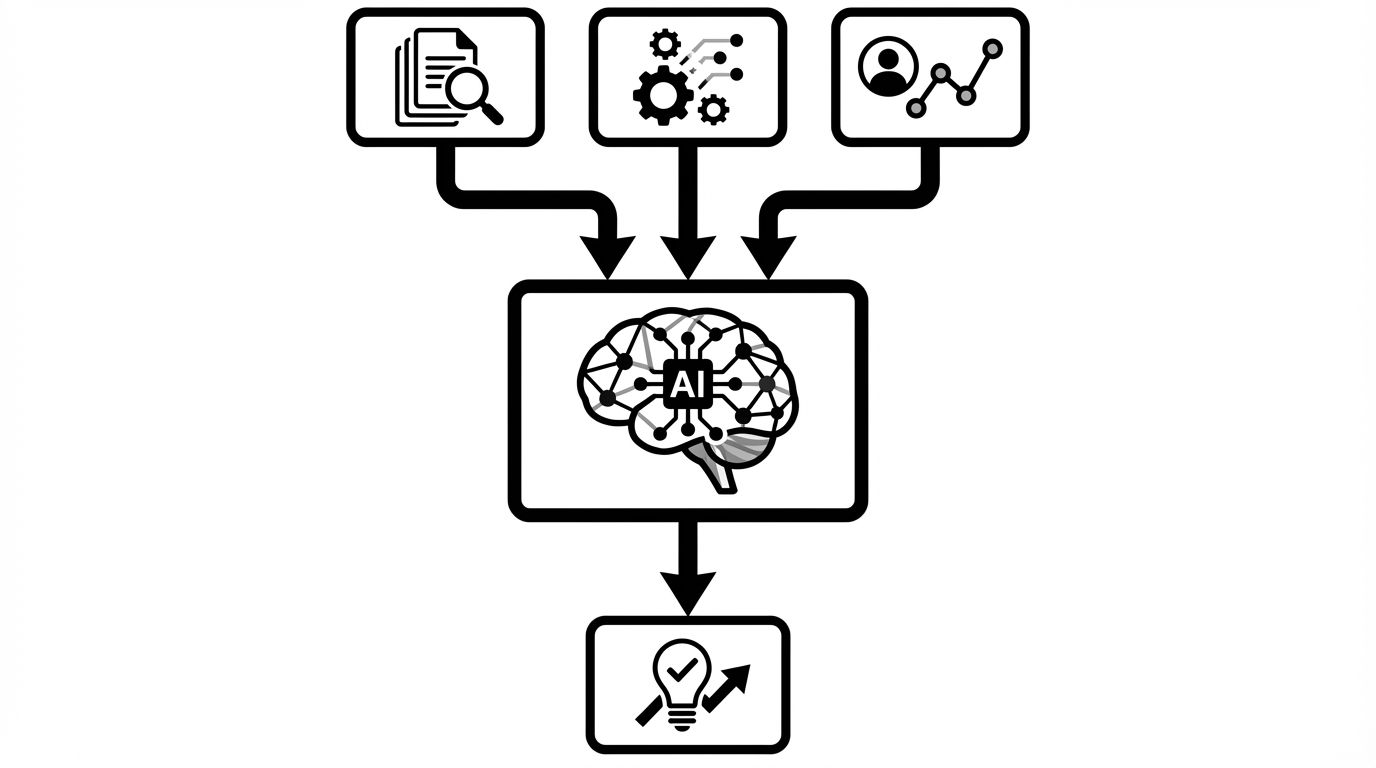
The diagram below outlines how these foundational elements feed into AI model understanding.
Week 3: Create Your First GEO Content
With your foundation in place, week three is about creating content specifically designed for AI citation.
- Write a definitive guide for your category. A thorough, authoritative page that answers the question "What is [your category]?" gives AI models a strong citation source. Follow the content formats that work for AI, clear headings, concise paragraphs, structured lists.
- Build an FAQ section. AI models disproportionately pull from FAQ content because it matches question-and-answer query patterns. Add 8–10 questions and answers to your key pages, using the exact language your buyers use.
- Publish one comparison piece. "X vs Y" queries are among the most common AI prompts. Write a factual comparison between your solution and the most common alternative. Use tables, bullet points, and specific criteria.
Focus on accuracy and specificity over volume. One well-structured guide produces more AI citations than ten generic blog posts.
Week 4: Measure and Iterate
The final week is about measurement, analysis, and planning your ongoing strategy.
- Re-run your AI visibility audit. Compare your results against the week-one baseline. Have any new mentions appeared? Has sentiment improved? Which platforms responded fastest to your changes?
- Track AI referral traffic. Set up AI referral tracking to measure how many visitors arrive from AI platforms. This gives you a concrete traffic metric alongside the visibility data.
- Identify your next priorities. Based on the gaps that remain, decide whether to focus on more content creation, technical optimization, or competitive positioning. The complete guide to GEO maps out the full strategy.
Common Beginner Mistakes
Understanding what not to do saves as much time as knowing what to do. These are the patterns that stall beginners:
- Treating GEO like SEO. Keyword stuffing, meta tag optimization, and backlink campaigns do not directly influence AI recommendations. GEO requires structured content, authoritative sourcing, and brand consistency.
- Optimizing for one AI platform only. ChatGPT is the most visible, but Gemini, Perplexity, Copilot, and AI Overviews each pull from different signals. A cross-platform approach is essential.
- Expecting overnight results. AI models update on their own schedules. Some changes reflect within days, others take weeks or months. Set realistic timelines and track trends, not individual data points.
- Ignoring competitors. Your AI visibility is relative. If three competitors are already well-optimized, you need to surpass their content quality and authority signals, not just match them.
What Comes After Day 30
Thirty days gives you a foundation and a baseline. It does not give you sustained competitive advantage. The brands that win at GEO treat it as an ongoing program with regular content creation, continuous monitoring, and iterative optimization.
Your next step after this initial period: run a deeper competitive analysis to understand exactly where you stand relative to the brands that AI models currently favor. Then build a quarterly plan that systematically closes those gaps. Start with a GEO optimization assessment to get expert guidance on where to focus next.