Global Fintech Fest 2026: What to Expect Across 11 Tracks
With 11 tracks and 350 plus sessions across four days, how do you build a GFF 2026 schedule that is actually worth the flight?

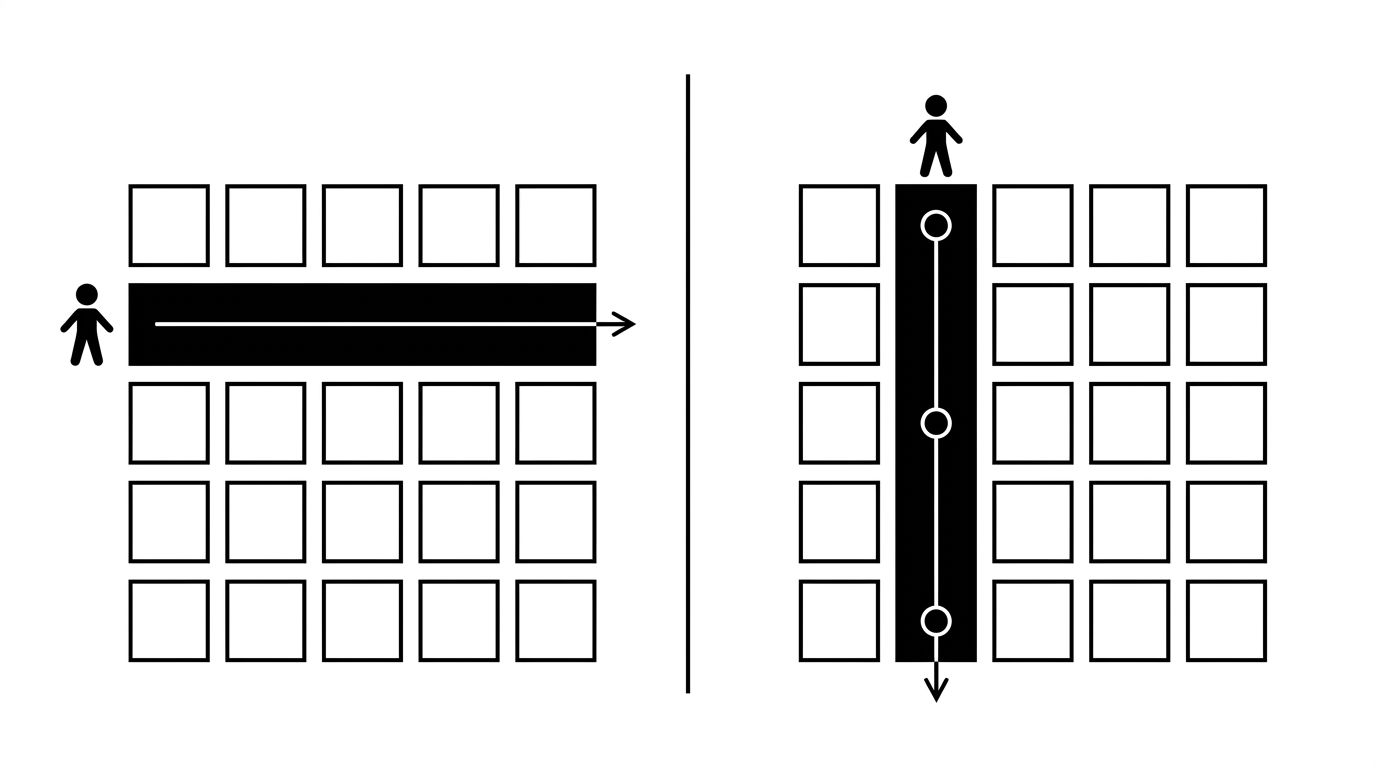
Global Fintech Fest 2026 files agentic AI as one of eleven tracks, and that is the most misleading thing about the agenda. Agentic AI is not a track at this event. It is the subject of every other track: AI underwriting sits inside InsurTech, agentic compliance sits inside RegTech, autonomous banking sits inside Banking and Financial Institutions, and AI-enabled advisory sits inside Wealth and Capital Markets. Anyone who builds a schedule around the "AI, Data and Emerging Technologies" track will spend four days hearing what AI can do in general and very little about what it does to their own book of business. Read the agenda down your vertical and take the AI sessions filed inside it.
That one decision does more for your four days than any other bit of GFF planning. The rest of this covers what the festival is this year, how the four days differ, which of the eleven tracks belong to whom, and the handful of things worth blocking out before the agenda fills.
The essentials
| Detail | |
|---|---|
| Dates | 8 to 11 September 2026 |
| Venue | Jio World Centre and Trident, Bandra Kurla Complex, Mumbai |
| Edition | 7th |
| Theme | Potential to Impact: Trusted, Connected, Global Systems for Inclusive Finance |
| Technology pillars | Agentic AI, Tokenisation, Quantum |
| Tracks | 11 |
| Sessions | 350 plus, per event listings |
| Organisers | Payments Council of India, NPCI, Fintech Convergence Council |
| Regulatory patrons | RBI, SEBI, IFSCA, PFRDA |
One caveat to hold onto for the next three weeks. The official agenda page carries the organiser's standard line that sessions, speakers and timings can change without notice, and as of mid-August the official speakers page still shows zero of zero. Several third-party guides are already circulating detailed speaker lists. Treat those as expectations and re-check the official agenda in the week before you travel.
How the organisers define the three pillars
The theme page is unusually precise about what each pillar covers, which makes it a better filter than the track names:
- Agentic AI: moving from automation to autonomous intelligence, so systems sense, decide and act in real time under governance. Covers workflow orchestration, supervisory oversight, fraud prevention, and personalised financial services at scale.
- Tokenisation: making value programmable and borderless through fractional ownership, instant settlement, and interoperable money.
- Quantum: quantum-safe cryptography and risk optimisation, framed as resilience for financial infrastructure.
The organisers argue the three matter most where they converge, into what they call a financial operating stack that is intelligent, programmable and secure. For planning purposes, rank them by deadline. Quantum is a question for your CTO, not a track to sit through, unless you run a cryptography team. Tokenisation is real and gated on regulatory clarity, so the sessions worth attending are the ones with a regulator on the panel. Agentic AI is the only pillar already changing customer behaviour in India this year.
The four days are not four of the same day
This trips up first-time attendees who book a full four-day trip and find the first day closed.
8 September is listed as invitation-only, accessible on a Special Invitation Pass. It carries the closed-door regulatory dialogues, pre-conference masterclasses, and CXO roundtables. If your reason for going is regulator access, this is the day that matters and the pass is not something you buy at the door.
9 September opens the public festival with the inaugural ceremony, the headline keynotes, and the industry report launches. Report launches cluster here because the press is in the room, which is why the GFF insights and reports page fills up over this week every year.
10 September is the working day. Sector panels run across all eleven tracks, product showcases open, and the investment pitch tracks run in early-stage and growth-stage formats. If you are raising, this is your day.
11 September closes with hackathon finals, the Global Fintech Awards, and the closing plenary. Attendance thins after lunch, which makes the morning sessions unusually easy to get into and the afternoon a good window for meetings.
The 11 tracks, and who each one is for
The tracks map to institution type, which is why the vertical read works. The table below is the fast version.
| Track | Who it is for | The agentic AI question inside it |
|---|---|---|
| Payments and Financial Infrastructure | PSPs, acquirers, networks | Who initiates a payment when the customer is an agent |
| Banking and Financial Institutions | Banks, NBFCs, core vendors | What autonomous banking does to the branch and the app |
| InsurTech | Carriers, brokers, insurtechs | AI underwriting, parametric cover, agent-mediated distribution |
| Wealth and Capital Markets | AMCs, brokers, wealth platforms | AI-enabled advisory and tokenised assets |
| RegTech and Supervision | Compliance, risk, audit | Agentic compliance, AML, cross-border supervision |
| Digital Public Infrastructure | Policy, platform builders | Identity, consent, and data exchange as agent rails |
| AI, Data and Emerging Technologies | CTOs, data leaders | Explainable AI, data governance, quantum convergence |
| Cybersecurity and Trust | CISOs, infra teams | Quantum-safe security and systemic resilience |
| Sustainable and Climate Finance | ESG, climate desks | Carbon tokenisation and AI risk assessment |
| Rural Economic Empowerment | Agri finance, MSME lenders | Rural credit intelligence and inclusion |
| Global Capability Centers | GCC leaders, global banks | India as the build centre for global fintech |
Two of these deserve a flag for anyone in BFSI marketing or distribution.
InsurTech now has a distribution problem hiding inside an underwriting agenda. Most sessions in the track will discuss AI as a pricing and claims tool. The nearer commercial change is that customers are asking assistants which insurer to buy from, and the assistants build those answers out of third-party editorial. Carrier sites barely feature.
Wealth and Capital Markets has the same shape. Tokenised assets will take the airtime, while the change already landing is that retail investors research advisors and platforms through a model before they ever reach a website.
The diagram below shows the difference between the two ways to read the agenda, and why the topical read leaves most attendees with generic notes.
Four hackathons, and what they signal
GFF 2026 lists four hackathons, all four run by institutions:
- PSB Hackathon Series 2026, from the Department of Financial Services with the Indian Banks' Association and twelve public sector banks, focused on GenAI, cybersecurity and fraud prevention.
- SBI Hackathon, on agentic AI for customer acquisition, digital adoption and engagement.
- SEBI Securities Market TechSprint, across four challenge tracks: synthetic media and phishing detection, agentic compliance, a multi-asset investor app, and simplified IPO documentation for SMEs.
- NABARD Hackathon, on rural financial inclusion through data-driven intelligence.
Read those four together and a pattern shows up. A market regulator, a development bank, the banking ministry's financial services department, and the country's largest bank all decided that the useful format this year is build-and-demo. Three of the four name agentic AI or GenAI in the brief. The centre of gravity at GFF has moved from what could be built to what has been built, which is also the bar the Bharat AI Zone applies: the NPCI-run Token Nxt showcase selects companies with live, demonstrable products, and a deck does not clear it.
Highlights worth blocking out
Start with the regulator dialogues on 8 September. Four Indian regulators lend their name to this event and send senior people. Hearing a regulator describe intent before it becomes circular text is the single hardest thing to get anywhere else, and it is gated behind a pass you have to be invited to.
The report launches on 9 September are where the year's benchmark data lands, and they set the numbers that get quoted in board decks for the twelve months after.
Geology's BFSI AI Visibility Report 2026 launches at GFF. It measures which banks, insurers, wealth platforms and fintechs AI engines actually name when a customer asks for a recommendation, which sources those answers are built from, and how far the answer diverges from the organic search ranking. It extends the method we used in the 2026 insurance AI visibility report, where the headline finding was that incumbents take roughly 80% of every engine's recommendations and only 1% of ChatGPT's cited links point at carrier sites. The BFSI edition widens that from insurance to the full sector. If you want the numbers for your own brand before the report drops, the free audit runs the same check.
Token Nxt, inside the Bharat AI Zone, gives up to twenty selected fintech and banking AI companies sponsored booths for live demonstrations in front of investors and buyers. It is the highest signal-to-noise square footage in the venue, because everyone in it has a working product.
The pitch tracks on 10 September split into early-stage and growth-stage. Roughly 500 investors attended the 2025 edition, which is the reason most founders make the trip.
The Global Fintech Awards on 11 September run more than twenty categories, including AI in BFSI. The shortlist alone is worth the hour, being a decent proxy for who the industry currently rates.
Who should go, and who should not
Founders raising within the next twelve months should go, for the investor density on day three.
Anyone whose roadmap depends on regulatory direction should go, and should work hard to get onto the 8 September invitation list. Compliance and risk leaders in particular get more from one closed-door dialogue than from a week of reading circulars.
Product and engineering leaders building on UPI and NPCI rails should go, because NPCI co-organises and tends to announce at this event.
International firms assessing India entry should go. More than 100 countries were represented last year, and the regulator access compresses months of relationship building into four days.
Marketing leaders are the group most likely to go for the wrong reason. Booking a booth to reach a hundred thousand delegates is a poor trade at this scale, and a delegate walking a hall that size retains almost nothing. Go for the sessions inside your own vertical track, the report launches, and the meetings you book in advance. Treat the booth as secondary.
Three things to do before September
None of these need budget approval, and together they take an afternoon.
- Build your schedule vertically. Open the agenda, pick your industry track, and take the agentic AI sessions filed inside it. Ignore the AI track unless you own the data platform.
- Write down the five questions your customers would ask an assistant before choosing a provider in your category. Phrase them as questions, not keywords.
- Run those five through ChatGPT, Perplexity and Gemini, and record which sources each answer was built from. In Indian financial services the answer is usually an aggregator or a comparison site rather than a provider. If you are not in the source set, that is the gap the BFSI report quantifies.
Do the third one before you land in Mumbai. It turns the agentic AI sessions from an interesting talk into a conversation about a number you already have.
For the strategic argument underneath this, on why agent-mediated distribution is the first fintech channel with no purchase mechanism, read our GFF 2026 dates, themes and what to expect guide. If you want to see where your own brand stands across AI engines before the event, the financial services page covers what changing it involves.